Author Archives: CharlieClaywell

Unknown's avatar

About CharlieClaywell

I have been a writer for years, mainly as a reporter, but I have always enjoyed history, especially non-mainstream stories buried inside old documents. My blog mostly centers around those stories. On occasion, though, I deviate and talk about my dog, vintage toys and what it's like to be middle-aged.

The Canine Gaze And Other Great Dog Mysteries

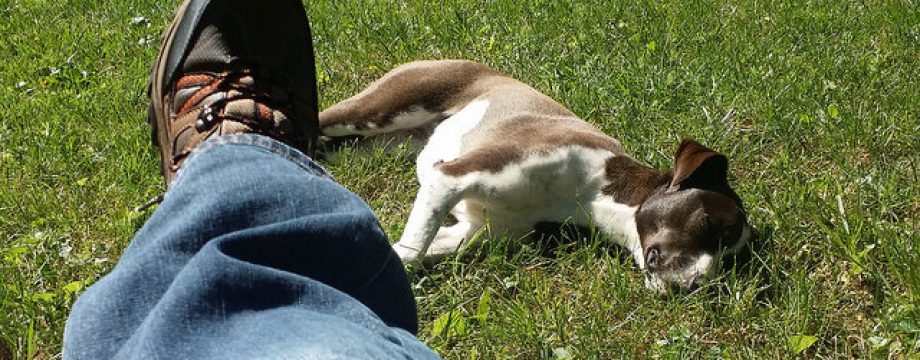
20160112_103030-EFFECTSI love reading books about dogs. I always have. One of my favorite childhood books included a dozen or so stories about dogs that protected their owners from bear attacks.

Of course, Old Yeller and Savage Sam were two stories that really pulled me in. The climax of Old Yeller is when teenager Travis Coates is forced to destroy Old Yeller. The dog, infected with rabies after protecting Travis’ younger Arliss from a rabid wolf, is now a danger to the family. As we watch the scene of Old Yeller’s death unfold — knowing in our hearts it’s the right thing to do — we still wish for a better way.

But it’s time for Travis to become a real man and overcome his personal affection for the dog and do what is right for his family.

Versa’s Flaws

When I began writing personal essays, my first attempt at a longer read (one-hour story) was about our dog, Versa. In some ways, Versa is like Old Yeller. When we adopted her, she was not overly likeable and a little rough around the edges — she had some flaws. The day we met, she did not impress me, partly because when my daughter, Molly, tried to interact with her, Versa was too timid — cowering with her tale between her legs, and quivering as Molly tried to pet her.

It wasn’t Versa’s fault.

She is a pound puppy and, as I wrote in Broken Spirit: Lessons From a Rescued Dog About the Politics of Life, she exhibits the traits of fear aggression — a tendency to be afraid of everything and everyone. It is a common trait of pound dogs. And, although, its grip on Versa is lessening, the trait is still noticeable after working with her for nearly three years.

In time Versa ‘grew on me’ and now she is part of my daily routine. As I wrote in Broken Spirit,

Versa and I have a daily ritual. I sit on a stool in my living room, start putting on my socks with my shoes beside me on the floor. Versa knows what this means: she is going for a walk. She wags her tail; prances over to our front door then back to me to check my progress. She nudges me with her nose as if to say, hurry up — let’s go.

True Companionship

Dogs provide a companionship that cannot be matched by any other domesticated animal. It is probably for this reason alone that so many books have been – and still are being – written about canines. We want to know how others interact with their four-legged family member.

contentA Useful Dog by Donald McCaig is a short-read — probably an hour or so — but by reading it you develop an deep appreciation for McCaig’s Border Collie sheep dogs. These dogs are energetic, bright and loyal, but as the author points out they can be difficult to train, control and work.

The book also includes snippets about the various jobs performed by other dogs, including sniffing out landmines in war-torn areas of the world. A deep bond grows between the dog and its partner in such adverse conditions, McCaig notes, but he says, this deep bond often exists in less dangerous situations.

He writes,

“On good days, I imagine humans are connected to our dogs on a primitive genetic level; that we don’t need to hear well because our dogs hear for us, that we don’t need good noses because our dogs sniff out danger, that we humans can dream because our dogs watch over us. On good days, I think dogs gave us our spiritual lives.”

The Gaze

packoftwoFor an even deeper look at the intricate dog-human relationship, read Pack of Two: The Intricate Bond Between People and Dogs. In the book’s opening, author Carolyn Knapp readily admits one reason she adopted Lucille, an eight-week-old Shepherd mix, from the local shelter was to fill the abundance of time Knapp acquired after becoming sober for the first time in her life. (She writes about her battle with alcoholism in Drinking: A Love Story).

Knapp fearlessly jumps headlong into issues only dog owners truly appreciate.

She speaks bluntly and honestly about dealing with other dogs and their owners, about condescending dog trainers with their various theories of control, and the hardest of all humans to understand – people who don’t like dogs. But one of the most intriguing passages is about the ‘canine gaze.’ If you own a dog, you’ve seen it. Often a dog’s gaze has a very definite meaning – I need to go outside, for example — but sometimes, we owners are clueless to what the dog is trying to communicate to us.

As Knapp notes, this non-understood gaze troubles us so when her dog launches into a gaze, Knapp, like all of us, concocts some really crazy ideas about what it means. She says,

In other words, I project. I project and I anthropomorphize and I make stuff up. I view her inner life through the filter of my own emotions and experiences, and the tendency to do this can make me crazy, for I can read anything into Lucille’s eyes. Anything. I can imagine that she’s mad at me, whether or not she is. I can imagine that she’s lonely or depressed, that’s she’s worried or chagrined or wistful, that I’m getting on her nerves.

It’s part of the Lassie Syndrome of life – we dog owners have come to believe that all looks, gazes and actions of our beloved canine friend holds some deep — often mystical — meaning.

Versa Knows

As I write this, Versa lies calmly on her bed beside my chair. She is always nearby. Whenever I walk to another part of the house, she follows. With her, I’m never alone.

And as she lies comfortably on her bed, she is a visual reminder that dogs are simple creatures. They are the embodiment of what life is meant to be — a pleasant process. Versa needs very little: Food, water, shelter and a daily walk. Once Versa’s daily walk is complete – meaning her work day is over – she is content to nap, relax, play with the cats or simply do nothing at all.

She has figured out the secret to a happy life.

And, maybe that’s what she’s been trying to tell me all along.


broken-spiritBroken Spirit: Lessons From a Rescued Dog About the Politics of Life

When a rescued, mix-breed mongrel with an ill-fitting name (Versa) and a behavioral problem (fear aggression) chose me as her sidekick, I reluctantly agreed. But as I helped Versa overcome her fears, she taught me about the secrets to work and life.

Categories: Books I have read, Dogs, Pets, Versa | Tags: ,

Quakers And Their Beliefs On Sex, Money, And Fun

Note: This is the third in four entries about Albion’s Seed: Four British Folkways in America by David Hackett Fischer. As I mentioned in the first post, since this is a large book (900+ pages) I did not want to write a single review. Instead I am writing about each of the four British American colonies Fischer examines. If you have not read his book, and are interested in the American Colonial Era, I highly recommend it. Click here to access all the posts in this series.

In this post, I’ll examine the same three folkways I did with the Puritans and the Virginians: Sex, Recreation and Money.

386px-William_Penn

Many politicians — and Americans in general I suppose — love to tell the story of America’s beginning in a largely mythological manner. The myths tend to capitalize on two reoccurring themes: settlers came here in search of religious freedom and secondly, all Americans can ‘make it to the top’ through hard-work and determination. Although the story lines are effective in creating a sense of nationalism — overall, neither are historically true.

But, at least with the Quaker-led British American colony, one of those story lines is fairly accurate for one group of settlers. The Quakers did in fact lay the groundwork for a society built around the idea of religious freedom.

Where They Landed

Although Quakers came from all parts of England, most originated from the North Midlands region. By and large, they landed in present-day Pennsylvania and Delaware. In North America, they were barred, banned and persecuted by the leadership of both the New England Puritan and the Virginia colonies. Being a Quaker in either of these two colonies meant risking being literally branded with a hot iron — often to the face — or execution by hanging.

The hatred levied against them seems somewhat odd since they were pacifist Christians. But it was their inner light theology that caused the hatred. They believed a ‘still small voice’ existed in everyone and if a person listened to that voice they can be saved. Although in many churches today this idea is somewhat accepted, the approach was threatening to established churches of that era because it effectively bypassed the need for the clergy.

Another Christian principle the colony promoted was its acceptance of various religious and ethic groups. The colony was the most diverse of the four British American colonies.

Money. Since the Virginia Colony was a profit-driven business venture, leaders there eventually conquered Indians for their land, but the Quakers felt the more godly approach was to purchase the land (since it belonged to the Indians). It is in the division of this purchased land that best demonstrates how the Quakers viewed the role of material possessions in a society. Their leader, William Penn, who called the colony as a holy experiment, felt the distribution of land should accomplish two tasks:

  1. Provide a source of capital for the founding of the colony.
  2. Create a rural society of independent farming families without great extremes of wealth or poverty.

It was because of this approach that Penn was initially successful in creating the most equal society in the Colonial era. Tax lists from the late 1600s show that in Chester County, the wealthiest 10 percent owned less than one-fourth of all the land. For comparison, in the Virginia colony, the wealthiest 10 percent controlled two-thirds of the land.

It was also the Quakers that largely created the concept of charitable organizations to help the poor.

Recreation. Much like their neighbors to the south, the Quakers were opposed to sport-type activities – especially the sports favored by the New England colony (basically forerunners of baseball and football). Sports and other non-pragmatic activities were seen as a waste of time and their courts punished people who participated in any of the forbidden games. Like the Puritans to the north they were also opposed to horse racing or games associated with gambling.

But their strongest aversion was reserved for the blood sport games that were so prevalent to the south in the Virginia colonies. Although they believed killing game for food was justified, they believed no person had the right to take pleasure – or make a game of – the death of an animal. They were very opposed — and believed it was a sin — to participate in the blood sport of gander pulling — an activity popular among Virginia farmers.

This did not mean, though, that they felt all forms of recreation were evil, but they did tend to view pragmatic recreation as the most God-like choice. Because of this belief one of the most popular form of exercise and recreation was gardening. Because of the colony’s obsession with plants they produced a disproportionate number of botanists – and even produced some of England and America’s leading horticulturalists.

Sex.  The Quakers’ belief in the purity of the inner light presented a vexing conundrum concerning sexual relations between a husband and wife. Like New England and Virginia, the Quakers had laws outlawing sex between unmarried partners or adultery. A Pennsylvania law of 1683 concerning fornication stated that both the single man and the single women should be punished by being required to get married, to be fined or to be whipped – or all three. The law was overthrown by England sometime after 1700 when the Crown ruled it was unreasonable.

The punishment for adultery was even more severe.

  • 1st offense – a year in jail
  • 2nd offense – life imprisonment

The law was later revised and those who somehow engaged in a third offense were branded on the forehead with the letter A.

Even in marriage, sex — unless engaged in for procreation — was often considered sinful. Because of the impurity many associated with sex, long periods of abstinence were commonplace in Quaker families. Homes often had separate beds and rooms for the husband and wife. Some couples went so far as to believe that engaging in sex without the intent of propagation was an act of fornication or lust.

One of the unintended byproducts of this approach to marital sex was instituting population control through what amounted to a form of birth control.

Categories: Colonial Era, Colonial Period | Tags:

‘Reel Injun’ Blasts Hollywood’s Depiction Of Native Americans

220px-Reel_Injun_FilmPosterOne of the parts of American history that I am least familiar with is the history of the Indians. Until I started studying the Colonial Era, I did not realize just how many nations and tribes existed in North America.

Reel Injun, filmed and produced by Neil Diamond in 2009, is an intriguing look at Hollywood’s depiction of Native Americans over the decades. The strength of the film is it is told from a non-White perspective, which I think, gives one a better understanding of how the stereotypes, created by films, impacted generations of children and adults.

One interview that stood out for me was of a middle-aged Indian explaining how he and his brother would watch Westerns at the local theater on Saturdays. But when the finale of the movie began — the scene where the Calvary or other white men pursued and killed all the Indians — his brother would put his head down and refuse to watch. Having watched plenty of Westerns myself, I never once thought about the type of message the films delivered to impressionable kids.

The movie is filled with old familiar clips, includes an interview with Clint Eastwood, and has a couple surprises — like famous actors billed as Native Americans in real life who were not Indian.

The documentary is currently available on Netflix.

Categories: American History, movies