 In American Massacre: The Tragedy at Mountain Meadows, September 1857
 , author Sally Denton examines an incident that has been a blight on the history of the Mormon church for more than a century. The church has maintained, that as a church, it had no role in the death of the estimated 140 men, women and children who were travelling from Arkansas to California before they were attacked and brutally slaughtered in southern Utah.
Historians like Denton disagree, and she sets out to prove her theory that Brigham Young, leader of the Church of Jesus Christ of Latter-Day Saints (commonly known as Mormons) was aware of the attack and its subsequent cover-up.
Both the church and non-church historians agree on most of the basic facts of the actual attack (who order the attack is the area of contention). Denton reports how the attack unfolded.
The Fatal Decision
A relatively wealthy group of family and friends decided to leave Arkansas for better opportunities in California. The party, known as the Fancher Train (named after one of group’s leader, Alexander Fancher) or the Fancher-Baker Party, consisted of about 200 relatives, neighbors and long-standing friends. The group travelled with about 1,000 head of cattle, a couple of prized stud breeding racing horses, and as much as $100,000 in gold coins and currency hidden away inside their luggage. (As a reference, the president of the United States earned $25,000 a year at that time)
The group travelled without significant incident until they camped about six miles outside of Salt Lake City. Alexander Fancher and co-leader John Baker, rode into Salt Lake City to buy supplies but were met with opposition inside the city and returned empty handed.
“On the advice of the Mormons,” Fancher and Baker decided to split the group so their livestock would have adequate food along the way. One portion took the north trail as previously planned while Fancher took about 150-160 members of the camp and traveled a southern route which led to Mountain Meadows where they were later ambushed.
The Attack
When the camp awoke on September 7 a child was struck by a bullet and wounded. The camp responded by circling the wagons, shoveling trenches and creating earthen mounds in front of the wagons and returning fire at the men hidden in the nearby hills. Shortly after daybreak, the gunfire ceased. On Tuesday snipers continued the attack, preventing the camp from accessing nearby spring water. On Wednesday, a heavy assault ensued after reinforcements assisted the attackers. On Thursday morning, it was more of the same.
But on Friday morning, September 11, it was calm. At this point though the camp was out of food, could not access the nearby water source and their ammunition was nearly depleted. At least seven members were dead — including two children shot down as they, dressed in white, tried to gather water for the camp from the nearby spring. More than 40 members were wounded.
The Entrapment
Around mid-morning on September 11, the camp noticed a large group of white men approaching carrying the American flag and the white flag of truce. One of the white men explained to the camp that a Mormon named John D. Lee wanted to entered their camp. Once inside, Lee explained the Paiutes (Western Native Americans tribe) were angry with the camp, but that he was in a position to negotiate the peace. Over the course of the next 3-4 hours, Lee convinced the group to surrender their weapons so he could negotiate with the Indians.
The Execution
Once the camp was disarmed, they were quickly divided into groups, marched a short distance and then a command was given to the men who were allegedly rescuing the camp, “Halt! Do your duty to Israel” and the Mormon soldiers shot the unsuspecting, unarmed men next to them. Then the women and children were killed. The only survivors were the 17 or so children 8 years old and younger. The Mormon defectors that had joined the Fancher camp were ‘blood atoned’ — a ritual Mormons practiced in its infancy — of ‘saving a sinner’ by spilling their blood on the ground by slitting their throats.
The Book
What Denton successfully accomplishes in the book is, by sifting through the various versions and histories of the attack, she shows the Native American tribe that was initially blamed for the attack could not be responsible. Although a few members of the tribe did participate in the massacre, they were paid mercenaries. She proves that the majority of attackers were white and Mormons — and she demonstrated a plausible link between Brigham Young and the attack.
Denton divides her book into three logical parts. In the first section she gives a brief, yet adequate look, at the history of the Mormon church and explains the persecution the church endured in Ohio and Missouri before heading west to what would become Salt Lake City and Utah. In this first section she explores some of the peculiar and lesser known tenements of the Mormon faith including their military arm that committed acts of violence when deemed necessary by church leadership.
The next segment of the book develops an understanding of the men and women who were the victims. She gives a fairly detailed look into the lives of these frontiersmen and proves they were not novices and notes that some of the leaders had traveled west before. Denton ends the section with the massacre — and the details are lurid especially in regards to the younger victims. She also shows how the spoils were divvied out to various Mormon leaders.
It is in the final section — which is the slowest moving part of the book — that Denton ties together all the histories and proves why the official story of the Mormon Church (which has changed over the years) does not stand up to the contradictory evidence. The church maintains that a group of ‘local Mormon settlers and Indians’ attacked the encampment based on orders from their “local religious leaders and military commanders.”
The only bright spot in the tragedy is the successful effort of Arkansas family members in rescuing the 17 children that survived the ordeal. The children had been adopted, in some cases, by the men that had killed their parents.
Rated 5 out of 5. Well researched and an engaging read.

 LDS Version of Mountain Meadows Massacre
The central difference in the LDS version of the story and historians like Denton and
Will Bagley is where to place the blame. The LDS places all the blame on the Cedar City Church where the Mormon attackers lived.

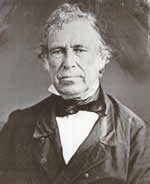 I’ll admit, I know very little about President Zachary Taylor — but then, really who does know much about the country’s 12th president? I came across a tidbit about his death while reading American Massacre, and according to the book, when Taylor died, Brigham Young, leader of the Church of Jesus Christ of Latter-day Saints allegedly rejoiced and said,
 Was Taylor Assassinated?












 Charlie R. Claywell