American History

Ohio’s Presidential Legacy: Ulysses S. Grant — Good Guy — Bad Crowd

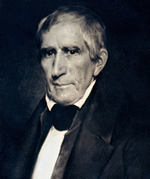
Ulysses_Grant

(This is the second in the series about Ohio’s presidential legacy. You can read the first entry, about William Harrison, here)

Ulysses S. Grant has had some bad luck when it comes to how he is remember. If he could have bypassed the Presidency and just been the man who won the Civil War, history would have been so much kinder to him. Instead, though, Grant has landed right in the middle of the most controversial presidents list.

The interesting thing is — Grant knew he wasn’t presidential material. In his farewell address to Congress, he even went so far as to apologize for his errors of judgement, noting he had the “misfortune to be called to the Office of Chief Executive without any political training.”

Although his tenure in office is oftened labeled one of the most corrupt in U.S. history, Grant was never personally involved with any of the scandals and his honesty and integrity was never questioned. His story is really of a man who never wanted to be president — one who admittedly did not have the political savvy to be in the country’s highest office.

Besides the Wall Street scandal which led to the Financial Crisis of 1869, others that occurred while he was in office included:

  • The Whiskey Ring: Before being exposed in 1875, a group of mostly Republican politicians siphoned off millions of dollars in federal taxes on liquor.
  • Credit Mobilier: Credit Mobilier was a fraudulent, private construction company that stole from the U.S. government by padding federal contracts and also skimmed profits from the Union Pacific Railroad. The scandal involved several Republican politicians including the vice president.

According to the University of Virginia’s Miller Center, though, Grant did do a few things right.

…in the areas of Native American policy, civil service reform, and African American rights, he took steps that few had attempted. He also executed a successful foreign policy and was responsible for improving Anglo-American relations.

Trivia:

The initial S in Grant’s name means nothing — his full name is actually: Hiram Ulysses Grant.

Books about Ulysses S. Grant
Quite a few book have been written about the 18th president of the United States and a great resource for book reviews about Grant — or other U.S. presidents — is the blog, My Journey Through the Best Presidential Biographies. The blog author has reviewed several books about Grant which you can read here.>> You can read the Personal Memoirs of Grant free, here.
Categories: American History, Politics

Founding Father Reworked New Testament To Highlight Philosophy of Jesus

Thomas JeffersonThomas Jefferson was obviously one of the most influential men in early American history which is why I find this to be one of his most intriguing projects (besides, of course, the Constitution). It is a little book Jefferson pieced together commonly called The Jefferson Bible.

In a nutshell, the book is a succinct version of the first four books (the Gospels) of the New Testament. Jefferson splices together all four books and, by removing the redundancies, streamlines the story of Jesus and his philosophy into an easy-to-read 40 pages.

Since Jefferson was a Deist, besides splicing the story together, he removes quite a bit from the Gospels as well.

The Jefferson BibleThis is because Jefferson rejected the divinity of Jesus and did not believe all the miracles that had been attributed to him. In fact, in Jefferson’ words those passages belonged on the ‘dunghill.’ Since those passages are eliminated (the virgin birth, the resurrection, water to wine, etc.), what is left is the core of what Jesus said and taught.

Although Jefferson did not believe Jesus was divine, he did believe that the ethical system of Jesus was the ‘finest the world has ever seen.’

From a historical perspective, the book is also interesting simply because you get to read Jefferson’s handwritten notes in the margin of the book and you get a feel for how his mind worked. The Smithsonian version that I read, includes a couple chapters in the front that explain why Jefferson laid out the book as he did and its unique history — including how the Smithsonian finally acquired it. The Smithsonian version also explains the process of preserving the original book.

Regardless of your religious beliefs, it is an excellent book to read if you want a clearer understanding of what Jesus said. Besides the English passages, Jefferson also compiled the story of Jesus in Latin, Greek and French. All four translations exist inside the same book.

You can read the English-only, 1902 publication online for free here (pdf).

Categories: American History, American Revolutionary War

Ohio’s Presidential Legacy: William Harrison — America’s One-Month President

harrisonGrowing up in Ohio, I knew one thing for certain about the United States presidency — the state delivered eight men to serve in the White House. They were:

  1. William Harrison
  2. Ulysses S. Grant
  3. Rutherford B. Hayes
  4. James Garfield
  5. Benjamin Harrison
  6. William McKinley
  7. Howard Taft
  8. Warren Harding

What I did not learn in school was these eight men were involved in some of the weirdest stories in United States’ history. Of the eight men, two were assassinated, one died under suspicious circumstances, two lost the popular vote and were selected president (one in a scandal much larger than the 2000 Gore-Bush election) and one was the first president to die in office.

Here is a look at Ohio’s first offering for U.S. President.

William Harrison

Besides having the dubious honor of being the first president to die in office, Harrison also has the shortest presidential term: 30 days, 12 hours, and 30 minutes.

Most historians peg his death — ruled pneumonia by his doctors — as being caused by his two-hour long March 4 inaugural address which took place in rainy and cold weather.  He was 68 — and at the time — the oldest elected president. However, some disagree that the weather caused Harrison’s death because he did not become ill until nearly three weeks after the speech. These scientists theorize his death may have been associated with the human sewage that festered near the White House.

That field of human excrement would have been a breeding ground for two deadly bacteria, Salmonella typhi and S. paratyphi, the causes of typhoid and paratyphoid fever — also known as enteric fever, for their devastating effect on the gastrointestinal system.

Once he became ill, though, he died nine days later.

Despite such a short presidency, Harrison is credited with several ‘firsts,’ including:

  • Having the first modern presidential campaign. He successfully created the image of a common working class man (he was wealthy and his father was governor) during the 1840 presidential campaign — an image other politicians have successfully used and re-used.
  • Being the first sitting president to be photographed.
  • Being the first Whig to be elected president.

Upon Harrison’s death, the concept of how to deal with a vacancy in the office of president was tested. This was because neither the Constitution nor the 12th Amendment stated whether the vice president was named President or simply filled in as acting president until an election. Tyler took on the role of president establishing the precedent used today.

Trivia:

Harrison’s grandson Benjamin, also an Ohioan, was the 23rd U.S. president. Benjamin was elected to only one term.

-flagsBooks About Harrison
Of course, there is much more to Harrison’s life than his short-lived presidency. In fact, he was a successful military man and politician before deciding to become president. Several books have been written about Harrison and one that consistently garners good reviews on Goodreads is the 422 page Old Tippecanoe: William Henry Harrison and His Time by military historian Freeman Cleaves.
Another well-received book is: William Henry Harrison: The American Presidents Series: The 9th President,1841.
Categories: American History, Ohio History