Posts Tagged With: Beatys

Am I related to someone famous?

When people learned I was tracing my family tree, many let me know they were related to someone famous — like Daniel Boone or Ben Franklin.

For the most part, I’ve found, that although I am connected to interesting regions of the country and intriguing eras of history — I’m not really related to the famous.

Both of my family lines were early American pioneers. The Claywells forged out an existence in Cumberland County, Kentucky in the early 1800s laying claim to land earned for Shadrach Claywell’s Revolutionary War service. My maternal line, who also served in the War, ended up in the same region possibily because the land resembled the homeland of their Scottish-Irish youth.

  • On the maternal side, the Beatys lived in the same region as a few famous people, like the Clemens — as in Mark Twain’s family. His father, John practiced law in Fentress County, TN and served in various official capacities like: Country Commissioner, Court Clerk, acting Attorney General and Postmaster of Pall Mall. The Clemens moved onto Missouri before Mark was born.
  • In, History of Fentress County, Tennessee: The Old Home of Mark Twain’s Ancestors, by Albert Ross Hogue, Hogue tells a story about Jim Crockett — Davy Crockett’s first cousin. When Hogue relays the story, he casually mentions that Jim’s father, William Crockett (Davy’s uncle), lived ‘in the pioneer days’ on what is now (early 1900s) the Jerry Beaty farm. Hogue adds, (without explaining how he verified this fact):
    • The Beaty’s, who are related to Crockett, also moved into this very neighborhood.
  • Probably the most famous man in the modern era from the Fentress County region is Alvin C. York. His WWI exploits were immortalized in a film starring Gary Cooper, which won two Oscars. York’s name is still very prominent in the region a century after his actions. My mother picked beans on York’s farm in her youth.
  • Jamestown, Tennessee — the county seat for Fentress County — is birthplace of the World’s Longest Yard Sale — which every August  passes through my hometown in southwest Ohio.

So am I related to anyone famous?345px-TaraConneratWillowGrove3

The closest I have found so far is: I am second-cousin once-removed from 2006 Miss USA Tara Conner. Tara’s great-grandmother Minnie Conner is my grandfather Charlie L. Claywell’s youngest sister — our common ancestor is Joe Lee Claywell (he is my great-grandfather, Tara’s great-great-grandfather).

Joe Lee had three children with his first wife Sallie Guinn (Charlie, Ruby and Jim). Sallie Guinn died due to complications of childbirth with their fourth child (Sallie L. who also died).

Joe later remarried (SallieWells) and they had five children: (Paul, Docia, Lucille, Glendon, Minnie).

Minnie is Tara’s great-grandmother.

Categories: Appalachia, Cumberland Plateau, Family History | Tags: , , ,

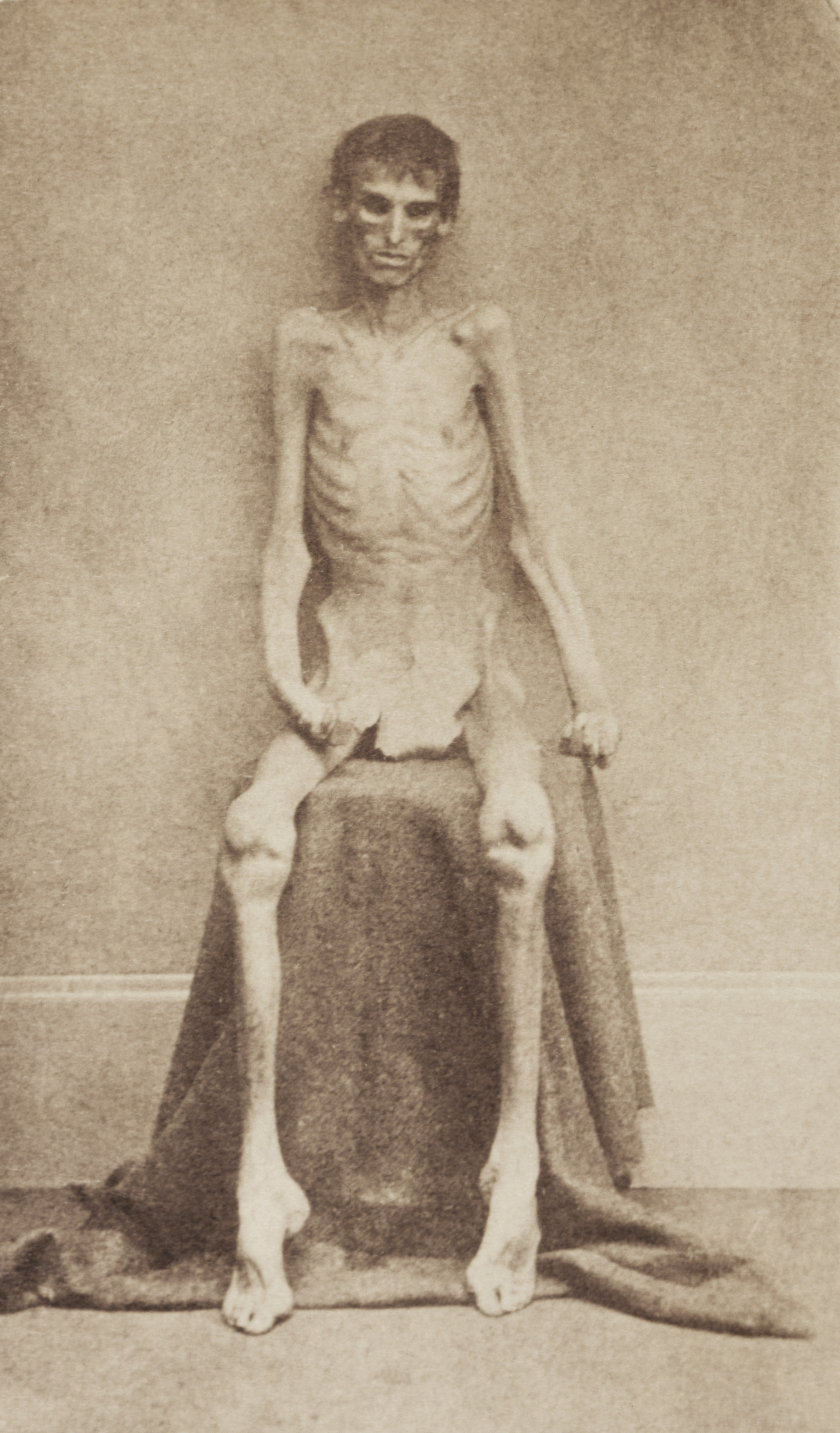
Beaty brothers, captured Union soldiers, starved to death as POWs

This is a photo from the U.S. Library of Congress depicting a survivor from the CSA's notorious Andersonville Prison. Andrew Jackson Beaty died in this prison at the age of xxx.

This is a photo from the U.S. Library of Congress depicting a survivor from the CSA’s notorious Andersonville Prison. Andrew Jackson Beaty died in this prison.

One of the most disturbing stories I have come across in my family history research involves the Beaty family during the Civil War. The region where they lived became a blood bath for soldiers and civilians during the War. Although, I have covered some of the story in articles about Champ Ferguson and Tinker Dave Beaty another big part of the story involves three Beaty men and their brother-in-law from my direct family line.

To give you a feel for what the Beaty family was dealing with between 1860 and 1865 (and probably a few years beyond that), here is a little backstory. They lived in Fentress County, TN — just across the state line from Albany, KY.  Although overall, the larger region (at least 6-8 counties) was very divided in its loyalty to the Union and the Confederacy, when the War broke out Fentress County was filled with a significant amount of Union supporters — including the Beatys. This immediately created a problem for the Beatys since Tennessee succeeded from the Union.

Across the line in Kentucky was, at least in theory, a more favorable situation since it was a neutral state (although the Union did supply the Home Guard with guns and ammunition). But quickly after the War began the area fell under the control of Home Guard units from both sides, renegade bands, vigilante groups causing a rapid descent into a nearly lawless environment. Adding to the situation was the difficulty of moving organized armies through the wooded and mountainous area of northern Tennessee.

This blend of difficult-to-navigate land, a community of independent people, mixed political loyalties and minimal law enforcement were the ingredients for a perfect storm.

What is difficult to completely verify is whether or not the Beaty family stayed in Fentress County during the War. A significant number of civilians headed north through Albany at the outbreak of the Civil War and I believe the Beatys may have been a part of that group for a several reasons. The family does not seem to suffer any civilian-type atrocity, they appear to lose land holdings after the War (which could be because it was determined their land was ‘abandoned’), and a letter written during the conflict by a Beaty cousin mentions the oldest son, Jonathon “being in Kentucky with his family.” Of course, this could simply mean the Beatys were across the state line, in the Albany area — but it could also mean they went further north.

Regardless of whether I am accurate or inaccurate on my theory of where they were during the War, they still paid a very high price during the conflict.

My grandfather from that generation was Alexander Beaty. His father was a Overmountain man and based on the name of his children, Alexander was very patriotic and a Union supporter.  Alexander’s three oldest boys, Jonathon, Andrew Jackson and Thomas, and a son-in-law, Andrew Owens, fought in the War and are mentioned in a letter written by Morgan Hull [pdf].

 I can inform you that Andrew J. Beaty and Thomas is here and well.  Jonathan A. Beaty is gone home the rest of the boys is all well. – Morgan Hull,  Co. B 2 East Tenn Regiment Infantry, Bowling Green, KY, Dec. 18, 1862.

Hull appears to be a first cousin — son of their father’s sister, Nancy Agnes, who married Jonathon Hull. In a second letter written by Hull he notes than Jonathon Beaty is with the family in Kentucky [pdf].

The unit the Beatys were in, Co. B 2 East Tenn Regiment Infantry, fought in several skirmishes and was also engaged in the Battle at Mill Springs (near the Monticello area) where the Rebels were defeated.

It was the battle at Rogersville, TN on November 6, 1863 that forever changed the family’s life.  Jonathon, Andrew and Thomas and other men from the Co. B 2 East Tenn Regiment Infantry are captured. I am not certain if their brother-in-law Andrew Owens or cousin Morgan Hull were also captured, but odds are they were since 609 men from the regiment died due to disease. This is because the men from the regiment were transferred to Belle Isle prison in Virginia on November 13 — about a week after their capture — one of the worst prisons of the War.

The prison would later scrutinized for its inhumane treatment of its POWs. In 1863, the prison held 10,000 men, but had only 3,000 tents for the men to survive in. Although the Confederacy would later deny the charge, food sent by the Union to feed the captured men was instead sent south by Confederate soldiers to feed their soldiers. So Union soldiers like the Beaty men were forced to endure the hardships of harsh weather conditions  while being underfed — leading to an extremely high mortality rate. Surviving soldiers and diaries of dead soldiers suggest that between 25-40 men were dying daily at the prison.

Andrew Beaty would be the first of the Beaty brothers to die. He died about three months after his capture on Feb. 15, 1864. Like most of the men, he died from exposure to the elements and starvation — although the official cause of death in his records state he died of pneumonia and diarrhea.

Thomas survived until May. At some point, he was transferred to the Andersonville prison (another prison notorious for its ill treatment of captured Union soldiers). He died May 16, 1864 and is buried there (Grave No. 1137). I have been unable to determine the fate of Jonathon Beaty and Morgan Hull.

In a letter written just days before their capture, Hull writes,

I don’t think the war can last much longer and I hope through the mercy of God the time may not be far distant when we can see each other in peace.

Morgan had no way of knowing the horrible fate he and others would face in just a few short days.

To learn more about Belle Isle and Andersonville prisons read [Amazon links]:
Categories: American History, Appalachia, Civil War History, Cumberland Plateau, Family History, Genealogy | Tags: ,

Child naming trends have always been strange — and a sign of the times

Napoleon Bonaparte McClain with his wife Angeline P. Harrison. They married in 1861 two years before he joined the Union Army. In an armed conflict during the war he lost part of his hand and a finger.

Napoleon Bonaparte McClain with his wife Angeline P. Harrison. They married in 1861 two years before he joined the Union Army. In an armed conflict during the war he lost part of his hand and a finger.

As a family historian I have come across my share of unusual names which seem to follow certain traditions. For example, Biblical names seemed to be popular with my paternal family line in the 18th and 19th centuries. Manurvia appears several times in my maternal line and I have stumbled across Permelia in my wife’s linage.

When I read some of the names, though, I am reminded of the Seinfeld episode where George reveals the two perfect names (Soda and Seven) — one he offers up to his fiance’s friends. When they balk saying Soda doesn’t seem like a name. He responds.

“Do you think Blanche sounded good the first time people heard it?” he asks.

Here are a list of a the most unique names I have found so far.

Named after famous people

I don’t know exactly what it means when you give your child the exact same name of a well-known person other than an obvious endorsement of that individual. It does beg the question, though, what if during the child’s life their namesake becomes disliked or dishonored. In my wife’s lineage — a distant grandfather — is named Napoleon Bonaparte McClain. Since the real Napoleon died in 1821 –and Napoleon Bonaparte McClain was born in 1839, he was at least free from the possibility of any real-time life scandals involving his namesake. In my wife’s lineage there is also a Christopher Columbus born in the late 1800s.

Presidential names 

In my maternal line I have a distant grandfather who lived in northern Tennessee named Alexander Beaty — whose father Andrew was one of the Overmountain men during the American Revolutionary War. Alexander was very patriotic when it came to his children — naming one James Knox Polk and another Andrew Jackson. Andrew Jackson, along with his brother Thomas and brother-in-law Andrew Owens would die young, having the misfortune of being captured during the U.S. Civil War. All three men died in Confederate POW camps.

Biblical Names

In the Claywell line, there are multiple instances of Shadrach — and even a Meshach and Abednego. Peter, Solomon  (sorry not Paul) and Mary were also common in the Claywell lineage. In my maternal line there is a Sarah Magdalene (instead of Mary), and a Moses or two.

Names I’ve Never Heard

A couple of the most unusual names I have found are Spotswood (male) and Telitha. Telitha is my maternal grandfather’s mother. I looked up her name — which can also be spelled Talitha, I think — it is a Biblical name. Apparently it is mentioned in the Gospel of Mark.  Two names that feel more like verbs than proper nouns are Comfort Claywell, born in the 1680s in the U.S. and Obedience Claywell listed in the 1860 in Cumberland County, Kentucky where my father grew up.

But, so far, I think the most unique name I have come across, in my opinion, is America Claywell, born in 1858 in Cumberland County, Kentucky.

Categories: American History, Family History, Genealogy | Tags: , , , , , ,