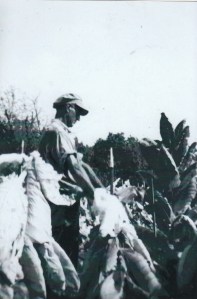
Rob Beaty ‘working’ tobacco.
I started watching Oliver Stone’s Untold History of the United States and my first impression is it is a well-researched, critical view of American history. The series challenges some of the commonly held beliefs about our country — including our telling of WWII.
In Stone’s telling, during the late 1930s Americans were not overly interested in going to war. His assertion is not unfounded. It was the era of isolationism — and much of the ‘good feeling’ associated with the war came in the years after it was over. As NPR reports in a review of ‘Angry Days,’
The conscription bill (i.e. the draft) was one of the most unpopular pieces of legislation, at least in the beginning, because we only had had a draft twice in our history before: the Civil War and World War I. The idea of a standing army was anathema to most Americans, as it had been to the Founding Fathers.
Anti-War Movement
Our standing army is a modern invention that grew along with the military industrial complex president Dwight D. Eisenhower warned about. As a society we have embraced our military and, today, opposition to any war tends to be seen as un-American. And, when Americans think about anti-war movements most recall Vietnam, probably because much of it was capture on film. However, one of the largest anti-war organizations in American history actually occurred during WWII. Its chief spokesmen was Charles Lindbergh. The organization, America First Committee, formed by Yale students included famous members — like future presidents Gerald Ford and John F. Kennedy.
Congresswoman Votes Against War
The first woman elected to Congress, Jeanette Rankin, has the distinction of being the only member of Congress to vote against entry into WWI and WWII. Rankin, a pacifist, believed that president Franklin D. Roosevelt permitted the Pearl Harbor attack to galvanize Americans into supporting the war. Although the allegation was never proven, as one author notes, at the very least, FDR did fail to interpret a ‘basket load of tips‘ showing an attack was imminent.
When Rankin cast her opposing vote on Dec. 8, 1941, in the immediate aftermath of Pearl Harbor, she said,
As a woman, I can’t go to war and I refuse to send anyone else.
Appalachia: Never Saw A War They Did Not Support
But I knew none of this when my maternal grandfather told me his WWII experience. Nor had I read American Nations. In the book, the author quips that the people of the Greater Appalachian region (which extends into my portion of Ohio) never saw a war they did not like. In a general sense, that has proven true with many of the people I know.
However, it was not true for Grandpa.
Regrets and Memories

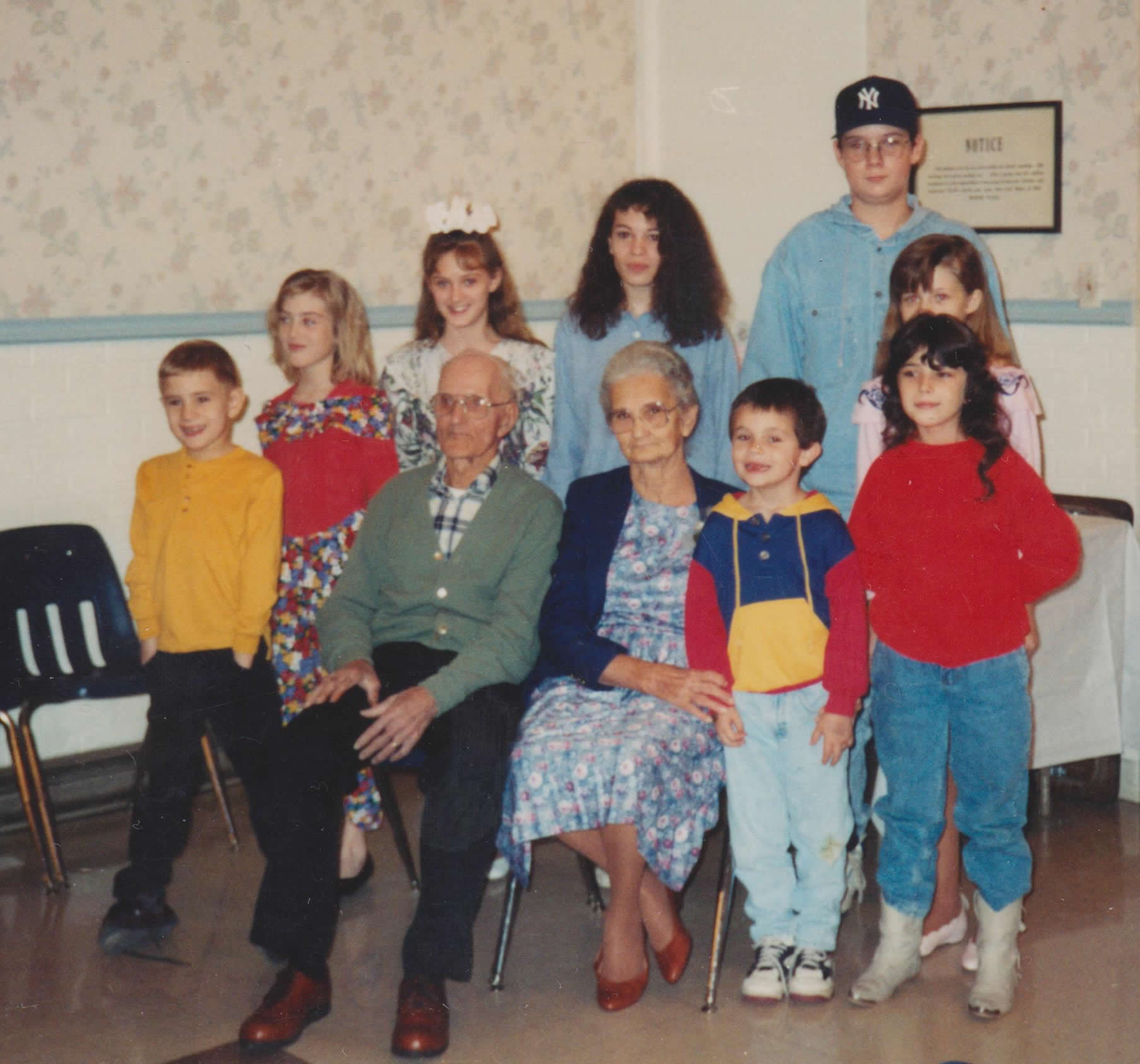
Rob and Malinda (Smith) Beaty with their great-grandchildren. (Click to enlarge)
One of the biggest regrets of my life is taking too long to get to know Grandpa. Even though in my youth my family travelled ‘back home’ on a regular basis, it was not until after my father died in 2000, that I really saw the need to get to know my grandparents. By then my paternal grandparents were deceased. But, I did spend time with Grandpa and Grandma Beaty and I still remember conversations with them — especially ones with Grandpa on his porch.
We talked about everything. He reminiscenced about cutting lumber — and I discovered he knew a lot about it. He mentioned diseases that ravish stands of timber — a subject I knew (and know) nothing about. He also talked about working on the Dale Hollow Lake project — and becoming very ill. He also just couldn’t believe that they (he and other workers) were instructed to leave felled trees to be covered up by the lake.
To him that was just wasteful.
Family vs. Nation
His WWII story surprised me, though, because I thought everyone wanted to ‘go over there and fight.’ That was the history I had learned. Because his story does not fit the national narrative, I’ve always been reluctant to tell it — especially in our era of hyper-partisanship and hyper-patriotism. Dissent and resistance tends to be vilified these days.
I also feared some would find it un-American and unpatriotic to put family above a nation. I don’t.
And neither did he.
Rob Beaty’s War Experience
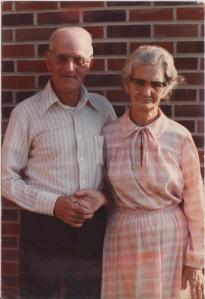
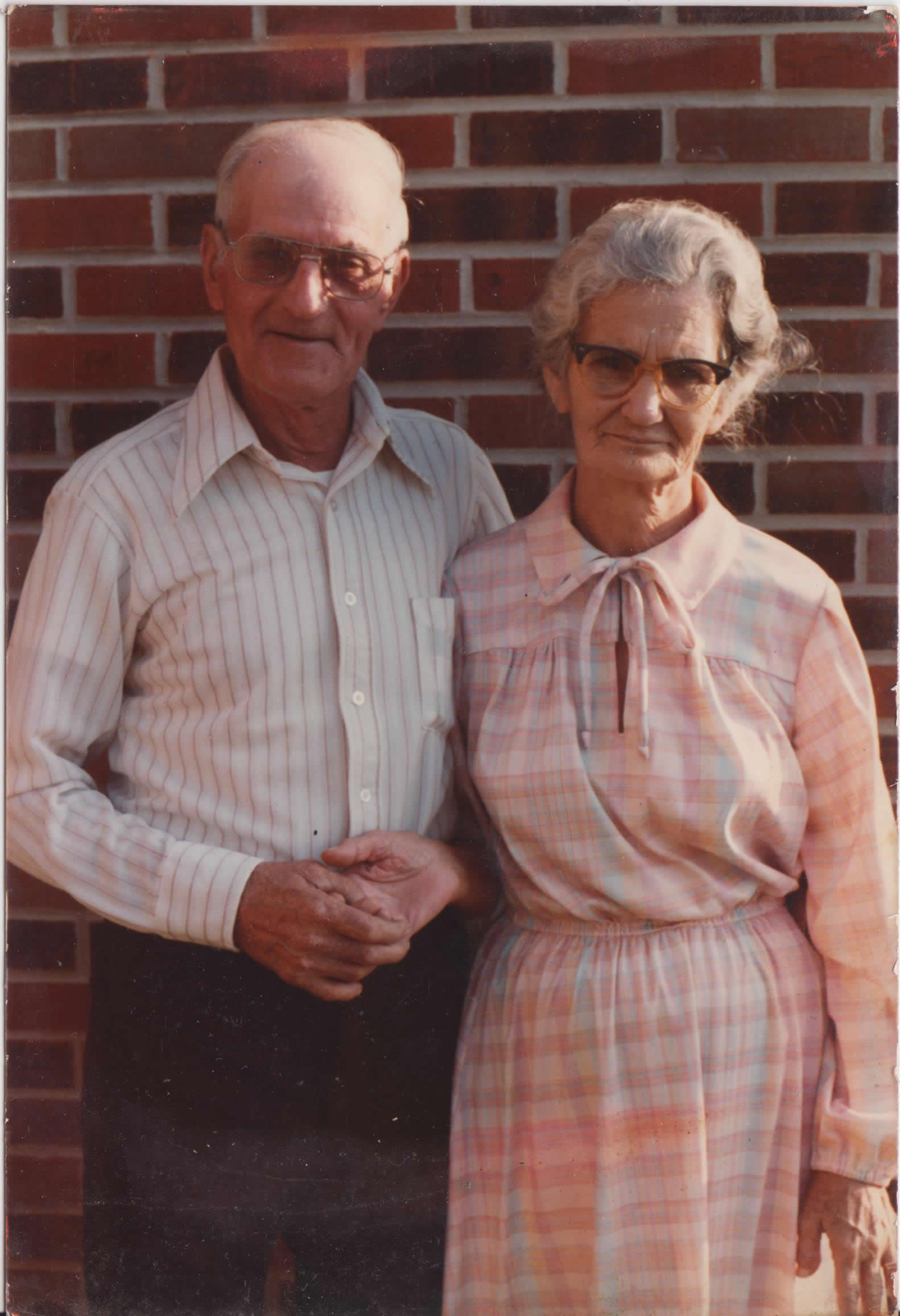
Rob and Malinda Beaty would end up celebrating more than 70 years of marriage.
Rob Beaty was born in 1915, which means when the war broke out in December, 1941 he was just a few months away from being 27. Married in 1933, Grandpa had been wed for nearly a decade and had three young children and a pregnant wife. My mother would be born within six months — in June of 1942.
So, to put his life in perspective, he was a father, a husband and not prime soldier age. Although I do not know the exact age when he was called before a draft board for active war duty, he would have been between 27 and 30.
Again, not an age most (except professional soldiers) head to war.
Grandpa Works In War Effort
After Pearl Harbor the war was largely supported by the American public. Even America First dropped their opposition — encouraging former members to embrace the effort. There was also local support for the war — WWI hero Alvin C. York, who lived in nearby Fentress County, Tennessee was actively encouraging citizens to buy war bonds. After years of refusal, York had agreed to let Hollywood film his story — garnering an Academy Award for Gary Cooper.
It was in this era that Grandpa’s first foray into WWII began when he went to work at a Indiana munitions plant (most likely Charlestown). When I spoke with him I was unaware that he had been required to register for the draft nearly two years before the Pearl Harbor attack. Since he was not in the 18-20 year-old range, he was sent to work and not to the front line.
According to my grandfather, in the war factory he was working overtime every week — and it was ‘the best money he ever made.’ Undoubtedly this is true since he would have entered the workforce during the Great Depression — and up until the War job, he worked as a laborer — clearing lumber — and as a farm field hand.
But, earning ‘good money,’ would not be reason enough for one woman to leave the Clinton County, Kentucky area. Grandpa said my grandmother refused to move to Indiana. So, when it was official she was not moving, Grandpa told his boss he would be quitting, because for Grandpa there was not really a decision to make.
He would choose his wife over war.
Grab Your Gun
Upon hearing Grandpa’s decision, the boss bluntly informed him, “If you quit Friday, by Monday you will be drafted.” Drafted, of course, meant heading to the front lines.
The situation brought out an angle I never knew about Grandpa, his willingness to resist. I knew he cared deeply for my grandmother because I heard him tell her when she had open heart surgery. He even used the L word, something I had never heard him say. His affection began in their teenage years — according to Grandma — he just never would stop ‘pestering her.’
But Grandpa’s resistance to the War, also exposed his inventive side. After all, he may be legally required to stand before the Draft Board, but that did not mean they had to want him.
He had a few tricks up his sleeves.
Have a Drink On Me
Although I can easily understand why a 27-30 year-old man would not want to take up a new career as a foot soldier, especially in an era of isolationism, the U.S. government could not.
“I didn’t want to go (to war),” Grandpa frankly admitted as we sat on his porch.
So he arrived at his hearing ‘under the influence’ (whiskey, I believe) making it difficult for doctors to examine him. He also pretended to be unable to see clearly during his eye exam — intentionally misreading the letters on the chart. (Of course, depending on the amount of alcohol consumed, he may not have been able to clearly see the letters.)
In his words, he ‘hemmed and hawed” around — and his plan worked.
He was not accepted into the military which meant he was able to grow old with my grandmother — celebrating more than 70 years together — which, I imagine, was all he ever wanted to do anyway.
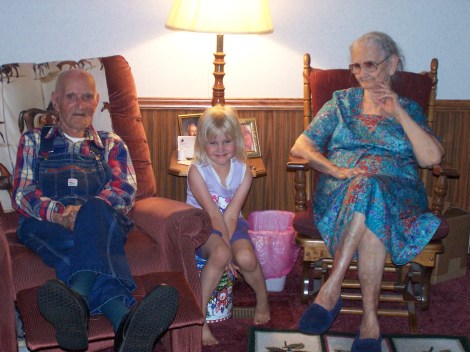
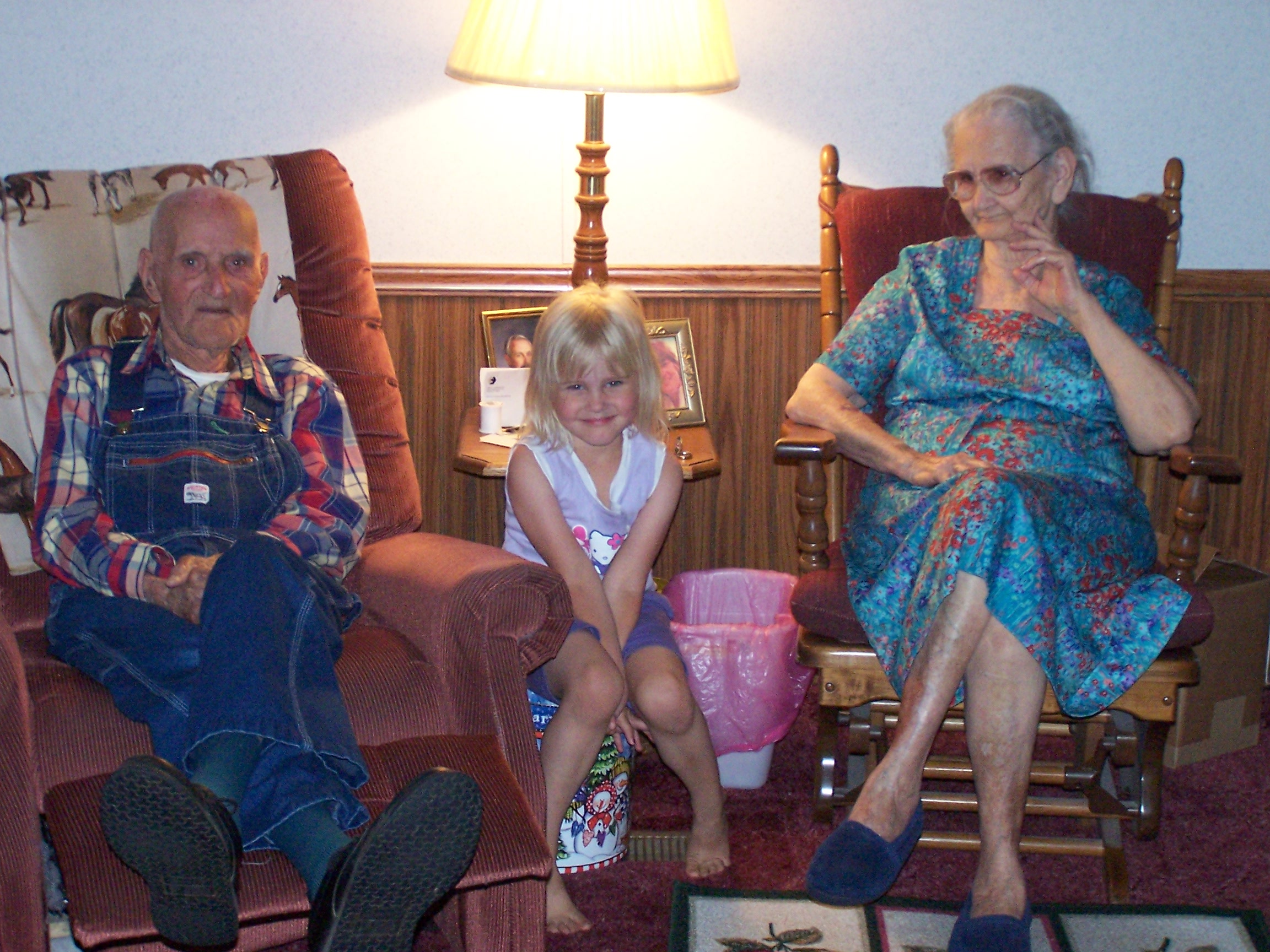
Rob and Malinda Beaty inside their Albany, Ky. home with my daughter, Molly — their great-grandchild.


 No doubt, for me, 2016 will go down as one of the most difficult ones I’ve endured. But, it ends with the hope that it is always darkest before the dawn.
 A Good Dog Is Therapeutic. Dogs add something to life. Maybe because they sleep 12-16 hours a day. Maybe because they have the brain capacity of a toddler (an age when hero worship is common). Regardless of the reason, a good dog can make the worst of days a little better. They are excellent companions for long walks in the woods. They expect little, but deliver a lot of joy, smiles, happiness and loyalty. They can teach you how to live in the Now.



 Charlie R. Claywell