
Author Archives: CharlieClaywell

Unknown's avatar

About CharlieClaywell

I have been a writer for years, mainly as a reporter, but I have always enjoyed history, especially non-mainstream stories buried inside old documents. My blog mostly centers around those stories. On occasion, though, I deviate and talk about my dog, vintage toys and what it's like to be middle-aged.

‘Becoming Madison’ A Nice Preamble To Constitution

Knowledge will forever govern ignorance; and a people who mean to be their own governors must arm themselves with the power which knowledge gives. — James Madison
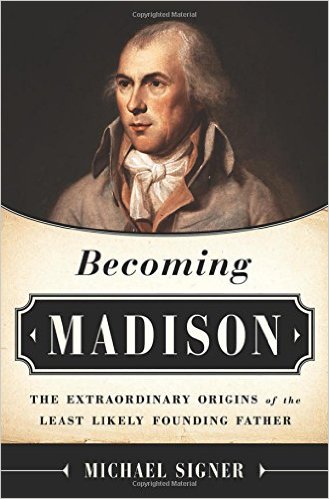
Becoming-MadisonMany an argument in America, I’m certain, has ended with the phrase “it’s in the Constitution,” despite the reality that many Americans have never read the document and would be ill-advised to debate what is in — or not in — the Constitution.

But one who man could say it with certainty was president James Madison.

Becoming Madison: The Extraordinary Origins of the Least Likely Founding Father, centers around the younger, formative years of the country’s fourth president and author of the Constitution. Most of the story is neatly sandwiched between two defining moments in Madison’s life and both incidents involve his political nemesis, Patrick Henry. In the first moment, Henry see a great political opportunity in, of all things, the decline of church membership in Virginia. Henry tries to exploit the electorate’s belief that the closing churches indicate the country is heading down the path to Hell, immorality and eventual destruction.

Salvation Through Taxation

Henry offers up a solution — the Bill Establishing a Provision for Teachers [Ministers] of the Christian Religion. The bill, which initially proved very popular with politicians and voters alike — would assess a tax on all citizens to fund churches. Since this was in the pre-Constitution era, the concept of a wall between the church and state did not exist. Madison, though, saw the inherent flaw with Henry’s popular concept and set out to defeat the proposal. Madison initially scribbled some notes on the back on an envelope contesting the concept. His note began,

The true question was not whether religion was necessary. It was whether religious establishments were necessary for religion. No.

From the simple answer of No, Madison would write a 15-point essay and address the Legislators in opposition to Henry. Madison, a short, soft-spoken man was definitely in a David versus Goliath fight when he chose to engage in political battle with the Revolutionary War icon who famously spoke, “Give me liberty or give me death.” Just as in biblical times, Goliath fell, but more importantly, it was in this singular event that led to the creation of Madison’s method of political attack. The method consisted of nine interlocking tactics:

  1. Find passion in your conscious.
  2. Focus on the idea, not the man.
  3. Develop multiple and independent lines of attack.
  4. Embrace impatience.
  5. Establish a competitive advantage through preparation.
  6. Conquer bad ideas by dividing them.
  7. Master your opponent as you master yourself.
  8. Push the state to the highest version of itself.
  9. Govern the passions.

The book ends with an even larger political battle with Henry — ratification of the U.S. Constitution. Henry was adamantly opposed to the proposed Constitution — viewing it as the enemy of freedom — and, of course, Henry was considerably influential. In fact, it was assumed in his day that if his home state of Virginia did not ratify the Constitution — then the Constitution would fail to garner the nine states needed for acceptance. In the end, Virginia narrowly ratified the document.

Unelectable Today?

Although the focus of the book is on the forces and influences in Madison’s younger years — especially the ones that channeled him into being a statesmen — the book is also filled with enough real life stories to let reader understand who Madison is. Madison, at 5′ 4″ and a 100 or so pounds, probably would not have been elected in today’s TV-driven presidential races where the passions are intentionally enflamed by demagogues. Although by no means perfect, Madison was a believer in a governmental system that kept all the various passions in check so that the good of the nation — and its citizens — would be served.

Panic Attacks

The author points out several of Madison’s weaknesses and the most pressing one was panic attacks. The problem plagued Madison his entire life. As a young man Madison — a believer in armed opposition to the British — collapsed on the battlefield unable to participate in war. At the age of 36, during the ratification process of the Constitution, Madison retreated to his room for days unable to face the controversy. Despite this weakness — which was potentially debilitating in politics — Madison rose above his pain, authored and then fought for the document that governs our nation.

Principle Proves Costly

Madison was a believer in reason and it nearly costs him his political career. He suffered his first defeat by refusing to participate in a common practice of securing votes. Most politicians in his day would supply voters with alcohol on election day and, of course, the drunker the voters became the more apt they were to cast their ballot in favor of the one supplying the alcohol. Madison felt the practice demeaned the nation, believing that those who govern had a moral obligation to be statesmen and push the state to the highest version of itself.

Final Note

In a book review it is not possible to explore all the reasons a book is worth reading and the list of childhood influences and educational choices are just two subjects the book explores that I have not touched on. But, the fact that Madison was educated under the tutelage of John Witherspoon was extremely influential in the creation of the U.S. Constitution. It was while being pushed, educated and challenged by Witherspoon that many of the ideas in the Constitution first surfaced.


Rated 5 out of 5. Before reading the book all I knew about Madison was he authored the Constitution and I was pretty sure he married Dolley. After that I knew little about the man. After reading the book though, I must say, my impression of Madison is he was a man of principle and believed that for a country to succeed, strong checks must be in place to counteract voters’ passions. His main weakness, I would contend, was he put too much faith in the morality of elected officials, presuming they would govern from a sense of morality and the higher good.

Categories: American History, American Revolutionary War | Tags:

Why Your KJV Bible Isn’t The Same One Your Great-Great Grandparents Read

1760_Cambridge_Edition_King_James_BibleBecause of my background with the Christian church and my laymen’s knowledge of the Bible, my wife and daughter — who attend a local Protestant church — often ask me to explain various Biblical verses. But starting from when my daughter was a young child I attempted to tell her all angles of a passage whenever I could. For example, if she asked about baptism, I would, to the best of my ability explain what the various churches taught on the subject. Whether this was the best approach, she’ll decide as she ages, but it was my attempt to let her find her own truth.

That being said, both my wife and daughter have asked me on multiple occasions how the Bible came to be. I struggled with a method of explaining that although some believe “God spoke it” and it just appeared, the history is not quite that simplistic. I finally found a succinct (less than 100 pages), interesting book published posthumously by a United Methodist minister that explains the history of the Bible in an enjoyable, understandable way — giving just enough of the process to move the story forward without burdening the reader with all the intricate details of how each translation came into existence.

Old And New Testaments

How the Bible Was Built starts with the discovery of the first Old Testament text — Deuteronomy — and ends with the various modern translations that exist. As the authors explain not all Old Testament books were considered Holy Scriptures by Jews, in fact, they explain, for some Jews (and quite possibly Jesus), the Old Testament consisted of only the first five books of the modern Bible.

As far as the New Testament, the authors say that by about 200 A.D. a list of books considered Holy Scripture had been compiled. And the first complete manuscript of the New Testament discovered — The Sinaitic Manuscript — closely mirrors the modern New Testament with the exception that the Sinaitic Manuscript contains two additional books: The Shepherd of Hermes and the Letter of Barnabas.

But What About Those Pesky Books Between The Old And New Testaments?

What the authors accurately point out is in many of the original manuscripts — including the original King James Version — were 15 books collectively known as the Apocrypha. (The pulpit Bible at the church I grew up in contained these books.) Although most Protestants eventually dismissed these books, the Catholic church still recognizes 12 of them as Holy Scripture.

When the KJV was first published, printers who removed the Apocrypha from the text were subject to heavy fines and jail time because King James was adamant that the books belonged inside the Bible. However, by the mid-1800s, the books were eventually removed from most — and basically all American — versions of the King James Bible as reformers contended that originally these books were seen more as holy works and not as holy scripture.

What Did People Read Before The King James Version?

The KJV is without a doubt the most widely-known English version of the Bible, although today it only represents about 15 percent of translations consumers buy. As How The Bible Was Built points out several versions of English Bibles existed before the KJV. Three of the most notable ones were the:

  1. Geneva Bible (which King James found deplorable because of all of the notes in the margins)
  2. Tyndale Bible
  3. Coverdale Bible, published in 1535, was the first complete English Bible.

What Ended The Debate on Which Books Were Included In the Bible

According to the authors, the debate over which books belonged in the Bible changed over the course of about 1000 years. As they note, The Shepherd of Hermes almost made it in while the Revelation of John barely made the cut. But the end-all event that defined what books would or would not be included in the Bible was the invention of the printing press. Once Bibles were printed, it effectively ended the debate.


Trivia

Indirectly the Apocrypha played a role in the discovery of America. When Christopher Columbus petitioned King Ferdinand and Queen Isabella for funds to launch his exploration he quoted Esdras 2: 42,

On the third day thou didst command the waters to be gathered together in the seventh part of the earth; six parts thou didst dry up and keep so that some of them might be planted and cultivated and be of service before thee.

Columbus surmised after reading this passage that since the earth was only 1/7th water a trip from Europe to Asia would be relatively short.

Categories: Religion | Tags:

The Lure Of A Good Book & Bookstore

22651439113_88b420ce71_zIf you’ve read this blog for any length of time, you’ve figured out that books are a huge part of my world. I love to read. Books have a way of introducing a world beyond our reach, presenting new ideas, repudiating old ones — and sometimes just filling our time with a great story.

Of course, in the Internet age, the most common way to acquire these books is by buying them online, which is a shame.

Buying books online, although convenient, robs the buyer of the ability to browse, peruse and in general sample books in a determined, yet casual way that pixels can’t emulate. Online buying takes away the ability to glance at the other books on a nearby shelf and see if a book ‘over there’ is more appealing. Online effectively removes the element of chance and the role that chance plays in securing the perfect read.

Independent Book Stores

Stores that deal in the obscure, collectible or hard-to-find book have been always been my favorite. Although the names of the many establishments I have visited escape my memory, bookstores and the rarities they house have punctuated many trips — from the small, out-of-the-way store in Newport, Rhode Island, to the mammoth store in Columbus, Ohio with its room-after-book-filled-room of reading materials.

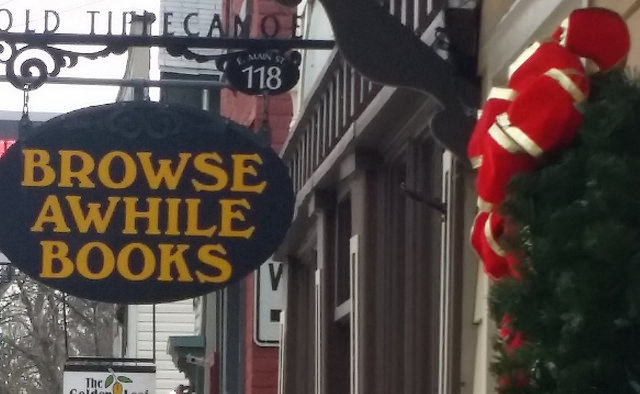
I recently discovered a new store, one that is close and convenient. Located in Tipp City, Browse Awhile Books with its casual organizing style encourages hours of browsing. Located on the right wall as you walk into the store is a collection of Mark Twain books — a collection of about 20 hard-back vintage classics — with familiar titles like Huck Finn, Tom Sawyer and less well-known novels like Puddin’ Head Wilson. The books are a reminder of when literature, like Twain’s, addressed that uncomfortable reality that all of us are flawed, societies fail and even a perfect world like the garden of Eden was doomed from the beginning (Eve’s Diary).

But the store is more than books from Twain or other literary figures, included in the store’s mix are modern books like Men Are From Mars, government pamphlets, scholarly works from multiple eras as well as romances, westerns and young adult. There is even an entire room dedicated to science fiction. For me, the sheer volume of books show how little I know. As I glance across the titles and authors, though, I find inspiration in knowing how much I can learn by devoting a small segment of time every day to a subject — any subject.

Chance Finding

Just up the road from the Tipp City store is another favorite source of mine for books — Goodwill. In a world of strange coincidences offset by orderly design, the books in Goodwill call out to me in a different fashion — by title, cover design or juxtaposition. Here I often find books outside my normal reading scope of American history or American politics. Today is no different. Sandwiched between Love and Hate in Jamestown (which I bought) and Lord of the Flies (which I bought for my daughter) is a book about the art of furniture making. This paperback book — printed in 1980 by the Popular Mechanics Company — is a three-part book filled with designs and techniques for building Mission Furniture. The book explains everything from the advanced skills required to bend and curve wood into intricate pieces of furniture to simpler, almost beginner patterns for a window chair, book trough and hall bench.
Although I know spending time with any book is not such a bad hobby, I’m learning that neither is reading a book about furniture making. In some ways, the second approach is better than the first since I get to do what I love — read — while also expanding my life’s experience.

For me, it’s a win-win.


Trivia

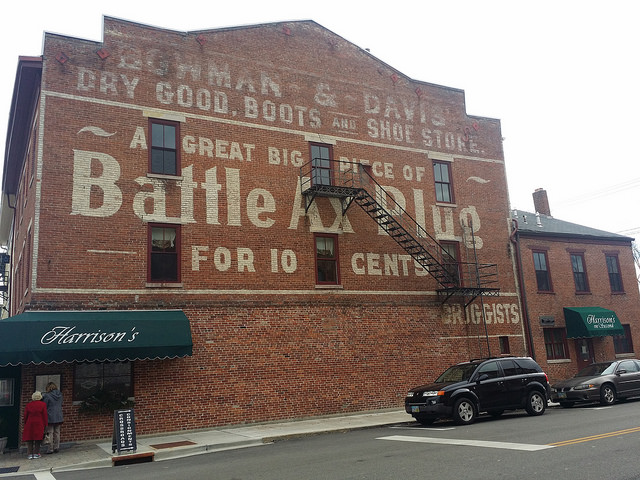
Tipp CityBefore it was renamed, in 1938, Tipp City was known as Tippecanoe. Tippecanoe was part of a presidential slogan that brought Ohioan William Henry Harrison (Old Tippecanoe) to the White House. Harrison, the first candidate to actively campaign for the presidency had a catchy slogan: Tippecanoe and Tyler too. Some historians claim the slogan was one of the most memorable in U.S. history. Catchy or not, it did not help much with Harrison’s actual presidency since he died just a month after taking office.

Categories: Ohio | Tags: