Author Archives: CharlieClaywell

Unknown's avatar

About CharlieClaywell

I have been a writer for years, mainly as a reporter, but I have always enjoyed history, especially non-mainstream stories buried inside old documents. My blog mostly centers around those stories. On occasion, though, I deviate and talk about my dog, vintage toys and what it's like to be middle-aged.

Stranger’s Kindness Delivers Vintage Claywell Photos

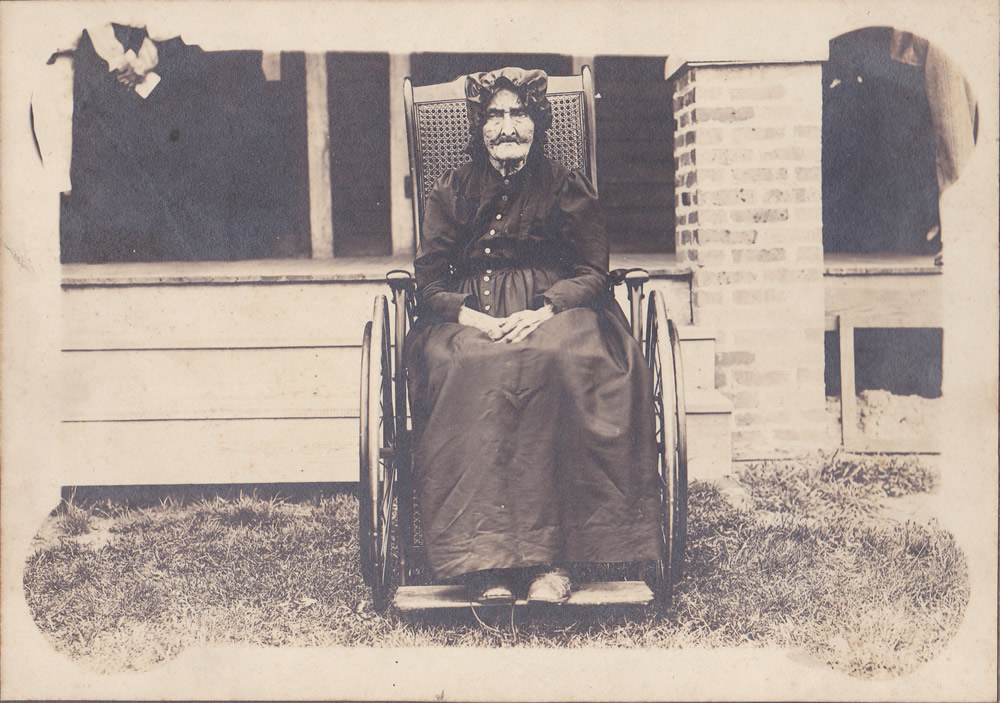
Sarah Vincent Claywell at her 100th birthday celebration.

Sarah Vincent Claywell at her 100th birthday celebration.

A few months ago I wrote about Sarah Vincent Clayweil’s 100th birthday celebration. In the post, I said hopefully someone held on to photos taken of Sarah at the celebration.

Turns out someone did.

Photos Found In Texas

Click on photo to enlarge. Sarah's children or grandchildren?

Click to enlarge. Sarah’s children or grandchildren?

All of the photos in this post are, in one way or another, associated with Sarah Vincent Claywell — including the top photo which is from her 100th birthday celebration.

A person connected to the family line of one of Sarah’s daughter-in-laws forwarded images she had received from Gloria Brown. Gloria’s husband is a descendant of Sarah’s grandson and wife — Sanford (pictured below) and Annie Curry. Gloria found the photos while cleaning out a garage in Texas. The photos were in a box marked “Martha’s pictures.”

Sanford is Nancy Isabelle Claywell Curry’s oldest son. (Family historians: Nancy went by Belle). As I noted in the previous post, Belle is mentioned in Sarah’s will as her deceased daughter. According to the will, Belle’s four children, Sanford, James, Cora and Nora receive $1 to $25 when Sarah’s estate was settled.

Who’s In The Images

Sarah Vincent Claywell is seated in the wheelchair. Based on newspaper articles this image is taken at a daughter’s home.

Two possibilities exist for the image of the two young women pictured above. The first possibility is they are Sarah’s grandchildren — and Belle’s twin daughters — Nora and Cora. The other possibility is they are Sarah’s great-granddaughters — Cora and Willie Roe’s twin daughters, Mable Faye and Anna May.

Click on Image to enlarge. Pictured, front row, William Curry and Nancy (Belle) Isabelle Claywell Curry. Their sons, Sanford (back row) and James; twin daughters Nora and Cora (uncertain of order).

Click to enlarge. Pictured, front row, William Curry and Nancy (Belle) Isabelle Claywell Curry. Their sons, Sanford (back), James; daughters Nora and Cora.

The photo to the left is Belle with her family: Husband William Curry and children Cora, Nora, James and Sanford. According to Sanford’s 1958 Missouri death certificate (also sent to me), Sanford — a farmer — was 80 when he died. He was born in Glasgow, Ky.

True Treasures

Receiving old photographs like these is always greatly appreciated. Vintage images and old documents are visual reminders of the family thread that runs through us all, and I wholeheartedly agree with the lady who sent me the photos. She wrote,

Sarah V. Claywell

Sarah V. Claywell

It is hard to find words to describe how a picture of a person (who shares your genes) can fill in a space inside you that you didn’t know was empty, making you stronger and your life richer because of it…. I am humbled to have been given such treasures to care for and direct their path.


Categories: Claywells, Family History, Genealogy | Tags: ,

Recipes, Diary Reflect Simpler, Authentic Era In U.S.

Quote: Give it Your AllSince I mostly blog about United States history, I read several bloggers who write about Americana and American history, and I’ve always had a preferences for those that delve into topics about everyday life. One blog I really enjoy reading — A Hundred Years Ago — originally began as entries from a diary kept by the blogger’s grandmother. As the site notes,

My grandmother, Helena Muffly, kept a diary from 1911-1914 when she was a teen living on a farm in central Pennsylvania. The original purpose of this blog was to post Grandma’s diary entries, as well as background and contextual information, a hundred year’s to the day after she wrote them.

Once the contents of the diary were explored, the blogger turned her attention to old family recipes — another topic I find interesting.

In her most recent post, the blogger discusses an vintage recipe for Old-fashioned Apple Raisin Stuffing — a tasty alternative to other less sweet stuffing (like my mother’s cornbread stuffing which is my perennial favorite).

As a family historian, one of my regrets center on food. I wished I’d videotaped my grandmothers baking their best recipes (at least in my opinion). For my maternal grandmother, Malinda (Smith) Beaty, that would be her buttermilk biscuits and for my paternal grandmother, Mary (Lewis) Claywell, it would be her cornbread. And, although, not a favorite of mine, I also wish I’d taped Grandma Claywell making watermelon preserves because of its uniqueness.

Many of life’s greatest memories, it seems, occurred at family picnics or around a dinner table. So, if you are looking for an ‘old-time’ recipe A Hundred Years Ago has plenty — everything from Black Walnut Taffy to Creamed Dandelion.

Categories: Blogs I read

‘How We Got To Now’ Tells Story Of Unsung Inventors

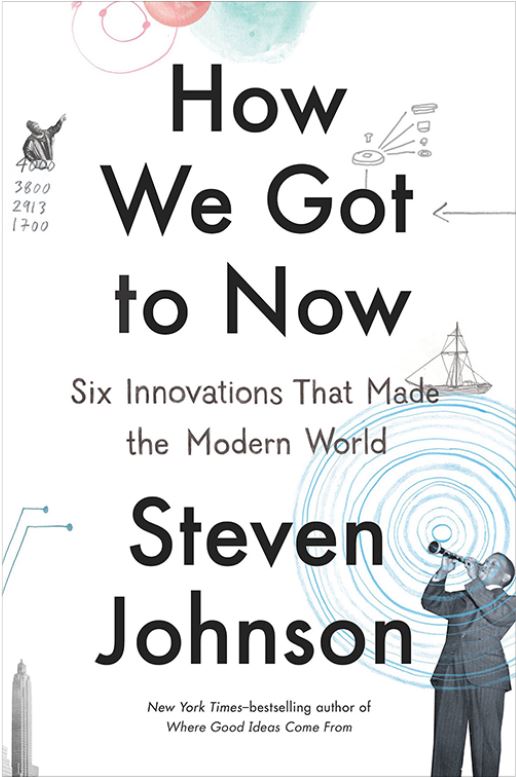
steven-johnson-how-we-got-to-nowHow We Got to Now: Six Innovations That Made the Modern World by Steven Johnson is by far one of the most interesting history books I have read. Johnson provides an in-depth look at the history for six technologies that impact our daily lives.

The six subjects Johnson explores are:

  1. Light
  2. Clean
  3. Cold
  4. Time
  5. Sound
  6. Glass

As you read through each subject, you will brush upon names you know, but the overwhelming majority of the stories are about people you have never heard of, but these unknown people were instrumental in creating the technology.

In the story of light, Johnson explains that although the usual telling of the story about the light bulb is Thomas Edison worked hard and finally figured out how to create a working electric bulb. But, Johnson says, saying Edison invented the light bulb is like saying Steve Jobs invented the mp3 player. Johnson goes on to list name after name of inventors who had already created a working light bulb. Edison greatest contribution to innovation, Johnson asserts, was his ability to assemble one of the greatest teams of inventors, specialists and makers.

In the story of light, Johnson also speaks to colonial use of whale oil for candles. As a child I always presumed that whale oil was created from whale blubber. Johnson explains, though, that the whale oil is extracted from sperm whales. These whales carried as much as 500 gallons of oil in the cavity above their brains. To harvest the oil, men would carve a hole in the side of a dead whale’s skull, climb inside and then remove the oily, sticky substance.

Johnson goes back to the original discovery or creation of the product in each of the topics and then traces that technology’s history up to the present day. Along the way, he reports on some of the unintended consequences of the products (like the creation of household bleach) and how some of these inventions changed social norms (air conditioning changed the country’s political map).

There is also a PBS series based on the book. It was released in 2014.

Rated: 5 out of 5 stars. This is a very enjoyable and engaging read especially for those who enjoy the history of inventions or learning about the hobbyists and non-mainstream inventors who re-invented the world.

Categories: Books I have read