 Note: This is the last of the four entries about Albion’s Seed: Four British Folkways in America by David Hackett Fischer. If you have not read his book, and are interested in the American Colonial Era, I highly recommend it. Click here to access all the posts in this series.
In this post, I’ll examine the same three folkways I did with the other colonies: Sex, Recreation and Money. In the book, Fischer examines about 20-25 folkways for each colony.
The last group highlighted in Albion’s Seed are also the late arrivers — coming to North America from 1717 to 1774. This group of immigrants, generally referred to as Scott-Irish, actually originated in the border region of northwest England.
They landed mostly in the Quaker Colony of present-day Pennsylvania, but in a rare twist of events, the Quakers, who had created the most religious and ethnically diverse settlement in North America at that time, did not want them and encouraged the settlers to head to the backcountry.
So, they ended up in present-day Appalachia.
Let’s look at how their beliefs on the Big 3: Sex, Money and Fun compared to the other three colonies.
Money. One persistent image of settlers in the Backcountry Colony is that of the rugged individualist living off their own piece of land. The reality, though, then — and now — is much starker.
In the 18th century as many as one-third to one-half of the taxable white males in the region owned no land. It was not any better a century later. According to Census reports from 1850 and 1860, in a sample of eight Tennessee counties, the wealthiest 20 percent of the region owned 82 percent of the improved land and 99 percent of the slaves. In 1983, the top 1 percent of land owners possessed nearly half of the land in Appalachia. The top 5 percent owned nearly two-thirds.
Fischer notes,
This pattern of wealth distribution in the southern highlands in the twentieth century was much like that which existed two hundred years earlier.
However, Fischer does note, one of the counties in Kentucky that had a more equal distribution of land was Cumberland County. Both the Beatys (my maternal line), and the Claywells lived in Cumberland County. The Claywells originated in the Virginia Colony. The Beatys were members of the Backcountry Colony. (They also fought in a decisive Revolutionary War Battle).
Recreation. Because of the conflict that existed in the Border regions of England (where these immigrants originally lived) many of the games and sporting activities transported here were contests of ‘courage, strength and violence.’ Some of the games have fallen out of vogue, but some, like wrestling lives on. Two types of wrestling existed. One was a regulated bout — similar to tournaments held today in high schools. The other type was a no holds barred free-style where everything was legal. These bouts only ended when the opponent ‘gave up.’
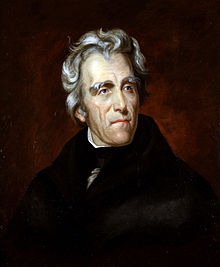
Other popular recreational activities imported from England included running, jumping, leaping, and axe or spear throwing contests. Of course, many of these activities laid the foundation for modern Track and Field events. One of the Backcountry Colony’s most famous sons, President Andrew Jackson, was known in his youth for his exceptional running and leaping skills.
But, not all the recreation in the Backcountry was imported from the Mother Land. A case in point is sharpshooting. Since bullets tended to be a valuable commodity, back settlers become highly skilled at hitting distant marks, often using a tree or other support to steady their gun. In the 20th century, one of the region’s most famous sharpshooters was WWI hero Alvin C. York.
Sex. Although the Puritans were very comfortable discussing sex, these conversations did not come close to the familiarity that the backcountry colony had with the subject. Sex was discussed openly and one’s beauty was often, contrary to customs in other parts of North America, put on display. In the late 1700s, Anglican Church missionary Charles Woodmason commented,
The young women have the most uncommon practice, which I cannot break them of. They draw their shift as tight as possible round their breasts, and slender waists and draw their Petticoat close to their hips to show the fineness of their limbs… indeed nakedness is not censurable or indecent here.
The sexual mores of the newly inhabited region were also different from the other three colonies in another area.
In 1767, Woodmason determined that 94 percent of the brides, whose weddings he had officiated, were pregnant. He attributed this number to two factors: the lack of clergy in the region and love feasts. Love feasts, celebrated at night, included significant amounts of alcohol, and often ended with unwed couples in bed, according to Woodmason. But these prenuptial pregnancy were handled differently than in the other three colonies. In the other colonies, formal prosecutions for fornication were usually launched — and one or both of the guilty parties punished.
In the backcountry, prenuptial pregnancy was not viewed as a legal issue.
Trivia
 As highlighted in Killings — Folk Justice in the Upper South, one of values of the region centers on a unique approach to justice. Carried from the border land regions of England, justice was meted out under a simple rule of retaliation. The principle could be boiled down to this:
A good man must seek to do right in the world, but when wrong is done to him he must punish the wrongdoer himself by an act of retribution that restores order and justice to the world.
According to Fischer, a young Andrew Jackson was told by his mother to “never tell a lie, nor take what is not your own, nor sue anyone for slander, assault and battery. Always settle them cases yourself.”
Apparently Jackson took her advise to heart because he is the only United State’s President to have killed a man in a duel. The duel was fought over an insult levied at Jackson’s wife, Rachel.
 If you are like most people you don’t give much thought about the change in your pocket or purse — and you may even get annoyed with the person in front of you at Walmart as they try to find that elusive nickel, dime or penny.

 . The author breaks down the colonies, not by states, but rather by region and he looks at the settlers’ unique customs.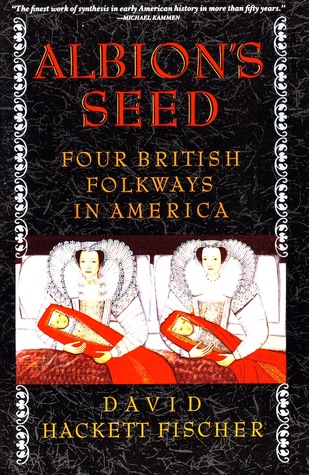



 Charlie R. Claywell