American History

How 10 Percent Of The Voters Made A Choice Everyone Has To Deal With

-flagsI know this is sacred territory. Some Americans equate voting with the only civil right that matters.

But does every vote matter — or is it possible the system is flawed?

Growing up I heard a lot of folklore about the ‘one vote that mattered’ in elections, but as far as a I can tell, there have been very few, if any, significant elections altered by a single vote. The only one that comes to mind for me is the 1876 Presidential election, which was in fact decided by one vote. But the election is hardly an example of how well the system works. It is just the opposite and the election is a black spot on America’s past.

I write about this because I live in Ohio’s 8th Congressional District. House Speaker John Boehner, just two steps away from presidential power, has represented this region for decades — ever since he was first elected in 1990.  Since 1990, besides running unopposed several times, he has never faced any serious competition.

But, the region is hardly prosperous. Parts of the gerrymandered district  are under-employed, impoverished and in decline. Although not responsible for all the woes that have beset this area, Boehner seems to have done little to stem the economic fallout.

Which goes back to the original question, does every vote really matter.

In Ohio, we use a closed primary system. What this means, in a nutshell, is every May (sometimes March), when it is time for voters to decide who will appear on the November ballot, not everyone has a say. FairVote.org offers this explanation of closed primaries,

In a closed primary, only voters registered with a given party can vote in that party’s primary. Parties may have the option to invite unaffiliated voters to participate, but such independent voters usually are left out of the primary unless they decide to give up their independent status.

So during the primary, a large percentage of voters in Boehner’s home county of Butler and in Preble County, where I live, do not cast a vote for their potential Congressmen — instead being required to wait until November.

In fact, in the 2014 May primary, 83 percent of the 234,320 Butler County voters (193,833) had no say. In Preble County, a region which is small enough that its voting base has no sway on national politics, 65 percent — or 17,800 voters had no say in who would be on the November ballot as their potential representative in Congress.

Or to put it another way, only a small number of voters in the 8th District do decide which candidates end up on the ballot.

In Butler County, 19,900 voters chose Boehner as their party’s candidate for the 8th Congressional District while 3,631 chose Tom Poetter as the Democrat candidate — but all of the county’s 234,320 voters have to accept it — and then choose between them come November.

Which, one could argue, doesn’t really reflect the will of all the people.
Categories: 8th congressional district, American History

Covered Bridges Showcase Heritage In Ohio’s 8th District

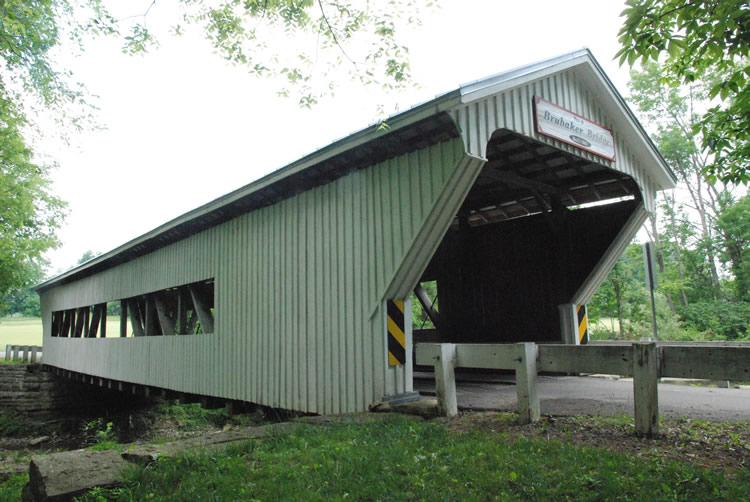
Brubaker Bridge, located just outside of Gratis, Ohio in Preble County.

Some say the Brubaker Bridge, located just outside of Gratis, Ohio is haunted.

The first time I rode across a covered bridge in Preble County as a kid, I was mesmerized by the idea. Of course, little did I realize then just what a trademark they were for the county.

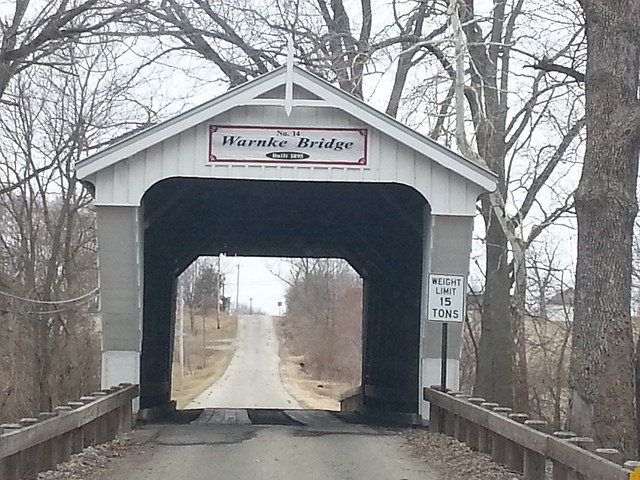
Warnke Bridge, Lewisburg, Ohio.

Warnke Bridge, Lewisburg, Ohio.

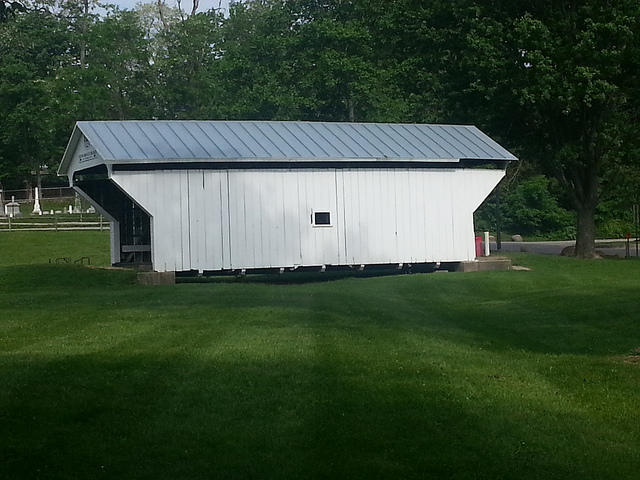
Six of the county’s eight covered bridges still in existence were built by E.S. Sherman in the late 1800s — who used the somewhat antiquated Childs truss patent for the structures. In fact, only one bridge was ever built out of Preble County with a Childs truss — and that one was also built by E.S. Sherman. Of these Sherman-built bridges five are still in operation. The sixth one has been restored and placed inside the community park in Lewisburg.

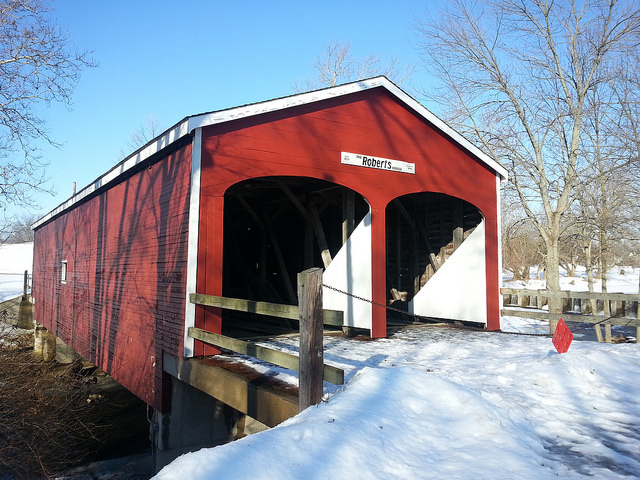
Roberts Bridge, Eaton, Ohio.

Roberts Bridge, Eaton, Ohio.

Roberts Bridge was restored after vandals set it on fire in the late 1980s/early 1990s. The incident led to the restoration of all the county’s covered the bridges with efforts to make them flame resistant.

Built in 1829, Roberts Bridge is Ohio’s oldest covered bridge — and the second oldest double-barrel (two lane) covered bridge in the United States. The bridge is no longer in use and spans Seven Mile Creek in Eaton, just a few blocks off of U.S. 127 on the south end of town.

One of the bridges, the Brubaker Bridge, lands on various haunted lists. The claim is a group of teens in the 1930s crash their vehicle through the side of the bridge (it is built on a curve) and their bodies were not discovered for several days. Now they haunt the structure.

Several events are held throughout the year  to celebrate the county’s unique heritage. One of the most popular events is the Bridges, Bikes and Blues event hosted by the Preble County Historical Society. The all-day event attracts bikers from throughout the Tri-State area. The PCHS also published a map brochure of all the county’s bridges which individuals can use for self tours.

In 2012, the county unveiled its eighth covered bridge. The Burr Arch design bridge — a truss style patented in 1804 —  is located at Hueston Woods state park. It is the first covered bridge to be built in the county for more than 100 years and is designed with walkways so pedestrians can also enjoy the view.

Restored covered bridge located in Lewisburg's community park.

Restored covered bridge located in Lewisburg’s community park.

Categories: 8th congressional district, American History, Mystery, Ohio Events | Tags:

Amphicars Make A Splash At Annual Ohio Show

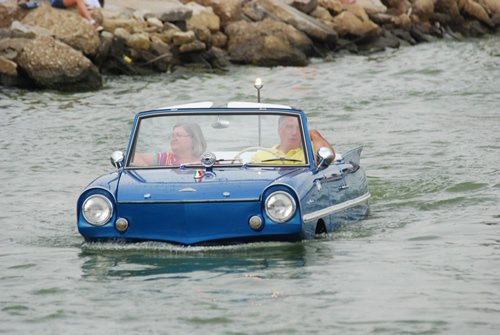
An amphicar cruises in St. Mary's Lake during the 2014 Lake Festival in Celina, Ohio.

An Amphicar cruises in St. Mary’s Lake during the 2014 Lake Festival in Celina, Ohio.

Lake Festival in Celina, Ohio is a free event that has a fair-like quality to it — with plenty of deep-fried food — and is held on the banks of St. Mary’s Lake each year in July. This year’s event was held July 25-27, and included the Friday evening ‘Splash Inn’ where Amphicars from California, Michigan to Ohio drove down a wooden dock, splashing into boat mode before navigating through an tunnel and out onto St. Mary’s Lake. | View Photos

Since relatively few cars made it into the U.S. only a handful of the cars are at the event (maybe 15) which is why the event is extra special because it is one of the few times you will see an Amphicar  — especially one operating in boat mode.

Between 1961 and 1967 slightly more than 3,000 of the vehicles were imported into the United States. The vehicle’s model number 770 comes from the fact that the car can do 7 knots on water and 70 mph on land. This was accomplished with a 43-hp Triumph engine.

Amphicars hold the distinction of being the only civilian amphibious passenger automobile ever to be mass produced.

Presidential Favorite

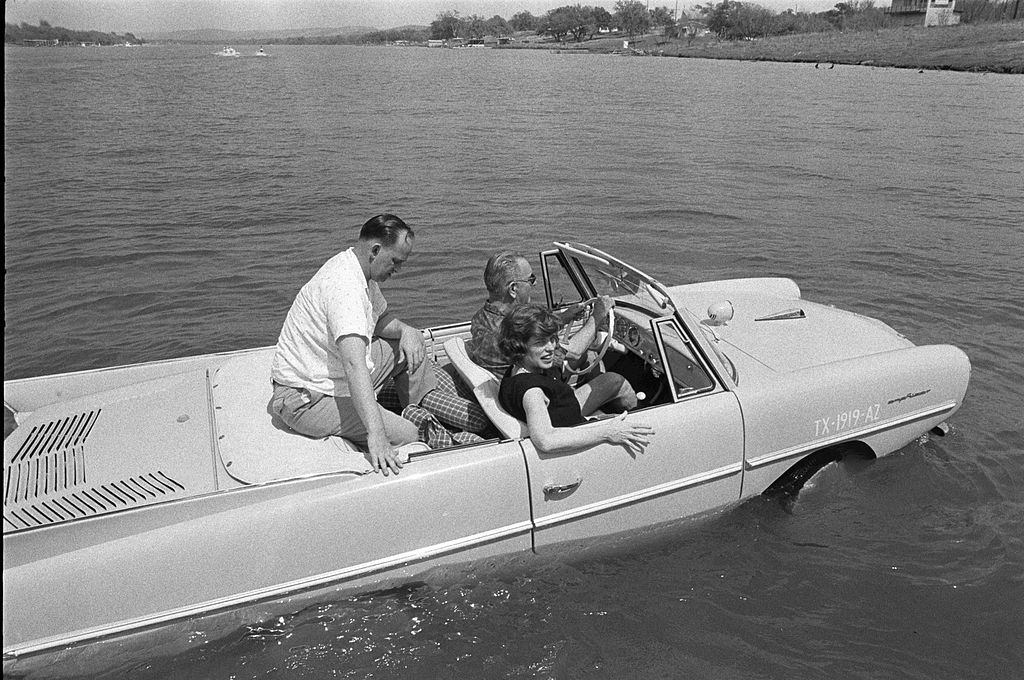
1024px-LBJAmphicarPresident Lyndon B. Johnson owned a Lagoon Blue version and used the vehicle to prank an unsuspecting passenger by telling the passenger that the brakes weren’t working as he ‘crashed’ the car into a lake.

To learn more about the Amphicar visit:

Amphicars: This is an enthusiast site and offers recent news, history of the vehicle, links to vehicles for sale and upcoming events associated with the Amphicar.

The International Amphicar Owners Club: Click on this link to find upcoming ‘swim-ins’ across the United States.

eBay: Occassionally a few will be listed for sale on the eBay Motors website.

Categories: 8th congressional district, American History, Ohio Events