
American History

Mark Twain On The Hypocrisy Of Prayer

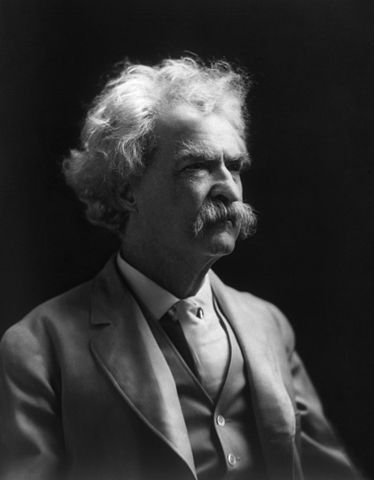
374px-twain1909Although I agree with the premise presented in The History of Prayer in America by James P. Moore Jr. that prayer has been a very common thread among Americans throughout our history, at times the book overplays the importance of public prayer by politicians by ignoring the politics behind the act.

Not every politician that prays is a believer — some are just exploiting those who are. And, some politicians offer prayers that are woefully (intentionally?) naïve of the societal ills (and their solutions) that exist in their own communities. These individuals often oversimplify complex problems — expecting God to solve everything without any intellectual, spiritual or humane work on their part.

Prayer For Our Soldiers (But Not Theirs)

When it comes to dealing with America’s hypocrisy, few did it better than American humorist and satirist Mark Twain.

By the end of his long literary career Twain had grown very tired of America’s imperialism, patriotic fervor and, in general, the gullibility and hypocrisy of the Chosen. Around the time America went to war with Cuba in the late 1800s, Twain wrote a short story for Harper’s Bazaar called War Prayer, but, as Moore reports in his book, the story was rejected because Twain’s publisher feared the work would impede the sales of his other books.

After Twain’s death, though, Moore notes, the story was published in Harper’s Weekly (1916).

In Twain’s story an old man interrupts the prayer service of the patriotic saints — as the minister is beating the war drums. This old man wants to teach the saints how to pray more honestly, because as he explains, when a farmer prays for rain for his crops, that same rain may destroy his neighbor’s harvest.

But, his most pressing goal is to teach the church the most effective way to pray about our wars — brutally honest. Get rid of all political correctness and cut to the chase. Part of the old man’s prayer goes like this:

O Lord our God, help us tear their soldiers to bloody shreds with our shells; help us to cover their smiling fields with the pale forms of their patriot dead; help us to drown the thunder of the guns with the shrieks of their wounded, writhing in pain; help us to lay waste their humble homes with a hurricane of fire; help us to wring the hearts of their unoffending widows with unavailing grief; help us to turn them out roofless with their little children to wander unfriended in the wastes of their desolated land in rags …

For our sakes who adore Thee, Lord, blast their hopes, blight their lives, protract their bitter pilgrimage, make heavy their steps, water their way with their tears, stain the white snow with the blood of their wounded feet!

In the original version of the story the old man’s words are typed in red ink.
Categories: American History, My America

Untold History Of The United States Highlights Obscure Stories, People And Events

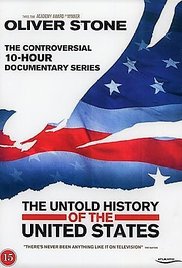
untoldhistoryOliver Stone established himself as a film director in the mid-1980s with Platoon — the classic Vietnam War movie that make Charlie Sheen a household name.

But, in his 2012 10-part documentary Untold History of the United States, Stone re-establishes himself as a historian on the small screen as he offers a fresh view of 20th century America history. He does this by telling the stories mostly lost — or underreported — in America. In the opening episode Stone sets the stage for where he is going by quoting Napoleon:

History is a pack of lies agreed upon.

Vice President Henry Wallace

The series begins with WWII, but instead of simply displaying reel after reel of war scenes, Stone ventures into the backstory and political maneuvering that unfolded among the world leaders at that time. The series ends with the Age of Terror of the modern era.

One of the most interesting episodes for me was Episode 2 when I learned about Henry Wallace. Wallace, a vice-president in the FDR administration, was instrumental is salvaging the farming industry in the 1930s– but, he also fostered some odd beliefs. He was eventually pushed off the ticket during FDR’s final presidential campaign. Stone poses the question about what type of world would have existed had Wallace, and not Harry Truman, become president upon FDR’s death.

America as Empire

Throughout the series, Stone presents the United States’ history as one of an imperialistic country expanding its empire. He shows her strengths and weaknesses, but mostly he challenges the conventional story we learned in high school.

The series is very information dense, so if you are looking for a surface understanding of the United States in the 20th century, it will not appeal to you. Those viewers, though, could view a condensed version of the documentary by watching episodes 11 and 12.

Those watching the entire series will walk away with a more complete understanding of their country. The hour-long episodes are entertaining and thought-provoking.

My only criticism of the series is, unfortunately Stone does not have a good ‘narrator’ voice and, at times, it lacks inflection.

The series is available on Netflix and online.

Categories: American History, WWII

Metal Homes Capture Optimism Of 1950s U.S.A.

Years ago when my daughter was younger we headed to Dearborn, Michigan to visit The Henry Ford Museum. Although plenty of interesting, historical items are on display, one I found most interesting was a prefab, metal home built in the late 1940s: The Dymaxion House.

As if being metal was not a unique enough feature, the home was also round.

The home was one of several efforts by U.S. companies to make housing more affordable for Americans — and to cash in on the housing shortage. In a 2001 New York Times article discussing the Ford Museum acquiring a prototype of the home they report,

The Dymaxion has about 1,000 square feet of floor space, but weighs under three tons. Though mass production never came to be, Fuller’s intention was to ship the 3,000 major parts in a steel cylinder. Ten laborers were to put the house together in two days with the help of a crane, for a total cost of $6,500 — about the same as a Cadillac.

But, the home was never produced, in part because investors could not raise the capital needed to move into full production.

The story went a little better for another prefab metal home company. Lustron homes, built in Columbus, Ohio, had investors hoping to turn the city into the Detroit of the housing market. But, it too would fail, despite positive press, a converted airplane factory and about $15 million in funds. The company produced around 2,600 homes beginning in 1948 before going bankrupt in 1950. Sixty-eight of the 1,500 homes still in existence are highlighted in a book by Cleveland photographer Charles Mintz.

Besides being manufactured entirely out of steel, the exterior of the Lustron home is enameled so its color is forever locked in. The homes were available in four or five colors, including pink.

To learn more about the pre-fab home experiment after WWII read, The Lustron Home: The History of a Postwar Prefabricated Housing Experiment by Thomas Fetters.

Categories: American History, Ohio History