
Americans Who Got It Right

1970s Reds Manager Defies Standard Pitching Method — Redefines MLB

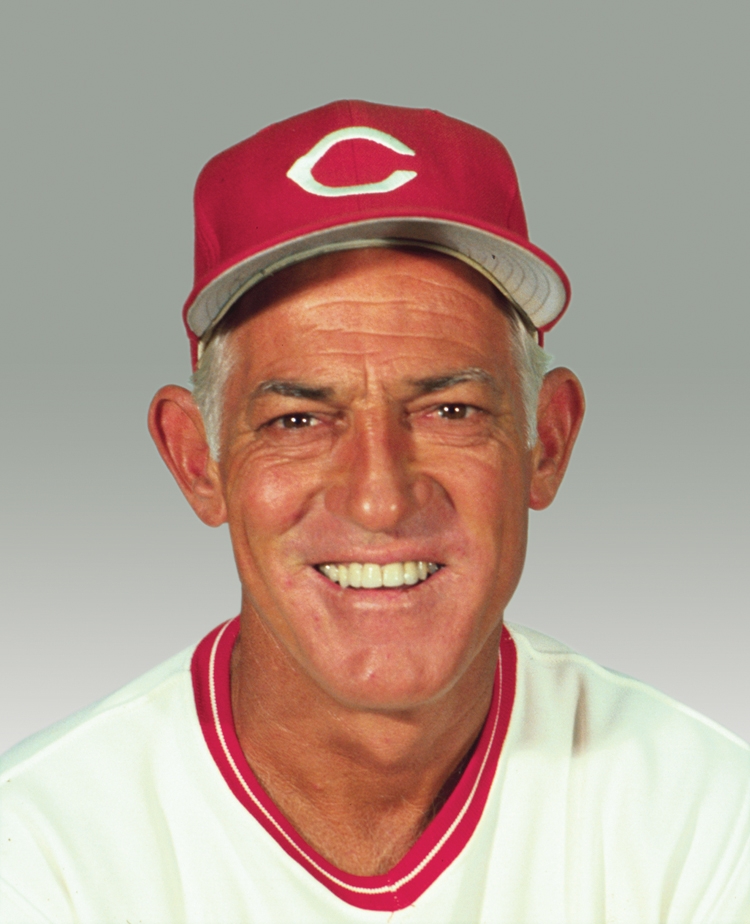
If you are a baseball fan — especially one in southwest Ohio — you know the name Sparky Anderson and the Big Red Machine are inseparable, but what you may not know is how far ahead of the curve Anderson was when it came to managing the game.

One of his most interesting moves occurred near the beginning of the 1975 baseball season. The Reds — filled with a roster of great players — were 12-12 at the beginning of May– hardly the record of a team destined to win one of the greatest World Series of all times just six months later.

Sparky made the decision to move Pete Rose to third, opening up the outfield for players like George Foster, and the Reds became unstoppable, ending the season with a 108-54 record — 20 games ahead of their rival the Los Angeles Dodgers. They went on to win their first World Series in four decades.

But that was not the trend-setting decision that redefined MLB. It was Anderson ‘s use — considered overuse at the time — of the bullpen. He removed starting pitchers at the first sign of trouble — earning himself the nickname Captain Hook.

In 1970, Anderson began relying on relievers to secure a win instead of expecting the starting pitcher to throw a complete game — which was the standard operating procedure at the time. As the Cincinnati Enquirer reported,

In Anderson’s first year at the helm of the Big Red Machine, the saves compiled by his bullpen outnumbered the complete games of the Reds’ starting pitchers.

Although that is a common trend for a team’s stats today, it was seven years before the rest of MLB caught up with the concept.

Despite the Reds winning seasons through the early 70s, Anderson’s bullpen approach to preserving a win was not well received in Cincinnati. In fact, in 1974 during a 45-game stretch with no complete games, the paper reported,

… even Reds fans were booing Anderson loudly when he came out of the dugout to remove another pitcher. Anderson on occasion alluded to the reception his appearances were getting from the patrons.

‘One of these days they are going to have Spear Day at Riverfront,’ said Anderson, ‘and the fan coming closest to my heart when I yank a pitcher will win a Buick.’


Americans Who Got It Right

This post is part of an ongoing series that focuses on the various men and women throughout American history — and from all walks of life — who bucked the trend, thought for themselves or, in general, possessed that very American ideal of individualism. You can read previous entries here.
Categories: Americans Who Got It Right, Baseball | Tags: ,

Frugal Recluse Pays It Forward In Ohio

sportscenter3_0

If you do a online search for Helen King, you will probably have to dig deep to find her — at least the one from Preble County who died in the early 1970s. And her obituary doesn’t shed much light on her accomplishment either. It simply says she is survived by three nieces, three nephews, five grand nieces and one grand nephew.

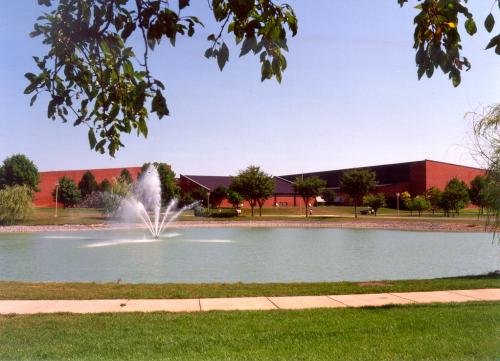
Despite the short, to-the-point obituary, at the time of her death Helen King gave the largest donation ever received by Ohio Northern University — $1.8 million dollars. The funds were used to build the King Horn Sports Center, a state-of-the-art facility which opened during the 1974-1975 academic school year.

In a 1972 article from The Register-Herald, which describes Helen as a recluse, one gets a small glimpse of her life. An administrator at a Dayton, Ohio nursing home she last lived in described Helen as,

“a dear soul but not a warm person….She kept to herself in the room, had few visitors, and read stock market literature.”

Despite the misgivings about her personality, when she died her estate was appraised at $1.9 million. The bulk of her money, it appears, was created through frugal living and smart investments. Appraisers said King acquired her fortune ‘gradually over the years, helped out by inheritances,’ but also noted she was something of a hoarder. In fact,

“Appraisers going through the house found some $1,500 hidden away in the small towels.”

Of course, the real question is where did Helen get the seed money to grow into such a large fortune — especially in a town the size of Eaton.

Well, it began with her late husband, Jesse, who died in 1943, nearly three decades before Helen passed away.

Jesse King was an electrical refrigeration engineer at Frigidaire in Dayton with more than 90 patents. When he first started in the business, the Pyrmont-born (Montgomery County) man was a close associate of Charles Kettering (who invented the electric car starter). After King retired from Frigidaire in 1938 he went into the real estate business. At the time of his death, his assets were valued at just under $250,000.

Helen — still in her mid-40s when her husband died — grew that nest egg to nearly $2 million.

Although she left some money to her nieces and nephews, since she had no children, their was no one ‘next-in-line’ to bequeath the wealth to, so she chose to donate all but $100,000 to a university that neither her or her husband had attended.

So what was her connection to the college? Her brother, Fred Horn, graduated from the school in 1911.


Learn More

According to the Ohio Northern website (pdf) once the money was received the school moved quickly on the project.

Ground was broken for the project on April 1, 1973, and the cornerstone was laid on July 12th. By September 1974 King-Horn was open for classes with the formal dedication being held on February 7, 1975.  

When it was completed, King-Horn cost roughly $2.3 million. It featured a 3,200 seat arena, a 6-lane swimming pool, 3 handball courts, a 110-yard jogging track, a wrestling room, dance studio, weight-lifting room, fencing,, shuffle board and ping pong areas, 3 classrooms, offices, study areas, training room, sauna and locker rooms.  

The building was renovated in 1991 and 1996. The center also hosted the 1995, 1999 and 2002 NCAA Division III Indoor Track and Field Championships and the 1997, 2000 and 2003 NCAA Division III Wrestling Championships.


Americans Who Got It Right

This post is part of an ongoing series that focuses on the various men and women through American history — and from all walks of life — who bucked the trend, thought for themselves and, in general, possessed that very American ideal of individualism. You can read previous entries here.

Categories: 8th congressional district, Americans Who Got It Right, Ohio History, Preble County | Tags: