Books I have read

‘Love & Hate In Jamestown’ Highlights Power Struggles Among Key Players

loveandhateinjamestownIn my effort to better understand my heritage I read a wide range of book styles and lengths, and I always appreciate a fast, to-the-point, concise read.

Love and Hate in Jamestown: John Smith, Pocahontas, and the Start of a New Nation by David A. Price fits the bill perfectly. Although I am familiar with the Jamestown story at a bare-bones level, after reading the book I have a much better understanding of all the key players in the British American settlement.

Price examines the major disagreements and episodes that defined – and at times – almost destroyed the colony. Jamestown’s history is often romanticized as is Captain John Smith’s rescue by Pocahontas – but Price effectively bypasses this approach and gets down to the essentials.

Individualism Is Born

One trait often equated with ‘being American’ is individualism. Ralph Waldo Emerson highlights the trait in Self Reliance. But as Price shows through the various events of Smith’s life, plenty of labels could be attached to Smith. He was a soldier, a planner, an instigator, to name a few, but his most enduring trait was his individualism. This ability to rely on his own skills and intellect led him to the brink of death several times, but it also carved out his rightful place in history.

Do What Needs To Be Done

Smith was pragmatic and not idealistic. During the Colony’s era that was grimly named the Starving Time, Smith details his irritation and disdain for the gentlemen class – the bulk of the colonists – by blandly noting the men had resigned themselves to their fate (death) instead of working to survive. This underscores why Smith butts heads with investors back home in London. He quickly tired of the Company’s protocol of sending gentlemen to the colony instead of skilled and unskilled laborers. The colony almost died out because of this policy. Smith not only engaged in manual labor, he went on expeditions, mingled with the natives — learning their languages and customs at a rudimentary level. It was largely through his efforts that the colony survived those first few years.

Colonial Myth

Long ago I tired of the argument that the Founding Fathers believed this or that — or the Constitution says this or that, because the words seem to come from people who have neither read the Constitution nor could name 10 Founding Fathers. Books like Love & Hate – and Albion’s Seed — provide a clearer understanding of America’s beginning. Despite modern politicians and their followers assertions that America was founded on (fill in the blank), in the beginning the British American colonies were filled with a plethora of ideas, philosophies and often contradictory agendas.

In Jamestown, the goal of the Virginia Company was gold. It was not religious freedom or democracy. It was simply a business venture complete with advertising and marketing materials that highlighted the good and omitted the bad. When the venture failed to produce a profit and investors were no longer supplying money — the Company began a lottery.

John Smith’s Legacy

Oddly enough, the Jamestown experience was a small blip in Smith’s life – although one he always cherished. After he left the colony in 1609, Smith returned to Britain and over the course of several decades wrote numerous books about New England. He never lost his love for the region – always promoting its merits. His last attempt to come back to North America in 1617 was thwarted by bad weather.

He died fourteen years later, in 1631, at the age of 51.

Rated 5 out of 5. This is a nice, quick read filled with the significant episodes of Jamestown’s history. Although the book is heavily researched, the footnotes are not intrusive, and the author includes several pages at the end explaining — and often dispelling — common theories about the Colony.


Trivia

Smith never married and he had no children.

Categories: American History, Books I have read, Colonial Era, Colonial Period | Tags:

Demons Plot For Your Soul In ‘The Screwtape Letters’

ThescrewtapelettersRegardless of your religious persuasion, The Screwtape Letters by C.S. Lewis is an excellent fictional read about all the behind the scenes work that goes on in the quest of securing the final destination of your soul. The book is an insightful, intriguing and even comical look into how Satan and his minions plot, scheme and tirelessly labor to ensure your eternal damnation.

The book is short — about 160 pages in paperback — and an excellent candidate for a weekend read. The book is written in a conversational tone and is simply a series of letters written by Screwtape, a senior level officer in Satan’s Army, to his nephew Wormwood. Screwtape is mentoring the young, inexperienced Wormwood in the fine art of deceit and manipulation as Wormwood struggles to bring his human patient back into the fold of “Our Father Below.”

British author Lewis wrote the book during WWII and, on occasion, uses the war as a backdrop for the story. Lewis puts a spotlight on the hypocrisy of his countrymen, fellow churchmen and people in general. In one WWII reference, Screwtape belittles the inclination of the British to say that ‘torture is too kind’ for their German enemies — and then offering a wounded German pilot tea and cigarettes.

“Do what you will,” Screwtape advises Wormwood, “there is going to be some benevolence, as well as some malice, in your patient’s soul. The great thing is to direct the malice to his immediate neighbors whom he meets every day and to thrust his benevolence out to the remote circumference, to people he does not know.”

In another letter, Screwtape addressing the laziness of some believers by commenting on their overreaction on points of doctrine. Screwtape tells Wormwood,

The real fun is working up hatred between those who say “mass” and those who say “holy communion” when neither party could possibly state the difference between say, Hooker’s doctrine and Thomas Aquinas’, in any form which would hold water for five minutes.

Even for non-Christians the book is a worthwhile read because, at it’s core, Lewis is examining why people succumb to their baser desires instead of nobler ones.

Author of the Chronicles of Narnia, Mere Christianity and Surprised by Joy, Lewis wrote more than 30 books and is one of the preeminent Christian minds of the 20th century. He died in 1963.

Get The Sequel

The Screwtape Letters was first published in 1942. If you’ve never read the book, grab a copy that includes the short 1959 sequel, Screwtape Proposes A Toast. In the Toast, originally published in the Saturday Evening Post in 1959, Screwtape gives an after-dinner speech at the Tempters’ Training College for young demons. Although, the sequel is more political (dealing with education institutional woes, the Cold War and Communism) than the book, it is another peek into Lewis’ moral views.

Categories: Books I have read, Religion | Tags:

‘Faith Of Founding Fathers’ Revisits Christian Leanings Of 6 Early Leaders, Wives

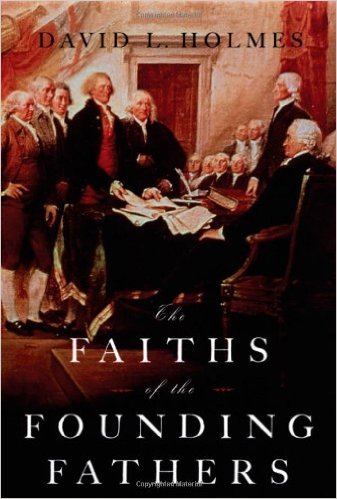
thefaithsofthefoundingfathersAmericans tend to be in one of two camps concerning the religious beliefs of the Founding Fathers. Those who believe the leaders were Christians determined to create the republic as a Christian nation. The other camp believes the country was founded in a secular manner with care being taken to “build a wall” between church and state.

In The Faiths of the Founding Fathers (2006) author David L. Holmes succinctly analyzes the religious leanings of six Founding Fathers. These six are:

  • Benjamin Franklin
  • George Washington
  • John Adams
  • Thomas Jefferson
  • James Madison
  • James Monroe

His examination, among other things, focuses on the words these men used when talking about God in a personal letter to a family or a friend. Reading these letters bypasses the political persona of the leaders and shows what they said in private.

Holmes zeroes in on specific words these men used concerning God or their use — or nonuse — of Christian phrases. For example, a Deist usually avoided traditional Christian phraseology using “the Grand Architect” instead of “God,” while Christians like John Adams would sprinkle “Redeemer of the World,” or “the grace of His Holy Spirit” throughout a letter.

Besides these six men, Holmes examines the men’s wives and a few of their children to see what family traditions and beliefs were passed on. The book concludes with a two-to-three paragraph about each of the modern presidents — beginning with Gerald Ford and ending with George W. Bush (who was president when the book was published).

Even though I found the whole book intriguing, the most interesting section was Holmes’ discussion, at the beginning of the book, about the religious climate during the Revolutionary War era. In this section, Holmes reports which church denominations existed in each of the 13 colonies, and their specific beliefs. This detailed account provided a picture of the variations of Christian doctrine and dogma that existed when the country was born.

Rated 5 out of 5: The Faiths of the Founding Fathers is an interesting read and a great introduction into the religious beliefs of the Founding Fathers. It also sheds some light on how those beliefs played out publically. With only 185 pages the book is also a quick read.

Categories: American History, American Revolutionary War, Books I have read