
movies

‘Muscle Shoals’ Looks At Man Behind Musical Sound, Hits


Documentary Muscle Shoals is an enjoyable walk down memory lane — showcasing some of the greatest music ever produced in the United States.

But, it is also a story of survival — of persevering through a life of setbacks and emotional pain.

The movie details the life of Rick Hall, founder of the Fame music studio located in Muscle Shoals, an Alabama town (population 13,600) near the Tennessee River. Although, the studio is far removed from the typical hustle and bustle of the large city studios in New York City and Los Angeles, it still produced hit after hit beginning in the 1960s.

Despite its ‘off the beaten path’ location, in time big-name bands and artists flocked in to record their music.

Rolling Stones & Company

Footage of the Stones’ recording sessions, including the production of hits like Wild Horses, is more than nostalgic meandering, it moves the story forward. But the movie is not just old clips, current interviews with Mick Jagger and Keith Richards offer reflection as they, and other artists, try to explain the appeal and magic of the region.

But, while these interviews and clips round out the story, make no mistake, Hall is the star of the film.

Hall’s story is a tale of triumph and loss. I won’t retell his story here because it would ruin an initial viewing of the film, but his life is proof that hard times make some people stronger — and, for people like Hall, something good can be created out of the aftermath of hard times.

Down A Long Hard Road

Hall, and the studio musicians featured in the film were, in many ways, just ‘good ole boys’ from down the road. However, that certainly did not equate to untalented. They were all extremely skilled. The studio musicians, The Swampers, even toured with The Who before returning to their Alabama roots, where they eventually split from Hall opening their own music studio. This only seemed to up the magic as the hits kept coming — ranging from Bob Seger’s Old Time Rock and Roll to Percy Faith’s When a Man Loves a Woman.

Missed Opportunities

Two musical incidents I found interesting, though, demonstrate the hit, miss and competitive nature of the business. Duane Allman — who would eventually helped form the Allman Brothers Band — camped out near Hall’s Fame studio trying to land a job as a session musician. In time, Hall hires him. Allman, being the creative guitarist he was, attempts to convince Hall to record, what is now known as southern rock. Hall, not interested in that style of music, nonchalantly admits on screen, ‘yeah I missed the boat on that one.’

The other story involves the best rock song ever recorded — Free Bird by Lynyrd Skynyrd (I know some will argue that distinction goes to Welcome to The Jungle by Guns N Roses, but they’re wrong). When the studio version of Free Bird was recorded in Muscle Shoals, it was over nine minutes long (the live version is about 15 minutes — as it should be). The record company wanted the studio version shortened to less than four minutes. The recording studio refused saying it would destroy the integrity of the song.

The decision eventually cost them the contract.

Rated 5 out of 5

If you enjoy music, and the stories behind some of the biggest names in music, the documentary is a perfect blend of music, interviews and story. Be forewarned though, it may inspire you to dust off some old albums or to download some classic songs from iTunes.


My Interest In The Movie

Bob_Dylan_-_Slow_Train_ComingBefore watching the film, I knew nothing about Rick Hall, but I did know that Bob Dylan recorded Slow Train Coming in Muscle Shoals — his best work in my opinion. The 1979 Christian Rock album features bluesy cuts like Gotta Serve Somebody and Precious Angel as well as a somewhat humorous take on the Garden of Eden — Man Gave Names To All the Animals. Dylan also recorded the follow-up album Saved in Muscle Shoals.



Categories: American History, Americans Who Got It Right, movies | Tags: , , , , , ,

‘War Dogs’ Reveals Underbelly Of America’s War Machine

War_DogsIt’s a rags to riches story. Sort of.

War Dogs, starring Jonah Hill and Miles Teller, is about two 20-somethings living in Miami Beach, Florida who become arms dealers during the Iraq War.

Even though the pair have no military — or even significant business — experience they land lucrative military contracts with the Pentagon by simply bidding on contracts listed on a public website. They do not have to manufacture the products — like hand guns, grenades or assault rifles — they simply broker deals by finding a source.

All For Money

Of course, as a viewer — and as a citizen — the first thought that pops in my mind is: Really? Anyone can bid on a defense contract? As the movie explains, during the Iraq War the website was created to ‘level the playing field’ for military contracts mostly because of pushback president George W. Bush received over the unfair advantage Halliburton received. (Halliburton was the company associated with vice president Dick Cheney). To offset the political fallout, a portion of all military contracts were handled by small businesses.

Smoking Dope, Selling Guns

That decision opened the door for Efraim Diveroli and David Packouz, turning the two pot-smoking, college dropouts into legitimate, legal international arms dealers.

The movie follows the pair through their struggle to become uber-wealthy and peaks when they land a $300 million contract. The deal, which ties them to at least one unsavory business partner, causes the partnership to unravel. They hit several obstacles, but it’s not the obstacles that sinks them, instead it is good old-fashioned, all-American greed.

They stiff a small-time business owner in Afghanistan.

Cost of War

The movie is definitely worth watching to learn about the exploits of Diveroli and Packouz, but it also reveals a much larger and more significant problem. It unveils the sheer volume of money diverted from other American needs. The film opens with statistics about the cost of war — detailing the $17,000+ it takes to outfit a single wartime soldier and the cost of air conditioning ($20 billion annually) to keep the bases cool.

In the end, War Dogs is just another cautionary tale reminding us that in times of war,  monetary profit — not justice — motivates unsavory men and governments.

Rated: 4 out of 5

Categories: movies

Andy Griffith Played Dark Role Before Mayberry & Matlock

It is Andy Griffith like you’ve never seen him. Released in 1957, A Face in the Crowd, follows the meteoric rise of a ‘country boy’ with a saleable skill — singing.

The movie opens with a local radio DJ heading to the county jail to spice up her A Face in the Crowd broadcast which interviews common, everyday people — hoping to find a rising star. Larry Rhodes (Andy Griffith), in jail for public intoxication, barters a deal with the DJ and sheriff in exchange for playing a song for the radio show. His bluesy, country sounds draws in the DJ who sees potential in the young miscreant.

After convincing her uncle, the owner of the radio station, to take a chance with Rhodes, the Lonesome Rhodes personality is unleashed on the public. What follows over the course of the two-hour film is a growing awareness by Rhodes that he can influence the public to do his bidding. At first it is benign — as he successfully attracts enough donations to help a woman rebuild her home destroyed by fire, but by the end, Rhodes has become the classic example of ‘power corrupts, absolute power corrupts absolutely.’ When he reaches the peak of his fame, he reminds his associates,

I’m not just an entertainer, I’m an influence, a wielder of opinion — a force.

Controlling the Masses

Although the film has a 1950s-era quality to the acting, it’s provocativeness comes from the dialogue — a significant portion delivered by a young Walter Matthau — and subject matter. In his drive for power, money and fame, Rhodes discards societal norms and values and lives by his own set of rules.

But what the nearly 60-year-old movie does, beside addressing the hypocrisy of the rising elite, is it successfully predicts the ease of influence  TV launched. Everything is a product and Rhodes is the salesman, hawking Viagra-like sugar pills and presidential candidates. Near the end of the film, Rhodes overhauls a Senator’s image with a new personality to make the Senator a more likeable presidential candidate.

Despite Rhodes constant line that he is just a ‘country boy,’ he is well-schooled in market percentages and knows, not only his share of the viewing audience, but what that means in political and financial power. It’s why he advises the Senator on proper facial expressions and a better delivery style when speaking on camera. Rhodes even launches a Hee-Haw type show (Cracker Barrel) — where he just sits around and ‘chews the fat’ with his ‘country’ co-stars — so he can have a vehicle to introduce America to the new, improved (and much more marketable) Senator.

Image Versus Reality

Of course, as in all cautionary tales, the rise to the top is only exceeded by the fall. Rhodes becomes too brash and, when what he really thinks about his audience(they are dumb) is leaked to them, his fans abandon him.

But all is not lost.

It is Matthau’s character that succinctly describes the short-term memory of the American public. In one of the final scenes Matthau admits Rhodes will be back on TV, but, Matthau tells Rhodes, it won’t be the same. When people talk about you, Matthau says, they will say:

Whatever happened to .. you know what’s his name .. the one who was so big a couple years ago… the number one fella… how could we forget a name like that, by the way have you seen the new fella….


White Trash

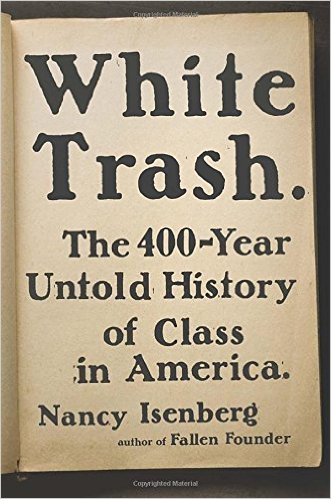
whitetrashI learned about A Face in the Crowd while reading White Trash: The 400-Year Untold History of Class in America by Nancy Isenberg. As Isenberg points out in the book, the film’s director used Griffith’s childhood upbringing as a motivational technique to draw more out of the actor.

The book, definitely a 5 out of 5 stars rating, addresses one of the oldest and most persistent myths in American culture: that we are a society with no class structure.

Isenberg begins in the colonial era, drawing off of the writings of the Founders, and builds a case that the people used to populate the colonies were, by and large, considered ‘waste’ people. They were expendable. She follows the theme of class up to the present time, showing, among other things, how political leaders exploit the class structure — often by pitting one class against another.

Despite being a more ‘scholarly’ book (with ample footnotes), White Trash is a very interesting, easy read. I highly recommend the book for anyone seeking a more in-depth understanding of America’s culture and history.

Categories: movies | Tags: , , , , , ,