movies

Mother Learns Painful Lesson In Fruitvale Station

Fruitvale_Station_posterFruitvale Station is the 2013 film based on the true story of Oscar Grant. It opens with real-life footage of Grant being detained and then ends when he is shot in the back by BART police officer Johannes Mehserle. Grant dies nine hours later in Highland Hospital.

The incident led to murder charges against Mehserle and a multi-million dollar settlement.

A Day In The Life

Although the movie brings out these various facts as the story unfolds, the intent of the film is to humanize Grant by relaying the events of his last day, December 31, 2008. What unfolds is the life of a troubled man on the brink of change, as well as, three females who care deeply for him. His mother, played by Octavia Spencer, his girlfriend (Melonie Diaz) and his young daughter – played by Ariana Neal. All of these individuals lose a part of their life when Grant dies, but in many ways, the story is about a mother’s struggle and her loss.

A Mother’s Love

In one flashback scene Grant’s mother is visiting him in prison and he has what appears to be a fist mark on his face. When she enquires about the mark, he changes the subject, but when another prisoner, threatens him and disrespects his mother — Grant verbally fights back. After the guards subdue the situation, his mother tries to calm him down. When he doesn’t respond positively, it is the straw that ‘breaks the camel’s back’ and she walks out – telling him she will never visit him in prison again.

It’s the classic act of tough love, but as the story unfolds, it’s apparent that the mother’s love for her wayward son runs deep. Deep enough, that it will eventually cost him his life.

On his final day, Grant visits his mother for her birthday dinner. She wants to believe he is finally on the right path. Since it is New Year’s Eve and he is going to San Francisco to watch the fireworks, she knows he will be drinking so she asks him to take the train instead of driving.

It’s a request that haunts her as she views his dead body at the end of the film.

Although some may feel the movie is heavy handed in its portrayal of Grant – showing him as a repentant man determined to live a good life – the underlying message is valid. Life is sacred. Every shooting victim is someone’s son, father or brother.

Rated: 4 out of 5. The movie is worth watching for a wide range of reasons, but possibly the most powerful scene is when Grant’s mother is not allowed inside the hospital room where her son’s dead body lies.

Afterthought

Although movies like Fruitvale Station highlight the humanity in a horrific situation, I’m not convinced they do much to sway public opinion. As Alan Deutschman points out in Change or Die, the three most common methods used to change people’s opinion – fear, facts and force – do not work. This movie relies mostly on facts and fear.

I think most individuals watching this film will already believe institutionalized prejudice exists. Those who do not believe the issue exists – those who champion causes like all lives matter, blue lives matter – or subscribe to the concepts espoused by Bill O’Reilly — will see the man’s death as the results of his own actions.

As a white man, though, I have never feared police confrontation. In 30-plus years of driving, I have been pulled over maybe a half a dozen times — and in only one incident have I dealt with an aggressive, combative officer (which, as the movie accurately points out, was part of the problem in the Fruitvale incident). Although the officer initiated the contact between us by ‘yelling me down,’ and I responded in a verbally assertive manner, I never feared for my safety or of being wrongly apprehended.

The incident ended without so much as a warning ticket.

In a perfect world, Grant would have, at most, been arrested for disorderly conduct and maybe public intoxication.

But as history has proven, sometimes the response to an act is not in direct proportion to the offense.

Categories: movies | Tags: , , , ,

‘Instructions Not Included’ Embraces Life’s Greatest Fears

instructionsnotincludedI’ve never watched a foreign film before, but when my daughter needed to view one for a Spanish class project, I sat down and watched Instructions Not Included with her.

It was a great choice for my first foreign movie.

The movie is the type that needs some time to unfold so the first 15-20 minutes are used to set the stage. Included in these opening scenes are the odd ways a father teaches his young son, Valentin (Eugenio Derbez) to overcome fear. The antics used to strengthen the boy’s courage become increasing strange with each new lesson. The lessons finally end when the father tosses Valentin off a high cliff into the waters below.

Needless to say this approach to parenting has an adverse effect on Valentin as an adult.

The final piece of the stage is set when Julie, a white, American girl, becomes romantically involved with Valentin and, unbeknownst to him gives birth to a beautiful young daughter, Maggie. But, Julia can’t handle being a single mother so she drops Maggie off at Valentin’s and disappears for the next six years.

Valentin, who up until this point had been a player in and out of relationships, is not ready for domestic life. But in time, the young daughter grows on him and he becomes a good father — with only a few minor defects.

I won’t go into the actually story because I don’t want ruin your viewing, but most of the story is told when the daughter is six or seven years old. The movie is worth watching just for the performance of the child actor, Loreto Peralta.

Instructions Not Included is currently available on Netflix.

Rated 5 out of 5. This is definitely one of the best movies I have watched. The jokes are funny and the plot twists keep you on your toes. Be forewarned, though, parts of the movie may bring tears to your eyes.

Categories: movies

The Crucible Even More Applicable In Era Of Terrorism

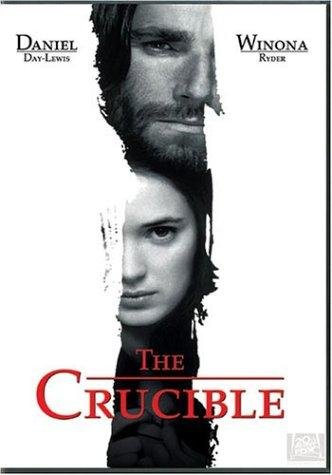
thecrucibleDespite a National Anthem that proclaims we are the land of the free and home of the brave, Americans have a long and storied history of fear — and that fear is often manipulated by demagogues.

In The Crucible playwright Arthur Miller examines our fear by showcasing society’s tendency to react in illogical ways when frightened. As Miller shows, these reactions are fueled and guided, in large part, by powerful players who intentionally override the common good and replace it with a political or personal agenda.

Written as a play, The Crucible is the retelling of the Salem Witch Trials. In the 1996 film version, starring Winona Ryder and Daniel Day-Lewis, Ryder plays the role of Abigail Williams the lead accuser during the witch trials. Lewis, who plays John Proctor, is the sole voice of reason as hysteria sweeps through the small New England community, a hysteria that inflicts death, incarceration and torture on innocent citizens.

But, as is often the case with fear, the voice of reason must be silenced, as Procter eventually learns.

As the story unfolds and the personal agenda of Abigail becomes apparent, the illogical beliefs that overthrow reason, justice and sensibility seem juvenile to the viewer especially when many of the accused ‘admit’ they are a witch simply to avoid prosecution and possible death. After these fake confessions are spoken, though, and the accused have renewed their allegiance to God, the community and church forgives them of their egregious sin. These actions highlight the obvious weaknesses of manipulating a society’s fear — citizens begin to tell people what they want or need to hear so they can be spared — and the victim is Truth.

Circle Logic And Faulty Use of Deductive Reasoning

Throughout the play, Miller examines the common human weakness of faulty thinking. In one scene the presiding judge, Thomas Danforth (Paul Scofield), explains to the court why the testimony of children (the ones exposing the witches) is valid. The court is forced to rely on the children’s testimony, Danforth says, because “witchcraft is an invisible crime and by its very nature we cannot call up witnesses.”

The ludicrousness of this approach is driven home when a woman is accused of being a witch because she predicted her neighbor’s pigs would die. When the court asked her how she knew the animals would die, she replied, “I have raised pigs all my life and know if they are not fed properly they will die.” Her truthful, logical answer is dismissed as a lie because she had successfully ‘predicted’ the animals would die thereby ‘proving’ she could foretell the future and/or cast a spell.

In the court where reason is replaced by fear, the only action necessary to be guilty, she learned, was to be accused.

That Was Then, Not Now

In 2015 it’s easy to mock the settlers for being superstitious and naïve, but that is the twist of the story. Miller wrote the play in response to the Congressional Communist witch hunts being conducted by Senator Joe McCarthy during the 1950s when — just like in Salem — reason, justice and sensibility were cast aside — and the accused often admitted guilt to avoid a more severe punishment.

The Problem Of Fear

In a world with very real threats — like the Paris terrorist attacks — fear  is often exploited to manipulate an unsuspecting society. Scarcely before the bloodshed in Paris had ended, American politicians and pundits were using the element of fear to push their agenda. Within hours, social media was filled with posts condemning President Obama for the attacks, opportunists were crying “close the borders” and Ann Coulter said the attacks sealed Donald Trump’s presidential victory.

However, as ridiculous as those responses were, possibly the most asinine remark came from former House Speaker Newt Gingrich who tweeted,

Imagine a theater with 10 or 15 citizens with concealed carry permits. We live in an age when evil men have to be killed by good people.

Gingrich’s statement devalues the lives of the highly-trained U.S. soldiers who have died over the past decade and a half engaging a multitude of extremist and terrorist groups. By suggesting that any Tom, Dick, Harry or Jane with a gun could have neutralized the terrorists oversimplifies the situation and minimizes the amount of legwork and intelligence-gathering soldiers and their commanding officers engage in on a daily basis.

If predicting and eradicating evil was as simple as Gingrich suggests 9/11 would not have happened — and Able would have outlived Cain.


Rated 5 out of 5: The Crucible should be required viewing for all Americans. Although it’s ‘just a story,’ its principles are crucial to curtailing leadership by fear. This type of leadership, used over and over throughout America’s history, is one of the greatest obstacles to liberty.

Categories: American History, movies | Tags: