My America

‘We’ve Got A Job’ Tells Forgotten Story Of 1963 Children’s March In Birmingham

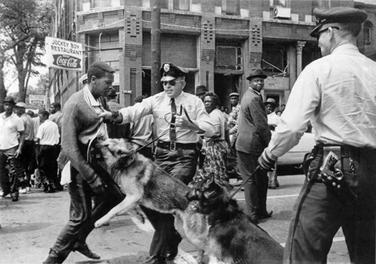
Scene from 1963 Children’s March courtesy of Wikipedia.

Although not formally educated in American history, I consider myself a devout student. My interest was casual until the death of my father 17 years ago when it intensified. My first foray was tracking down his Korean War medals. Then I dove into my family’s history learning about its colonial and pre-colonial American past. The natural progression led to studying American history.

When I look back over the nearly two decades, I’m pleased with the quest and the natural growth it produced — including a better understanding of America’s race wars.

It’s Just A Word

Growing up in an evangelical home, I was acutely aware which words not to use. Soft curse words like damn could evoke a lecture. When, as a seven-year-old, I told Mom I wanted a recently released toy called Son of a Gun, she threatened to punish me (‘You want me to mash your mouth’).

But the N-word was more acceptable.

That is not to say my parents used the word or embraced it (they didn’t), but when I dropped the word as a teenager, in anger, at a black man, there was no lecture. I learned the word years earlier from my paternal grandfather who used it to describe a community of  ‘yella n-word’ (a reference to their lighter skin tone) that lived near him in Cumberland County, Kentucky. As an eight-year-old sitting on the couch watching TV with Grandpa, he used it freely when black entertainers appeared on TV, saying, ‘Now there’s one happy N-word.’

I relay this, not to expose the subtle, and not so subtle, prejudice of my childhood, but rather to show that what we teach our children matters.

We’ve Got A Job

Juvenile-level literature like We’ve Got A Job matters on many levels. The book teaches our children positive role models, and it also tells the stories of parents who did ‘teach their children well.’

Like most Americans, I’ve long been familiar with the images, and TV footage, of the Civil Rights movement. Some of the most gripping images, like the one above, capture dogs attacking peaceful protesters. The water hose news footage is also very disturbing to watch especially since, as Americans, we lie to ourselves and say we’re a Christian nation ordained by God as a ‘city set on a hill,’ but our actions say otherwise.
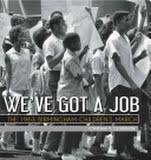
But, what I never knew, until reading We’ve Got A Job by Cynthia Levinson was that thousands — literally thousands — of black juveniles were arrested and crammed into American jails because of their peaceful protests. In Job, the author details the lives of four participants — the youngest is nine-year-old Audrey Hendricks — telling their stories of courage and resolve as they took on the blind hatred of Alabama’s White power structure.

The Birmingham Children’s March took place between May 2 and May 11 in 1963. In the March, roughly 4,000 elementary, middle and high school children were arrested and jailed. The March was organized by the Rev. Martin Luther King Jr. and the author weaves in the role King, and other Black leaders, played as they navigated the delicate balance of protest amid the violence.

Although written for a 12-15 year old audience, the book is a compelling read for adults — and include many unknown facts and stories. One that struck me was — on the day four black girls were killed in a church bombing — two other black juveniles were murdered. One was killed by a police officer and a second, a 16-year-old black male, was shot and killed by a white Eagle Scout.

Levinson received several awards for the book including, the Golden Kite Award for Nonfiction. The book is a reminder that when evil exists — good people, of all ages — rise to resist.

Rating 5 out of 5. I rate this book highly for two reasons: it is very well written as it weaves a lot of information together, some well-known, some hardly known, into a compelling account of an important week in American history. The other reason — the author captures a story that was nearly lost to history.
Categories: American History, Americans Who Got It Right, Books I have read, My America

‘American Evangelical’ Explores Group’s Historical Fear Of Immigrants

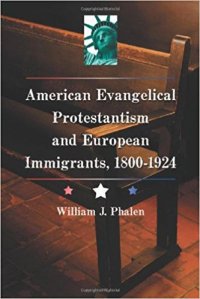
Roughly a week before Trump ‘used rough language‘ to describe his desire to keep certain immigrants out of the country, I found American Evangelical Protestantism and European Immigrants, 1800-1924 sitting on the bookshelf at the Richmond, Ind. Goodwill.

The book relies heavily on historical writings to flesh out the view of Evangelicals concerning which immigrants they did not want coming to America (spoiler alert: Trump was playing to them with his recent Norway/shithole comment).

Public Enemy No. 1: Catholics

During the 1800-1921 era, few groups generated more fear among the Protestant Evangelicals than immigrants from mostly Catholic countries — like Ireland. But, in the Irish, the Evangelicals found a formidable foe. The Irish, because of their dealings with the British in their homelands, were highly interested and highly skilled in politics. A host of battle lines were drawn between the Irish, and the Catholics as a whole, but few generated as much animosity as public schools. Protestants were determined to force all school children to be taught from their Bible and passed laws to forbid the Catholic Bible from being used in schools. Catholics fought back, and in time, largely through the help of the Irish, pushed out the religious intolerance.

They’re All Ungodly Drunks

Even though at its core, the battle over immigration was one of religious preference (and a convenient interpretation of the Founding Father’s belief systems — as if there were one unifying interpretation of religion), but part of this also included what the nativists viewed as moral actions. During this era, the Irish and German, were coming to the country in large numbers to fill the labor shortage. Both groups had a significantly differ view on the consumption of alcohol. The view of evangelicals had shifted from the country’s inception from one that did not view drinking as a sin (only drunkenness) to a view that all consumption of alcohol was evil. This, of course, jarred with the customs of many Irish and German citizens, who not only enjoyed drinking, but were also inclined to do it on the only day they had off – Sunday. The Evangelicals fought back eventually ushering in the Prohibition.

Assimilation, Through Coercion

One of the most interesting aspects of the book, to me, is the fact that (as the author successfully demonstrates), Evangelicals members of the Republican Party, were also believers in free will, except that did not apply to moral choices. The group tirelessly worked to impose their version of morality on the country. They did not shy away from using denigrating language to describe those they considered ‘undesirable.’ Their xenophobia (and at other times racism) is also apparent in the words of many of their leaders. One leader, Josiah Strong, believed Germans were of an ‘inferior stock’ than Anglo-Saxons, and pushed for immigrants to be brought in from ‘acceptable areas’ of Europe.

After reading the book, and seeing how the views of Evangelicals today mirror 19th century views, I do wonder why they never learned to live the words of the Apostle Paul, who said,

“When I became a man, I put away childish things.”

My Rating 4 out of 5 stars. The only reason I ding the book slightly is because it is more scholarly than popular in tone. There are a lot of historical quotes and footnotes, which can may it difficult for the casual reader to read. But, those interested in seeing how deeply-rooted fear is difficult to weed out of a country’s soil, this book supplies ample quotes from 19th and 20th century Evangelical leaders — words that could have just as easily be spoken by Franklin Graham, James Dobson or Jerry Falwell Jr.

Categories: American History, Books I have read, My America

‘Stranger With A Camera’ Explores Filmmaker’s Murder In Kentucky

After reading What You Are Getting Wrong About Appalachia, I walked away with more films to watch and more books to read. My family hails from the outlying regions of Appalachia, and as a family historian, I have always found the culture and region intriguing. It was my ‘other home’ since my family migrated from the region before I was born — and by the age of four, I was living in southwest Ohio.

The film, Stranger With a Camera, explores the murder of renown Canadian filmmaker High OConnor who was killed by a Jeremiah, Kentucky man while he was filming one of the man’s tenants. The documentary is filmed by a member of the Appalshop and resident of the region where the murder took place.

Since the film is short — about one hour (it can be live-streamed here for $3) — I won’t go into the ‘plotline’ but will instead discuss its broader theme. The backdrop for the film is the death of a filmmaker and the man who fired the gun. However, the director is really exploring the concept of who gets to tell a community’s story. The region where the story takes place was visited heavily by government officials and VISTA volunteers in the late 1960s as part of the War on Poverty. The filmmaker looks at how the community — and which parts — became part of the national dialogue. To set the stage she uses various news reels about the region and points out the individuals that she personally knows on the camera.

Those interested in storytelling — or how a community deals with ‘outsiders’ — will find the film enjoyable. Besides filming ‘locals,’ including the man who witnessed the murder, the director interviews crew members and the daughter of the murdered man.

My Rating 5 out of 5. The film successfully captures the ‘heart and soul’ of Jeremiah, Kentucky in a sensitive, yet objective and informative, way.

Categories: American History, Appalachia, movies, My America