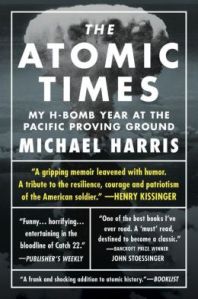
 When I picked up The Atomic Times: My H-Bomb Year at the Pacific Proving Ground
 on Kindle, I was immediately drawn in by the conversational writing. But the subject matter is hardly casual. The book looks at the military personnel’s exposure to excessive levels of radiation while isolated on the island of Eniwetok Atoll in the South Pacific during the H-Bomb tests of the 1950s.
Michael Harris was 22 when he landed a one-year assignment on the island — dotted with aluminum buildings and three-eyed fish swimming in the lagoon. Although, the memoir could have been written from a ‘I can’t believe the Government did this to me’ angle, Harris does not take that approach — and does not come off as even remotely bitter about the experience.
What he does, though, is take the reader inside the barracks, the office buildings and throughout the island while casually reporting some of the oddities that happen when you packed a large amount of men into such a small space. The book, would probably be rated PG-13 — maybe R in a couple of chapters — has the typical ‘boys’ humor of misdeeds, quarks and indiscretions. He openly addresses how most of the men deal, each night, with their lack of female companionship. But, Harris also reports on the acts of violence soldiers committed against each other, how men dealt with fallout and what the Military Police obsessed over.
The further you get into the book, the more you realize the island — or the tests — are starting to ‘mess with’ the soldiers’ minds.
It is the amount of mistakes and poor decisions made by military and political leaders, though, that seems unfathomable. Although it was known a nuclear blast can permanently damage a person’s eyes, googles were not issued to enlisted men like Harris. In a recent interview, Harris explained why enlisted soldiers did not receive googles like officers wore.
We were told we had to wear high density goggles during the tests to avoid losing our sight but the shipment of goggles never arrived—the requisition was cancelled to make room for new furniture for the colonel’s house.
On multiple occasions, the blasts were detonated in front of the soldiers — exposing them to additional risks. In the book (and the interview), Harris explains how a couple unlucky servicemen died while on the island.
Servicemen were sent to Ground Zero wearing only shorts and sneakers and worked side by side with scientists dressed in RadSafe suits. The exposed military men developed severe radiation burns and many died.
Harris began writing the book while on the island and a friend smuggle it out. This first rough draft was mailed by his buddy to Harris’ father. Harris, though, did not complete the book for 50 years.
The book was released in 2014.
Rating 4 out of 5
Most sites — like Amazon, Barnes & Noble or GoodReads — give the book a 4-star rating which I would agree with. I only have two criticisms of the book: in a few places the story bogs down and — I want to know what happened to all his buddies. Although it is a memoir, the book does include statistics associated with the tests and accurate descriptions of the detonations, which Harris researched after the military operation was declassified.
Former U.S. National Security Advisor Henry Kissinger wrote this about the book,
A gripping memoir leavened by humor, loyalty and pride of accomplishment. A tribute to the resilience, courage and patriotism of the American soldier.
Learn More
The website Critical Past has some of the videos from the Eniwetok Atoll tests. Although they are a commercial site (selling the video), you can watch a low-resolution version free. Another website, A/V Geeks LLC, sells DVDs from that era, but also offers a free viewing of a different testing film.
Learn why Michael Harris took so long to finish writing the book in this interview.

 In the United States, two lines of reasoning for dealing with criminal behavior has existed since the country was created. On one side are those that believe in the Old Testament edict of an ‘eye for an eye’ and on the other side, the idea that behavior can be modified (which some call liberal, others call Christ-like).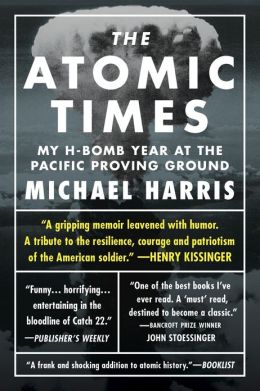



 Charlie R. Claywell