
The man who helped Hemingway and Faulkner get published was born in Preble County, Ohio.
Rich in History
One of Preble County’s most significant contributions to American literature is Sherwood Anderson — a man history seems to have forgotten and replaced with the men he helped get published.
He is also one of the county’s best kept secrets.
I’ve lived in the county most of my life and I was in my 30s before I learned Anderson was born in Camden — a small village at the southern end of the county. He was the third of seven children born to Irwin Anderson, a former Union soldier, and Emma Jane (Smith) Anderson.
He wasn’t here long — which is probably why so few know about his connection to the county.
The Anderson family left Preble County before Sherwood’s first birthday. The small one-story, wood framed home where he was born still exists (and is currently lived in). A small rock in the front yard designates his birthplace.
Three things I have always found interesting about him are: his relative obscurity, his ‘day of awakening’ and how he died.
Lost in History
Even though Anderson was reponsible for helping both Faulkner and Hemingway get published, his works and contribution seem to be unknown and under-appreciated. His signature piece, Winesburg, Ohio though, should be required reading. The book is a series of interrelated short stories based on the fictional town of Winesburg (based loosely on Clyde, another Ohio town he lived in). Commenting on the book in 1932, Anderson said,
The book is, of course, in no sense a burlesque, but it is an effort to treat the lives of simply ordinary people in an American middle western town with sympathy and understanding… These people are all like Wing Biddlebaum, people who had not succeeded in life, but decent people nevertheless.
Wing is the central character in the chapter Hands.
Wing Biddlebaum talked much with his hands. The slender expressive fingers, forever active, forever striving to conceal themselves in his pockets or behind his back, came forth and became the piston rods of his machinery of expression.
With Winesburg, Ohio, Anderson became one of the first American writers to use modern psychological insights.
Day of Mythic Proportion
Nov. 28, 1912 is the day of awakening in Anderson’s life. In one version of his autobiography, this was the day he deserted his wife, their three children and his business to pursue his creative work. In other versions of the story, it was the day he had a nervous breakdown, wandered the streets and was hospitalized. What really happened is up for debate, but regardless sometime around that time period he did moved into his creative work and leave behind his ‘normal’ businessman’s life.
Cause of Death
One of the most unusual things about his life — was his death.
The official cause of his death is peritonitis — inflammation of the peritoneum, the thin tissue that lines the inner wall of the abdomen and covers most of the abdominal organs. Anderson was on a cruise through South America with his fourth wife (20 years his junior) when he became ill. He was taken to a Panama hospital where he died on March 8, 1941.
An autospy after his death revealed he had swallowed a toothpick, possibly on the cruise, which had punctured the peritoneum, causing an infection that led to his death. He was 64.
The inscription on his tombstone in Virginia says, “Life, not death, is the great adventure.”
Books and Influence
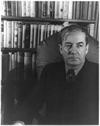
Sherwood Anderson
Besides mentoring Faulkner and working with Hemingway, Anderson also influenced other American writers like Thomas Wolfe and John Steinbeck. Anderson’s first book, Windy McPherson’s Son was published in 1916, followed by Marching Men in 1917. Winesburg was released in 1919 and his only best seller, Dark Laughter, was published in 1925.




 Charlie R. Claywell