
Civil War History

Homegrown Terrorism: The Story Of John Brown

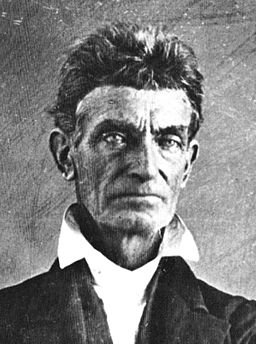
John_brownUntil I read the War to the Knife: Bleeding Kansas, 1854-1861 by Thomas Goodrich I only knew the sanitized version of the John Brown story. Brown — a God-fearing abolitionist is credited with starting the Civil War. The story I knew went basically like this. John Brown was an abolitionist from the East who moved to present-day Kansas to make sure the territory was slave-free. After his stint in Kansas, Brown headed East, overtook a fort in Virginia as part of plot to incite slaves to revolt against their owners.

In a very basic sense, all of that is true, but it in no way describes the utter depravity of John Brown.

Congress Shirks Duty And Bypasses Slavery Issue

In 1854 the United States Congress passed the Kansas-Nebraska Act giving the Kansas Territory residents the power to decide whether the region would be slave or free. With the advantage of history, it’s easy to see the error in judgment with this decision, but in 1854 it seemed like the correct approach. After all, it is standard operating procedure in the United States to let decisions be made as local as possible. But this single Act propelled the country into the Civil War.

A lot was at stake when the Act was enacted with the balance of power in Congress being a significant one. When the Act was approved 13 states held slaves and 13 did not.

Adding to the difficulty was Missouri, home to an estimated $100,000,000 worth of slaves. Missourians had a vested interest in Kansas becoming a slave state to protect their ‘property;’ while in the East, abolitionists were determined to halt the spread of slavery.

It unleashed a violent storm in the Kansas area.

Emigrant Aid Society

Shortly after the Nebraska-Kansas Act passed Massachusetts resident (and future Congressman) Eli Thayer established the New England Emigrant Aid Company for the sole purpose of transporting abolitionists into the Kansas Territory. These Easterners, with no frontier experience, headed west and quickly established abolitionist cities in the region. The most well-known city was Lawrence (the location for the worst civilian massacre during the Civil War).

Locals, Not Really Local

With abolitionists arriving from the East and Northeast and proslavery men coming from the South and Missouri, the region was quickly divided into three distinct groups: Proslavery, Abolitionist and settlers. Although, the Act was designed to let the settlers make the decision, it was the settlers that had the least interest in the political battle. Most were just ‘regular folks’ wanting to raise a family on their homestead.

Rigged Elections

When the first election was held inside the Territory, Missourians poured over the border on election day to vote — often by force. Their tactic worked as the Territory was declared a slave-holding region based on the election results (despite the fact that the number of voters exceeded the number of Territory residents).

Abolitionists refused to honor the new government — naming it the Bogus Government. Violence eventually broke out between the Abolitionists and Proslavery men and caught in the crossfire were the settlers.

It was during this upheaval, in 1855, when John Brown moved in.

Acts of Terror

In 1856, after the town of antislavery town of Lawrence was attacked by armed proslavery guerillas, John Brown decided the pacifist approach of the Abolitionists is hindering their cause. So he decides to meet force with force with a retaliatory attack. It is at this point the delusional side of Brown becomes more apparent. Even several of his children are shocked by the action he is proposing and John Brown Jr. refuses to participate.

But John Brown — often referred to as Old Man Brown — is convinced God has chosen him to rid the country of slavery. Before heading out to attack and kill several settlers, Brown said,

“I have no choice. It has been ordained by the Almighty God, ordained from eternity, that I should make an example of these men.”

Brown’s small group of men, armed with pistols and swords, then ventured out into the night to commit their first gruesome act. Their victim was a transplanted Tennessean, James Doyle, a proslavery man who was simply a settler in the wrong place at the wrong time. According to those who knew him, Doyle never agitated for slavery. In fact, when neighbors attempted to get Doyle to be a Legislator for the Territory, he said,

“I came to this territory to secure a home for my family, not for political purposes.”

Around 11 p.m. on May 24, 1856 Brown and his gang knocked on Doyle’s cabin door. According to one of the assailants that night, James Townsley, Brown order Doyle and his two oldest sons to surrender to his gang. The youngest son was spared because Doyle’s wife cried and pleaded for his life.

Brown and his followers then led the three Doyle men a short distance and order them to halt. Brown shot James Doyle while Brown’s two youngest sons attacked the Doyle boys with swords and killed them. The gang committed the same crime the following night killing two more men and those victims were “chopped into inches.”

The gruesomeness of the acts caused two of Brown’s sons to suffer mental breakdowns.

Brown wasn’t through though. He would remain inside the Territory until 1858, recruiting additional men for his cause. As his followers grew to 100 or so men, Brown led them in guerilla warfare and the body count and terror continued to rise. After two years of doing ‘God’s work’ Brown and his sons finally left the Territory.

Brown’s Capture And Execution

Brown’s most famous act came in 1859 when Brown and his followers overtook an armory in Harper’s Ferry. They had kidnapped several prominent men — including a relative of George Washington, Lewis Washington — and held them hostage inside the armory. The confrontation ended when Federal troops led by Robert E. Lee overthrew Brown and the surviving members of his ragtag army. During the battle, two of Brown’s sons were killed. As one of Brown’s sons groaned in the throes of death, Brown allegedly told him to ‘shut up and die like a man.’

Brown was convicted of treason, murder and slave insurrection and sentenced to death by hanging. He was executed on Dec. 2, 1859 in Virginia (present day West Virginia).

He was 59.


Trivia

Early in life, John Brown went to college to become a Congregational Minister, but he dropped out due to eye problems and a shortage of funds.

Categories: American History, Civil War History | Tags: , ,

Sunken Steamship Headed to Ohio in 1862 Discovered

In 1862 a propeller-driven steamship en route to Cincinnati sank in the Great Lakes killing all on board. The whereabouts of the ship remained a mystery until two New York shipwreck hunters recently located the ship about 7 miles off of the shore of Fair Haven, New York in Lake Ontario.

According to the Associated Press,

(Jim) Kennard and (Roger) Pawlowski, with underwriting support from National Museum of the Great Lakes in Toledo, Ohio, were searching for wrecks along the lake’s southeastern shore in late August when their side-scan sonar revealed a debris field in several hundred feet of water about seven miles from shore.

It’s not the first historical find for the pair of men. Earlier this year, the AP ran a story about two canal boats the pair found. In 2014, the pair along with Roland Stevens discovered a rare dagger–board schooner, Three Brothers, also in Lake Ontario. According to Ship Wreck World, the Three Brothers is

… the first fully working dagger-board schooner ever found and is believed to be the oldest confirmed commercial schooner to have been discovered in the Great Lakes. 

Pawlowski has been diving onto shipwrecks for 14 years and Kennard has been a shipwreck hunter since 1970 and has discovered more than 200 shipwrecks.

Categories: American History, Civil War History | Tags:

Claywell Woman Celebrates 100th Birthday

Family-Tree-Logo

“She has lived an unusually long and useful life and has battled against many difficulties, winning over them all.” — words written about Sarah Vincent Claywell at the time of her death.


I’ve decided to write more posts about my lineage — and some of the posts will include distant relatives — like this one about Sarah Vincent Claywell. When Sarah passed away at the age of 100 in Mexico, Missouri on December 15, 1919, she was Audrain County’s oldest resident and had outlived seven of her children (one died as an infant). A few newspapers also stated Sarah was the oldest resident in the state of Missouri.

Near the end of her life, Sarah became something of a minor celebrity in the Mexico, Missouri region. Newspapers would run tidbits about “Grandma Claywell” reporting on both her 99th and 100th birthdays. Some of the reports would be minor events — like how she was “strong and well,” and visiting a grandson. But others were more detailed — like when Mrs. A. H. Barnes, of Winchester, Illinois wrote Sarah a letter after reading about Sarah’s 100th birthday.

Barnes knew her mother was a Claywell, but Mrs. Barnes did not know if she was related to Sarah. When Sarah received the letter, she figured out that Mrs. Barnes’ mother was the daughter of Job Claywell, from Cumberland County, Kentucky. Job was the half-brother of Milton — Sarah’s husband. This meant Mrs. Barnes was Sarah’s great-niece.

From Kentucky to Missouri

Sarah was a widow when she moved from Cumberland County to Missouri in 1888 with her nine of her children. Her husband, Milton H. Claywell, died of fever in 1864 after serving in the Union Army.

According to the December 18, 1919 Mexico Weekly Ledger announcing her death (it was a front page story), Sarah was buried at Thompson Cemetery where a sister, daughter and son were also buried. At the time of her death her oldest surviving child, Elijah, was 80.

Military Tradition

Three of Sarah’s grandsons, as well as Elijah, served in the military during war time. Elijah fought during the Civil War in the same unit as his father. One of Sarah’s grandchildren, Joe Claywell, fought in the Spanish-American War. Two others served in WWI: Lee Roe, of Mexico, MO and Tom McGraw of Centralia. Lee was in the U.S. Army while Tom was a member of the Canadian military — who accepted Tom after his offer to serve in the U.S. Army was denied.

Two-For-One Party

Although hitting the century mark should ensure a person their own party, Sarah actually shared her big day with her grandson Lee. Lee had recently returned from fighting in France. About 45 people attended the party and during the celebration Rev. John S. Jesse gave a “glowing tribute” of Sarah and her life — and photos were taken.

Living Off A Military Pension

As the article closes, it discusses the military widow pension Sarah started receiving in 1863 (when Milton was dismissed from the Army for illness — he died in Feb. 1864). In 1863, her pension was $8 a month, but at the time of her 100th birthday it was $25.

Sarah passed away at her daughter’s home — Mrs. Mary Jane Roe. Mary Jane, 64, was her second youngest child. Sarah’s youngest son, James Claywell, 68, lived nearby.

Elijah, though, had moved back to Kentucky.

Her Will

Despite her somewhat limited income, Sarah left behind more than one hundred dollars to be divvied out among children and grandchildren. The Mexico Ledger reports on the settling of Sarah’s estate:

  • She wills that after her just debts and funeral expenses are paid $1 be given her sons James and Elijah Claywell, both of whom have heretofore received more from her than her other children.
  • To her daughter Mrs. Martha Johnson she leaves $50, and to the children of her deceased daughter, Mrs. Belle Curry, she wills the following amounts: Nora Curry, $20, Cora Curry, $25, Sanford Curry $1, and James Curry $1. Provision is made that, should either of these granddaughters be dead the other receive both shares.
  • Mrs. Claywell wills that $1 be given to each of the following grandchildren, who are children of her deceased son, Joseph Claywell: Joseph II, Clauddus, Columbus and Sallie E. Claywell.
  • To her daughter, Mrs. Mary Jane Roe, she leaves the remainder of her estate, this daughter having taken tare of her in the last years of her life. After Mrs. Roe’s death the amount willed her shall be divided among her children.

1860 Census

The 1860 Census records the family unit before Milton dies:

The family lived in Cumberland County and everyone was born in Kentucky.

Click on the links above to view the gravesite of each family member.

Military Records

  • Milton H. Claywell, Co. D – 5th KY Cavalry
  • Elijah W. Claywell, Co. D – 5th KY Cavalry

Connection to Me

Milton H. Claywell is the son of Shadrach Claywell Jr. and the brother of John Anderson Claywell. John Anderson is my great-great-great-grandfather. If you use the cousin calculator, that would make Milton my 3rd Great Grand Uncle.

Milton’s Lineage My Lineage
Shadrach Claywell Shadrach Claywell
Shadrach Claywell Jr. Shadrach Claywell Jr.
Milton H. Claywell John Anderson Claywell
Ed Claywell
Joe Lee Claywell
Charlie L. Claywell
Billy D. Claywell
Me
Categories: American History, Civil War History, Family History