Colonial Era

Virginia Colony Boldly Embraces All Forms Of Inequality

Note: This is the second in four entries about Albion’s Seed: Four British Folkways in America by David Hackett Fischer. As I mentioned in the first post, since this is a large book (900+ pages) I did not want to write a single review. Instead I am writing about each of the four British American colonies Fischer examines. If you have not read his book, and are interested in the American Colonial Era, I highly recommend it. Click here to access all the posts in this series.

In this post, I’ll examine the same three folkways I did with the Puritans: Sex, Recreation and Money.

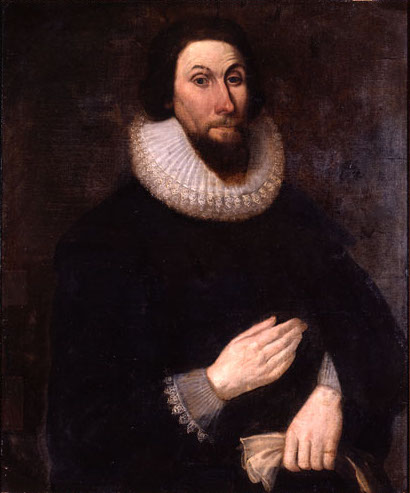
Governor_William_BerkeleyAlthough, I’ve never been able to conclusively determine the very first Clavell/Claywell to land on North American soil, some records show that a Peter Clavell died in Accomack, Virginia in 1692. Peter is a forefather of Shadrach Claywell. Shadrach is often the beginning point for U.S. Claywell genealogy. He was born in Bedford County, Va. So, it does appears the Claywell line landed in Virginia, which would also support the reasoning that they are English (and at least one of Shadrach’s children was described by his widow as English).

If Peter was, in fact, an indentured servant it was a rough start for a new beginning in a new land.

Different Approach To Colonization

Unlike the Puritan colonies to the north — a region populated by extended family units, educated individuals, and a more socially and financially equal society — the Virginia colonies were established in a nearly opposite manner. British royalists became the governing class and then through controlled immigration policies populated the colony with illiterate, unattached individuals. Sixty percent or more of the Virginia colony was illiterate — compared to 30 percent or less in the Puritan Colony.

This approach to cultivating a colony led to a highly stratified society with very defined social classes. The high illiteracy rate kept the impoverished class oppressed since they were ill equipped to improve their lot in an ever increasing literate world.

Money Flows To The Top

In 1641 Sir William Berkeley began his 20+ year reign as governor and under his leadership the colony grew from 8,000 to 40,000 inhabitants. During his reign and for centuries beyond, the region remained divided into two distinct groups: the haves and have-nots. According to Fischer, about 10 percent of the population controlled up to 75 percent of the usable land. This was a stark contrast to the northern Puritan colony where the division of wealth was closely regulated and the hedonistic pursuit of wealth was discouraged.

Fischer reports that 70 percent of the Virginia population owned no land while another 20 percent was slightly better off — owning small parcels.

In Virginia, a significant portion of the laborers, like Peter Clavell, were indentured servants. This meant, among other things, that they worked without wages for about seven years. But since the laws were slanted in favor of the property owners these servants, already the working poor, were at an even deeper disadvantage should a dispute concerning their contractual agreement surface. Simply put, the indentured servants were at the mercy of the ruling class so the poor became poorer and the wealthy expanded their holdings.

Killin’ Time Is Killin’ Me

The Virginia Colony phrase ‘killing time’ has its beginning in south England where most of the original laborers emigrated from — and it was a stark contrast to the Puritan concept of improving time. Recreation included significantly different activities in the Puritan and Virginia colonies. The Puritans enjoyed ice skating and games that were the forerunners of baseball and football. They saw recreation as necessary for the development of the Christian character whereas the Virginia colonies saw absolutely no value in any ball-centric sport.

By and large, the Virginia colony residents preferred blood sports. Some of the games were bizarre, like muzzling the sparrow, while others were more pragmatic and practical, like hunting game. But one of the most popular, festive blood sports of Virginia Colony farmers was a tortuous game that required dexterity, horse riding skills, and included the possibility of losing a finger to an angry gander.

Here is how Fischer describes the sport of ganderpulling.

An old male goose was suspended upside-down by his feet from the branch of a tree, and the neck of the bird was lathered with grease. The contestants mounted their horses and galloped past the goose, endeavoring to tear off the bird’s head by brute force as they rode by…. The scene was a lively one — shouting crowds, a swirl of violence, the goose twisting in agony, dismounted riders rolling in the dust, and finally the climax when the carotid artery gave way and the winner rode in triumph through a shower of crimson gore.

Barefoot And Pregnant

Although the roles of men and women were not equal in the Puritan colonies, whenever sexual crimes were committed, like adultery or fornication, the Puritans tended to punish both genders equally, Fischer writes. In Virginia, it was a much different approach.

First, men were allowed, and even expected, to engage in sexual activity with willing, and often, unwilling participants. The punishment for rape was sometimes less than the punishment for petty theft. This was because women, even in the upper, Royal class, were seen as breeders. They were ‘cursed’ with the sin of Eve and their only real purpose was to bear children for their husband (but this did not exclude women from all the hard, manual labor associated with farm work).

This mindset led to several unique laws. Women — and not men — were punished in adultery cases. Although, not a capital crime as in the Puritan colony, adultery was dealt with harshly. A convicted female was either flogged or dragged behind a boat until nearly drowned. The same harshness applied to an unmarried woman bearing a child. This too was a very serious offense in Virginia — but not because it was a sexual sin.

As Fischer writes the offense was punishable,

… because it threatened to place a burden of support on the parish poor rolls, and to deprive a master of work that was thought due him….When an unmarried woman gave birth outside of wedlock, a heavy fine was levied upon her. If the fine could not be paid (which was often the case), she was trussed up like an animal, her dress was ripped open to the waist, and she was publically whipped in the sight of a shouting mob until the blood flowed…

Where They Came From

Most of the immigrants inside the Virginia Colony were transported from the south and west regions of England. About 30 percent were skilled laborers or artisans — compared to 60 percent in the Puritan colony. Women outnumbered men by as much as 6-1 in the early years, but few came of their own free will. Seventy-five percent of the servant-immigrant males were between the ages of 15 and 24. Even younger children were stolen from England and transported to Virginia.

Eventually black slaves would be imported to the area, and the institution of slavery would be born. Some historians argue that slavery took hold here instead of in New England because of the hierarchy that already existed in Virginia. Even poor white settlers benefitted from slavery since it meant there was a class of people ‘beneath’ them in the social hierarchy (I may be poor, but at least I’m not a slave.)

Oddest Thing I Learned: Do You Believe In Magic?

Since many of the underlying beliefs — like a women’s subservient role, blood sport, and religious intolerance (the colony drove out Puritans and Quakers) — I have seen firsthand, none of those customs were shocking to me. But, I did find several customs intriguing. For example, I learned that the southern way of speaking was mostly imported from south England. The colonists’ term for coitus  — rogering — I also found a bit unusual, but the oddest thing was the colony’s — rich and poor alike — obsession with magic. They were not concerned, like their neighbors to the north about witches. No one was ever executed in the Virginia colony for witchcraft.

As a colony, people accepted their position on the social ladder because of their belief in luck or magic. This singular core belief went a long way in preventing any significant upward mobility for the indentured class — or any decline in status for the wealthy. The belief minimized any sense of responsibility for determining the direction of their lives or controlling their own fate.

On the whole, they believed that ‘God’ had placed them in their appropriate place on the social ladder.
Categories: American History, Colonial Era, Colonial Period, Family History | Tags:

Founding Father Kicked Out Of Office

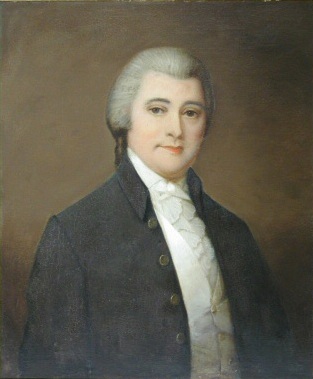
William-blountPoliticians, it appears, are cut from the same cloth regardless of era.

Such is the case of William Blount, a North Carolina delegate at the Constitutional Convention. Although well educated, Blount was mostly a silent participant at the event, but he was definitely on board with the concept — signing his name to our country’s governing document.

Just a few years later, in 1790, president George Washington named Blount governor of the Southwest Territory and Blount was instrumental is the creation of the state of Tennessee.

Everything was going great for the 41-year-old who had also taken up land speculation — a business interest that aligned quite nicely with his role as governor. When the state legislators elected Blount United States Senator from Tennessee in 1796, he owned an estimated 1 million acres of land and was very popular in his home state.

Blount was loved, in large part, because he stood with the residents — diligently working to define and enforce a boundary between white settlers and the Cherokee Nation.

At this point everything is right on track for the industrious Blount:

  • His constituents love him
  • He owns a lot of land
  • As current Senator and former governor he has insider access to land deals
  • He is well connected to white settlers and Indian Nation leaders

He was in great shape except in one key area — he was broke. The land speculations had stretched him too thin financially.

Undeterred, the ever-resourceful Blount used his connections with influential Indian and British leaders to hatch up a scheme to solve his money woes. Conspiring with Cherokee and Creek Nation leaders and a handful of frontiersmen, Blount decided to steal Florida and Louisiana from Spain and hand over the stolen land to the British.

It turns out, though, working as a agent of a foreign power is illegal (and treason) — but his plan could have worked if not for one small flaw — he put the plan in writing. His house of cards came tumbling down after a letter detailing the scheme fell into the hands of United States president John Adams.

Adams forwarded the information to Congress and five days later the House of Representatives impeached Blount. The Senate, dropped the charges, instead voting 25-1 to expel Blount from the United States Senate.

Despite his ouster in 1797, life went on pretty much the same for Blount until his death three years later. In 1798, he was elected to the Tennessee State Senate and rose to Speaker. He never spent a day in jail for his foiled plot.

Blount died in 1800, a few days short of his 51st birthday. He is buried in Knoxville, Tenn.

Source: The Book of Bastards: 101 Worst Scoundrels and Scandals from the World of Politics and Power by Brian Thornton

Categories: American History, Colonial Era | Tags: ,

What Did The Puritans Believe About Sex, Money and Fun?

Note: This is the first in four entries about Albion’s Seed: Four British Folkways in America by David Hackett Fischer. Since it is a large book (900+ pages) I did not want to write a single review. Instead I am explaining what I learned from the book about each of the four British American colonies Fischer examines. I have carefully tried to attribute everything Fischer writes, but in case I missed any attributions, be advised that the ideas come from Fischer and I am just relaying them. If you have not read the book, and are interested in the American Colonial Era, I highly recommend it.

JohnWinthropColorPortraitOne significant error I made when I began researching my American heritage was presuming that all colonies (and colonists) were the same. They were, after all, the colonies.

Of course, that’s like presuming every white, 50-something male living in southwest Ohio thinks like I do — or for that matter, anyone who shares my surname, shares my beliefs.

In Albion’s Seed: Four British Folkways in America (America: a cultural history) author David Hackett Fischer examines the four significant British belief systems that impacted the beginning — and current — mindset of the United States. In the first section he examines the folkways of the Puritan-based settlement that formed the Massachusetts Bay Colony.

What is a Folkway?

Fischer defines a folkway as the beliefs and customs that represent a group. In his book, Fischer examines 20-25 beliefs and customs for each of the four British American colonies. This includes customs about speech, marriage, religion, education, food, work, government, sex and clothing to name a few.

Why This Method Works

By paring society down to specific patterns, Fischer is able to dissect each of the four British settlements in an apples-to-apples comparison. So, for example, by examining how the Puritans chose to govern their society one can see how it measures up to the way the Virginia colony (where the Claywells landed) was governed.

The Big Three: Sex, Recreation and Money.

Using Fischer’s research, I’m going to look at three of the folkways: sex, recreation and money. I’ll begin with money.

1.) Money: As Fischer reports, the Puritans were not fans of capitalism, our economic system with roots as far back as the 14th century. They believed in a more evenly distributed system of wealth and some of their laws were designed to prevent the concentration of wealth in the hands of the few. Their society condemned a hedonistic pursuit of money as wealthy Puritan businessman Robert Keayne found out the hard way.

After overpricing bridles to increase his profit margin, Fischer writes, Keayne was charged in 1639 with oppression. He was fined heavily and Keayne later wrote that even after paying the fine, some officials wanted an even stiffer punishment. Keayne said these individuals wished,

“corporal punishment was added to it, such as …standing openly on a market day with a bridle in his mouth, or at least around his neck.” 

After the incident John Cotton wrote some New England best business practices. These codes went beyond the concept of charging consumer’s a fair price. Cotton said a businessman should not do the following:

  • Buy cheap and sell high
  • Raise the price of a product to cover a loss (like cargo lost at sea)
  • Use his intimate knowledge of a product to exploit a consumer’s ignorance

But one thing an upright businessman should do, Cotton wrote, was absorb a loss if he overpaid for a commodity. As Fischer astutely points out — had the businessmen followed Cotton’s suggestions, they probably would not have succeeded in their ventures.

2.) Recreation: Although as Calvinists, the Puritans were not big on holidays (including Christmas), they were not opposed to recreation for its own sake — within reason. Increase Mather wrote,

For a Christian to use recreation is very lawful, and in some cases a great duty.

According to Fischer, Puritans felt that recreation was proper as long as it was done in moderation. They believed recreation, usually in the form of sports similar to baseball and football, would refresh the spirit. This is distinctly different from colonies to the south where ball-centric games (football, baseball, etc.) were not common.

In some of the games, men and women would compete against each other. Massachusetts military units went so far as to require physical activities and as early as 1639, these units sponsored sporting events.

At least two significant rules about these activities did exist. Games were not permitted on Sundays (and violators could be severely punished) and games associated with gambling and drinking were discouraged. In some cases they were illegal. The Bay Colony outlawed games like shuffleboard, card and dice games while most communities actively discouraged horse racing, Fischer notes.

3.) Sex: As difficult as it is for some to believe, writing and talking about sex was not taboo in Puritan society. In fact, even as late as the mid-20th century publishers afraid of offending readers heavily edited early Puritan writings to remove sexual content, according to Fischer. This doesn’t mean, though, they were a free-loving, 60s-style society. They were just pragmatic. Sex, they felt was a part of life — no different than, say — animal husbandry.

For the most part, their sex laws mirrored statements found in the Old Testament except the concept of marriage. Fischer notes the Puritans believed marriage was a civil contract — not a religious ceremony. They believed if the contract was broken, the marriage could be ended through a divorce. Court records show they granted divorces for adultery, cruelty, dissertion, failure to provide and fraudulent contract, Fischer writes.

Where There’s A Will, There’s A Way

Two distinctive marriage trends emerged in the Bay Colony.

Unlike elsewhere, Puritans married later in life, Fischer says. The average age for men was 26 and the average age for women was 23. This posed an obvious problem — controlling the sex drive. Being a practical people, they invented intriguing ways that let people privately court in the midst of a crowd.

The bundling board — sometimes combined with a bundling sock (basically a modified chastity belt) — allowed a courting couple to go to bed together, at a parent’s house, while preventing coitus. The board divided the bed while the bundling sock kept the woman’s legs together.

Outside the bedroom, couples used a courting stick to whisper into each other’s ear giving them privacy while family and friends sat close by.

Puritans believed that an intimate sexual bond between husband and wife was important and necessary and did not buy into sexual asceticism or place as high a value on chastity as Roman Catholics and other Christians did, Fischer writes. This did not mean they encouraged sexual indiscretion. They believed sexual relations were only sanctioned between a husband and wife.

Babies Out Of Wedlock

As Fischer notes, the rate of illegitimate children in the Puritan colonies was significantly lower than in other early British American colonies. Laws were put in place to prevent non-married men and women from being alone in the same room. Adultery was a capital offense and three were executed under the provisions of the law. Fornicators, especially men, were severely punished, he reports.

Most of the rules, regulations and customs did not veer far from biblical principles, including the use of any type of contraceptive method which was strictly prohibited based on the story of Onan found in Genesis 38.

But a couple of their sexual beliefs led to some unusual problems.

Fear and Misunderstanding

Fischer tells the story of one poor soul — a one-eyed servant named George Spencer — who was accused of bestiality after a sow gave birth to a one-eyed piglet. Under intense pressure, Spencer confessed, recanted, confessed and recanted. Since the crime was a capital offense, under Puritan law two witnesses (observing the actual act) were required. The judges, convinced that Spencer had participated in an act of bestiality, admitted the deformed piglet as one witness and used Spencer’s coerced confession as the other witness. Spencer was hanged to death.

Besides an abhorrent fear of the unexplained or supernatural, the Puritans did not completely understand how the human gestation period worked. Fischer explains that Puritans believed a child was born on the same day of the week the child was conceived. Since sexual acts were forbidden on Sundays, this presented a significant problem for children unlucky enough to be born on a Sunday. Elders often refused to allow these children to be baptized or accepted into the church, Fischer writes.

Drunken Infants?

The oddest thing I learned from the book was about alcohol usage at funerals. Because of a high school history class, I knew Puritans drank alcohol and, in general, consumed it with their meals. What I did not know, though, was how significant alcohol was to the funeral process. Puritans had an almost unnatural fear of death but, in accordance with their customs, remained stoic and non-emotional during a funeral service. After the funeral ended, food and alcohol was served, and it was a much, much different scenario.

As Fischer explains,

“Then suddenly the restraints were removed on one of the few occasions when New Englanders drank to excess. Entire communities became intoxicated. Even little children went reeling and staggering through the bleak burying grounds. There are descriptions of infants so intoxicated that they slipped into the yawning grave.”


Where They Landed

For the most part, the Puritans lived in present-day Massachusetts before expanding and splintering into Rhode Island, Connecticut, Maine and other segments in the northeast. Fischer focuses mostly on the Massachusetts Bay Colony. Generally speaking the Bay Colony Puritans were wealthy and well educated while the Puritans at Plymouth Rock were mostly working class.

Where They Came From

An integral part of Fischer’s book is his theory that each British American colony pulled its population from a very specific region of England. The customs from those regions were transported to the United States and remain a viable part of the country’s moral and social fabric, he contends. In the case of the Bay Colony Puritans, most of the them originally lived within a 60-mile radius of Haverhill — a town located in East England, Fischer reports.

Key Attribute And Players

The migration of families is a key distinction of the Puritan Bay Colony since the other British American colonies tended to be populated with unattached individuals. A few of the most well-known Puritan settlers are:


Trivia

Categories: American History, Colonial Era, Family History | Tags: