Ohio History

Frugal Recluse Pays It Forward In Ohio

sportscenter3_0

If you do a online search for Helen King, you will probably have to dig deep to find her — at least the one from Preble County who died in the early 1970s. And her obituary doesn’t shed much light on her accomplishment either. It simply says she is survived by three nieces, three nephews, five grand nieces and one grand nephew.

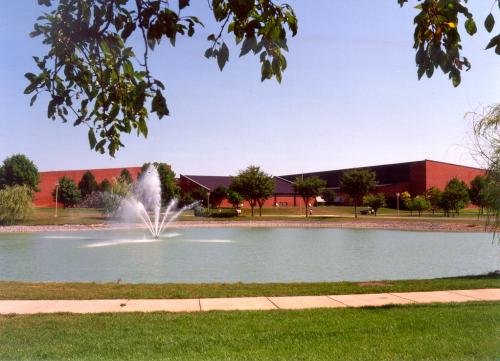
Despite the short, to-the-point obituary, at the time of her death Helen King gave the largest donation ever received by Ohio Northern University — $1.8 million dollars. The funds were used to build the King Horn Sports Center, a state-of-the-art facility which opened during the 1974-1975 academic school year.

In a 1972 article from The Register-Herald, which describes Helen as a recluse, one gets a small glimpse of her life. An administrator at a Dayton, Ohio nursing home she last lived in described Helen as,

“a dear soul but not a warm person….She kept to herself in the room, had few visitors, and read stock market literature.”

Despite the misgivings about her personality, when she died her estate was appraised at $1.9 million. The bulk of her money, it appears, was created through frugal living and smart investments. Appraisers said King acquired her fortune ‘gradually over the years, helped out by inheritances,’ but also noted she was something of a hoarder. In fact,

“Appraisers going through the house found some $1,500 hidden away in the small towels.”

Of course, the real question is where did Helen get the seed money to grow into such a large fortune — especially in a town the size of Eaton.

Well, it began with her late husband, Jesse, who died in 1943, nearly three decades before Helen passed away.

Jesse King was an electrical refrigeration engineer at Frigidaire in Dayton with more than 90 patents. When he first started in the business, the Pyrmont-born (Montgomery County) man was a close associate of Charles Kettering (who invented the electric car starter). After King retired from Frigidaire in 1938 he went into the real estate business. At the time of his death, his assets were valued at just under $250,000.

Helen — still in her mid-40s when her husband died — grew that nest egg to nearly $2 million.

Although she left some money to her nieces and nephews, since she had no children, their was no one ‘next-in-line’ to bequeath the wealth to, so she chose to donate all but $100,000 to a university that neither her or her husband had attended.

So what was her connection to the college? Her brother, Fred Horn, graduated from the school in 1911.


Learn More

According to the Ohio Northern website (pdf) once the money was received the school moved quickly on the project.

Ground was broken for the project on April 1, 1973, and the cornerstone was laid on July 12th. By September 1974 King-Horn was open for classes with the formal dedication being held on February 7, 1975.  

When it was completed, King-Horn cost roughly $2.3 million. It featured a 3,200 seat arena, a 6-lane swimming pool, 3 handball courts, a 110-yard jogging track, a wrestling room, dance studio, weight-lifting room, fencing,, shuffle board and ping pong areas, 3 classrooms, offices, study areas, training room, sauna and locker rooms.  

The building was renovated in 1991 and 1996. The center also hosted the 1995, 1999 and 2002 NCAA Division III Indoor Track and Field Championships and the 1997, 2000 and 2003 NCAA Division III Wrestling Championships.


Americans Who Got It Right

This post is part of an ongoing series that focuses on the various men and women through American history — and from all walks of life — who bucked the trend, thought for themselves and, in general, possessed that very American ideal of individualism. You can read previous entries here.

Categories: 8th congressional district, Americans Who Got It Right, Ohio History, Preble County | Tags:

Ohio’s Legacy: Rutherford B. Hayes & The Original, Contentious, Deceptive Presidential Election

hayesRutherford B. Hayes was one of the first men to be elected president without receiving the majority of the popular vote. The first was John Quincy Adams — who lost in both the Electoral College and popular vote to Andrew Jackson. At issue was the fact that neither Adams nor Jackson received the required 131 electoral votes, which pushed the decision to the House of Representatives — who selected Adams.

But with Hayes, it was an even more contentious situation. Hayes, the Republican candidate, ran against New York Governor Democrat Samuel J. Tilden and from the beginning Tilden was projected to win. On the night of the election, the popular vote indicated that Tilden had won by as much as 300,000 votes.

Hayes went to bed that night, presuming he had lost.

So What Happened?

Well, the Republican National Chairman found a loophole and wasn’t ready to admit defeat. What unfolded was a blight on the election process.

To win the presidency in 1876, a candidate needed 185 electoral votes. For Hayes to win, he needed the contested electoral votes in Louisiana, South Carolina, and Florida. If all the disputed electoral votes went to him, he would become president, however if just a single vote went to Tilden, Tilden would become the 19th U.S. president.

The process dragged on until January 1877 when Congress established an Electoral Commission to resolve the issue. The commission, made up of eight Republicans and seven Democrats, voted along Party lines in favor of Hayes — eight to seven — on the contested votes in Louisiana, South Carolina, and Florida. This gave Hayes the win with 185 electoral votes to Tilden’s 184.

Some historians say a backroom deal was broker in the process because the South was threatening to secede (again) if Hayes was elected. The deal, these historians say, included at least two promises:  Hayes would only serve one term and the Reconstruction laws imposed on the South would be lifted.

Both actions came to pass.


Learn more

There is actually a free book, written about 30 years after the election, that sheds a lot of light on the illegal and unethical activities by both the Democrat and Republican Parties in the 1876 election. You can read the book online here, but a simpler way to read it is with a Kindle or Kindle-like device. The book title is The Hayes-Tilden Disputed Presidential Election of 1876 by Paul Leland Haworth.


Ohio’s Presidential Legacy

Read more from the series:

Categories: American History, Ohio History | Tags: ,

Ohio’s Presidential Legacy: William Harrison — America’s One-Month President

harrisonGrowing up in Ohio, I knew one thing for certain about the United States presidency — the state delivered eight men to serve in the White House. They were:

  1. William Harrison
  2. Ulysses S. Grant
  3. Rutherford B. Hayes
  4. James Garfield
  5. Benjamin Harrison
  6. William McKinley
  7. Howard Taft
  8. Warren Harding

What I did not learn in school was these eight men were involved in some of the weirdest stories in United States’ history. Of the eight men, two were assassinated, one died under suspicious circumstances, two lost the popular vote and were selected president (one in a scandal much larger than the 2000 Gore-Bush election) and one was the first president to die in office.

Here is a look at Ohio’s first offering for U.S. President.

William Harrison

Besides having the dubious honor of being the first president to die in office, Harrison also has the shortest presidential term: 30 days, 12 hours, and 30 minutes.

Most historians peg his death — ruled pneumonia by his doctors — as being caused by his two-hour long March 4 inaugural address which took place in rainy and cold weather.  He was 68 — and at the time — the oldest elected president. However, some disagree that the weather caused Harrison’s death because he did not become ill until nearly three weeks after the speech. These scientists theorize his death may have been associated with the human sewage that festered near the White House.

That field of human excrement would have been a breeding ground for two deadly bacteria, Salmonella typhi and S. paratyphi, the causes of typhoid and paratyphoid fever — also known as enteric fever, for their devastating effect on the gastrointestinal system.

Once he became ill, though, he died nine days later.

Despite such a short presidency, Harrison is credited with several ‘firsts,’ including:

  • Having the first modern presidential campaign. He successfully created the image of a common working class man (he was wealthy and his father was governor) during the 1840 presidential campaign — an image other politicians have successfully used and re-used.
  • Being the first sitting president to be photographed.
  • Being the first Whig to be elected president.

Upon Harrison’s death, the concept of how to deal with a vacancy in the office of president was tested. This was because neither the Constitution nor the 12th Amendment stated whether the vice president was named President or simply filled in as acting president until an election. Tyler took on the role of president establishing the precedent used today.

Trivia:

Harrison’s grandson Benjamin, also an Ohioan, was the 23rd U.S. president. Benjamin was elected to only one term.

-flagsBooks About Harrison
Of course, there is much more to Harrison’s life than his short-lived presidency. In fact, he was a successful military man and politician before deciding to become president. Several books have been written about Harrison and one that consistently garners good reviews on Goodreads is the 422 page Old Tippecanoe: William Henry Harrison and His Time by military historian Freeman Cleaves.
Another well-received book is: William Henry Harrison: The American Presidents Series: The 9th President,1841.
Categories: American History, Ohio History