
Author Archives: CharlieClaywell

Unknown's avatar

About CharlieClaywell

I have been a writer for years, mainly as a reporter, but I have always enjoyed history, especially non-mainstream stories buried inside old documents. My blog mostly centers around those stories. On occasion, though, I deviate and talk about my dog, vintage toys and what it's like to be middle-aged.

‘Party Politics’ Reminds Us Why The Masses Cannot Be Trusted With Democracy

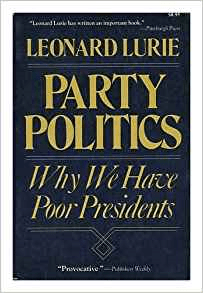
Published in 1980 Party Politics: Why We Have Poor Presidents by Leonard Lurie provides a strong argument why our Two Party political system does not work — and, according to the author, was never the intent of the Founding Fathers.

The book begins with why the Founding Fathers were opposed to a political party approach of governance and ends with suggestions on how to get back to a more democratic system of electing our presidents.

Those chapters are for people who enjoy political theory — the nuts and bolts of political machination — but it’s the chapters squeezed between the theories that more people will enjoy. These chapters are crammed full of succinct political analysis for each president from George Washington to Richard Nixon.

And, the chapters have enough sass, rumor, gossip and history to pull in even the casual reader.

Image Over Substance

With the exception of a few presidents, the author is not impressed with those we’ve elected. He is even less impressed with the political machinery that placed them in office. So even a president as popular as Dwight D. Eisenhower fails under Lurie’s microscopic examination. He notes Eisenhower’s political indifference, wasted opportunities, obsession with golf and the president’s inability to take on Party powers to remove Richard Nixon from his ticket. Lurie also notes,

Eisenhower represented the replacement of substance with image — the president as a symbol, the presidency as a reward. The party philosophy of winning at any cost had resulted in mere popularity becoming a qualification for nomination.

A feeling that resonates today with the current administration.

I’m Gonna Be President

By the end of first chapter, it’s apparent that Lurie is well read and very knowledgeable. His command of U.S. political history is stunning. But, just as impressive as the obscure historical nuggets he pens are the quotes Lurie uses to open the chapters. For example, this quote from famed ACLU Lawyer Clarence Darrow:

When I was a boy I was told that anybody could become president. I’m beginning to believe.

As one reads, it does become obvious that few things have changed in the political scene — at least as far as the mechanics. One reoccurring theme is voter apathy. In the race against Republican Warren Harding and Democrat James Cox voter were so uninterested that less than 50 percent of them participated. A phenomenon repeated multiple times both before, and after, that election. But, as Lurie notes, this is not without some advantages.

Republican leaders had come to rely on the fact that vast numbers of voters saw little reason to make the effort necessary to record for themselves any candidates.

And, and one political operative from Harding’s team noted — people will take what they are given:

We live in a hard-boiled age. No man in this country is every called to the Presidency by the clamor of millions. No man is so great in our democratic society that his name excites the masses.

Harding consistently ranks as the worst U.S. president (until recently) and possibly the most interesting thing about his scandal-riddled presidency was his affair with fellow Ohioan Nan Briton — Briton alleged Harding fathered her child.

We’ll Decide, They’ll Vote

I don’t care who does the electing as long as I do the nominating — Boss Tweed

The most important theme of the book, though, is how the American public does not truly have a say in the presidency. This reality has been proven, and written about, by scores of theorists. But, as Lurie notes, one reason is the party nomination process which bypasses the average voter — by permitting a relatively small group of individuals to decide which candidates will seek the presidency. And, this works because

…people accept government, they obey rulers, precisely because as an unorganized mass they easily fall victim to the predators living within their midst.

Nothing Really Changes

As he discusses the Reconstruction Era, Lurie notes how the appeal to patriotism was strong enough to quell any decent American from supporting a Democrat — a Party that was involved in suppressing the Black vote in that era. But eliminating the Democrat vote did not bring out the best in the GOP he asserts, noting,

Without the fear of political opposition there was no need to provide decent candidates, or even candidates who projected the image of decency.

In our current age of hyper-gerrymandering, it almost feels like he is writing about today.

Rating 5 out of 5. I rarely review political books this highly simply because too many become weighted down in political theory. But, this book is a nice mix of political theory, historical facts, rumors, gossip and lively narrative. Lurie has also written two books on Richard Nixon.
Categories: Books I have read, My America

‘Cornbread Mafia’ Describes The Rise, And Fall, Of Marijuana Production In Kentucky

As I examine my county’s long-term relationship with marijuana, besides researching our past, I’ve turned to books that highlight the history of marijuana production in the United States.
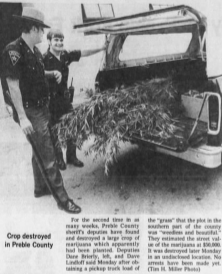
Ohio, which recently approved medical marijuana, began its love affair with the drug in the early-to-mid 1970s. Preble County saw an increase in production, and consumption, that mostly correlates with the return of Vietnam vets. According to articles from the late 1970s, one Preble County farmer — and Vietnam vet — was caught up in a drug smuggling deal that left two dead and several imprisoned. By the late 1970s, this farmer was receiving weekly shipments of 25-50 pounds of pot.

Each week’s delivery would supply 100-200 users with enough pot for a year.

Cornbread Mafia

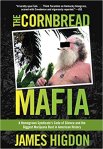
The Cornbread Mafia by James Higdon takes place about three hours south of Preble County in central Kentucky. It is a story of a code of silence, murder, crooked cops, and ‘good ole boy’ farmers perfecting their product through careful breeding until the weed grown in Kentucky can command top dollar.

Even though the author begins the book with some earlier history to help frame the belief system of Marion County, Kentucky, their pot production also begins in the mid-to-late 1970s. Much of the production was hidden in plain site due to the players involved. Higdon writes,

For the first decade of the marijuana era in Marion County, all processing from a number of top growers was centralized in one location, a place no one would suspect of housing a multimillion-dollar illicit factory — on a farm owned by a prominent doctor, whose brother had once been mayor of Lebanon. No one would have guessed that the stately proportioned barns and outbuildings concealed several tons of high-grade sinsemilla in any given October between 1972-1980.

Native Tells Story

Higdon, a Lebanon native and journalism major, wrote the book shortly after college, and since he has an understanding of the mindset of the region, it gives him an edge in telling the story. The characters come across as authentic, and not caricatures. It is a region, that for the most part, view the book’s main character, Johnny Boone, as a local Robin Hood type hero. By the end of the book Boone, who served two prison terms, is a fugitive.

The story is fairly complicated with its cast of 5-10 characters who are heavily involved in the central Kentucky’s marijuana business. As the feds start cracking down on the group, they are eventually forced to grow their crops in other Midwest states — but they always bring it back to Marion County for processing, which also ensures they get top dollar when they distribute it.

Eventually, 70 Kentuckians are arrested, and true to their values, they refuse to ‘rat out’ each other or accept plea bargains that will harm their partners. This is phenomenal since the sentences they receive range from six months in jail to 20 years in prison.

Quicken The Pace

My main critiques of the book is it starts off a little slow as the author explains the mores of the region, which is essential to the story, but it could have been trimmed. Also, the stories of minor characters could be condensed.

For the most part, it is a story of impoverished, yet entrepreneurial, Kentucky farmers doing what they do best — perfecting a crop and marketing it. If not for the handful of murders in the story line, the book would have a ‘Dukes of Hazzard’ feel to it.

Published in 2012, the book is a little dated because the story of Johnny Boone has evolved (I won’t link to it in case you want to read the book first), and at least one member of the Cornbread Mafia has written a memoir, which, of course, adds to the story. At some point, I’ll have to read that one as well.

Rating 4/5. If you are looking for a crime story — or are interested in marijuana production in the 1970s and 1980s — this is a very enjoyable read with very interesting characters.


Local Eyes Only

1982 marijuana bust in Preble County netting an estimated $10 million in drugs and equipment — or nearly $26 million in 2017 dollars.

Categories: American History, drug use, My America | Tags: ,

‘Missoula:’ Acquaintance Rape And Those Who Enable It

Preble County, Ohio courthouse.

“I was stunned to discover that many of mine acquaintances, and even several women in my own family, had been sexually assaulted by men they trusted,” author Jon Krakauer.

Rape is a crime that experts estimate is underreported by 80 percent.

In the past 18 years, 124 rape kits from Preble County have been submitted to state and local crime labs. If it’s true the crime is underreported, the number of rapes that occur annually in Preble County would be about 10. Yet, of the 158 court cases processed through the Preble County Common Pleas Court between July 1, 2017 and Dec. 31, 2017 only one individual was indicted on rape charges.

Books like Missoula: Rape and the Justice System in a College Town by Jon Krakauer offers some clues why, as a society, we are woefully lacking in our response to this prevalent, and violent, crime.

Book Inception Is Personal

Krakauer offers some commentary at the end of the book on why he chose to tackle the subject. When he decided to research the topic he was embedded with some U.S. soldiers for another book he was finishing up. As he explains he attended some therapy sessions with the soldiers who were dealing with Post Traumatic Stress Disorder, and the individual leading the session made the observation that two groups are most affected by the disorder: soldiers and rape victims.

That statement, and watching a personal friend struggle with the aftermath of sexual assault, seem to be the catalyst behind the book.

College Town Rapes

As the book reveals, it is a combination of societal beliefs, undertrained and bias gatekeepers, and public perception that impedes justice. And, sometimes, the march to justice is also hampered by the backlash a victim receives as communities rally around the accused.

The book takes place in the college town of Missoula, Montana which was thrown into the national spotlight a few years ago due to a series of rapes and sexual assaults that occurred in the community. Several of the allegations involved players on the much-loved University of Montana football team.

Missoula follows a couple of those cases from the allegations to their legal end. The testimony is difficult reading, but just as difficult to read is the clunky handling of the cases by the legal system, from undertrained police officers to unconcerned deputy prosecuting attorneys. In one of the cases, a female police officer assures the rape victim that she would bring in the alleged perpetrator and ‘at the very least scare the shit out of him.’

But, as the author reports, that is not what happens. While interviewing the suspect, the officer says,

I don’t think you did anything wrong. I think it is torturing you that you are accused of this and that bothers me. The case in my opinion is closed. This case is going to be listed as unfounded. I think this is just a misunderstanding.

Typical Behavior Of A Rape Victim

The book explains the typical manner in which rape survivors respond — which is counterintuitive to how we want them to respond. At the end of the book the author explains this phenomenon — as does one of the expert witnesses in one of the trials — but it’s too detailed to explain here. (A book the author quotes is Trauma and Recovery by Judith Herman.)

But one of the rape victims does offer a snippet of the phenomenon. Before being raped, the woman was a stellar college student, but after the crime she notes,

“I started drinking a lot — way too much — and engaging in other really risky behaviors. You hear that rape victims avoid sex afterwards, but it is actually just as common for some victims to become promiscuous in self-destructive ways. That’s what happened to me.”

Of course, the unenlightened use this behavior to besmirch victims.

Intellectually Lazy Investigators

Another interesting, albeit troubling, aspect of the book is how much an officer’s bias, lack of training or ignorance can derail a case. In several incidences, rape victims were asked ‘if they had a boyfriend’ with one officer going so far as to suggest that sometimes,

Girls cheat on their boyfriends and then say they were raped.

But, by far, at least for me, the aspect of the book that is invaluable, is it is filled with the stats that show rape victims are telling the truth.

It is estimated that 92-98 percent of victims are honest in their testimony.

Rating: 5/5. Although, at times, the court proceedings and testimony is a little labored, the stories are well researched and well told. The end result is a better understanding of the legal and societal weaknesses that allow rape to go unanswered.

This book, a national bestseller, also has a 4-star rating on Amazon.

Categories: 8th congressional district, Books I have read, My America