Family History

Cabin A Link to My U.S. Revolutionary War Heritage

headerThe image I use in the header of my blog is not just a random log cabin I photographed. It has historical significance to me. It was the dwelling place for my grandfather of the American Revolutionary War generation Shadrach Claywell — and he is believed to have built at least a portion of the cabin.

Originally located near Settle, Ky. on U.S. 90 in Cumberland County, the cabin was moved to Veterans Park in Burkesville in 1969. My paternal grandparents moved to within a mile of Veterans Park in 1968.  And, despite spending a considerable amount of time with my grandparents in the late 60s and early 70s, I knew nothing of the cabin’s existence until around 2000 when I started doing genealogy research after my father’s death.

According to historical documents, portions of the cabin, including the 1/2 dovetail section is believed to be original and may have been built as early as 1794. In 1969, Randolph Smith wrote a piece for the Cumberland County newspaper called the History of Shadrick Claywell Log Cabin and states his belief that Shadrach built the second portion of the cabin when he purchased the land in 1813.

The cabin and much of the land associated with it left the Claywell line with Shadrach’s death.

Shadrach, who lived in Virginia at the onset of the War was a bit of a restless soul. He was captured by the British during the Battle of Guilford Courthouse, lived in Canada awhile before eventually returning to Virginia. Before heading to Kentucky, he would first moved his family to North Carolina where his brother, Peter, was a minister. Then at the age of 46, Shadrach left North Carolina to settle in Kentucky on the land given to him for his War service.

Shadrach lived in the cabin and worked the 200 acres surrounding it more than 20 years until his death in 1839. In his Will, Shadrach bequeaths the cabin and surrounding land on Bear Creek to his daughter-in-law Obedience Shugart Claywell. Upon her death, Obedience would will it to her daughter Permelia B. Keen. The cabin remained in the Keen family until it was moved in 1969.

Historical documents describe the cabin as a one story log dogtrot (20′ x 52′), built mostly of poplar logs, consisting of two pens (20′ x 22′ and 20′ x 20′)  connected by an enclosed 10-foot breezeway. It has gable and cut stone hipped chimneys.

Categories: American Revolutionary War, Appalachia, Cumberland Plateau, Family History | Tags: , ,

Most Popular Blog Entries Address War, Dogs and Little League Baseball

I enjoy writing and connecting with readers. Despite my best efforts, some blog entries fall to the wayside while others flourish. Here are three of my most popular entries in case you missed them.

Significant Revolutionary War Battle Did Not Involve British soldiers

One of the most decisive battles in the War for Independence involved the Overmountain men. One of my forefathers was there, unfortunately he was bitten by a rattlesnake so how much he participated is a mystery. Read more >>

Broken Spirit: What A Rescued Dog Taught Me About Life

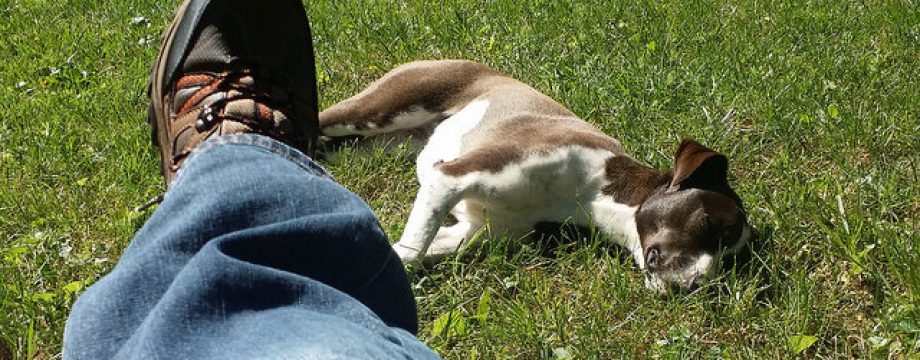
Technically, Versa is my daughter’s dog. We went to the local dog pound and my daughter picked out the 40-pound, black and white mix-breed, nine-month-old female pup. Within a month the pup — plagued with fear aggression — was mine. What was unexpected for me, though, was as Versa conquered her fears, she taught me a few things about my own. Read more >>

Little League and the Big Red Machine

This nostalgic piece looks back at what it was like to grow up an hour north of Cincinnati in the era of the Big Red Machine. It was a time when baseball was king and it was impossible as a Little Leaguer not to love the game. But I had a big problem — I was small, underweight, weak – and unlike Pete Rose, I could not hit. Read more >>

Categories: American History, American Revolutionary War, Appalachia, Baseball, Dogs, Family History, Versa

Little League and the Big Red Machine

Little League withthe Giants.

Little League with the Giants.

Growing up an hour north of Cincinnati in the era of the Big Red Machine, baseball was king and it was impossible as a kid not to love the game.

But I was small, underweight, weak — and unlike Pete Rose, who dropped by my small hometown to sign autographs — I could not hit.

Dad step in to solve the problem. For countless hours after work he would pitch to me while my brother Billy, a catcher, honed his skills. Despite painful bursitis in his pitching arm, Dad threw without complaint, encouraging me to swing hard and to ‘keep my eye on the ball.’

He even set up a visual marker for me. If a hit landed in the garden on one hop or less, it was a base hit.

Eventually, the practice paid off.

It was 1974, I was 10, pitching for the Giants and batting a respectable .375. But unfortunately, just like Cincinnati it was not our year. While the Reds finished their season in second place, four games behind the Los Angeles Dodgers, my team the Giants, landed near the bottom with a 3-7 record.

But it was a good year for another Reds player. My cousin Roger, who lived in the same duplex as me, played for the Little League Reds and they were unstoppable.

Roger was four months older than me, and he was skinny — but strong. He and I played baseball every chance we had. We played 1-on-1 with Pitcher’s Hand, Home Run Derby and a concocted 500-point game based on fielding.

And 1974 was his year to shine. While I was batting .375, Roger was hitting .516 (6th in league) and League Leader with 21 RBIs. He was also tied for first with five doubles. His team had a .778 winning percentage (while the real Reds could only muster a .605 winning percentage).

Fortunately, 1975 was a better year for the Giants and the real Reds.

Midway through the season, on Tuesday, June 11 my team, the Giants, ‘clobbered’ the Tigers, 18-4, and I ‘whirled the win,’  according to the newspaper. We were now 6-0 and unstoppable — or so we thought. But, a week later, the Mets handed us our first defeat — a 10-inning affair, 11-10. My teammate Andy took the loss — taking his record to 3-1 while mine was 3-0.

With Andy’s loss I was the League’s top pitcher, but Andy — like Roger before him — was dominating the league in batting. He was outperfoming me at the plate — batting .574. He was leading the league in RBIs with 31 (I was a very distant second with six). I was tearing up the bases, though, landing on the Stolen Base leaders list in third place with 24.

But, July 1 was the game of the season for the Giants.

Andy, coming off his first loss, threw a 2 hitter. We had 21 hits in our 25-11 win over the Braves (the score makes you wonder how many errors and fielder choices were called in the game.) In the game Andy, Scott and I were all 4-for-4 at the plate. A little more than a week later, on July 9, I connected for three more hits in our 26-8 win over the Cubs.

We ended the season with one loss and, just like Pete Rose and the Reds, we captured first place.

The Machine

The Machine is one of the best books written about the 1975 Reds season and what is arguably the best World Series in baseball history — the 1975 clash between the Reds and the Red Sox. Whether you lived through the season, or are just a fan wanting to know why the ‘Great Eight’ are legendary — this well-written book by Joe Posnanski — will entertain and enlighten. Highly recommended.

Categories: Baseball, Family History, Sports